
Last Updated 21 hours ago
Overview
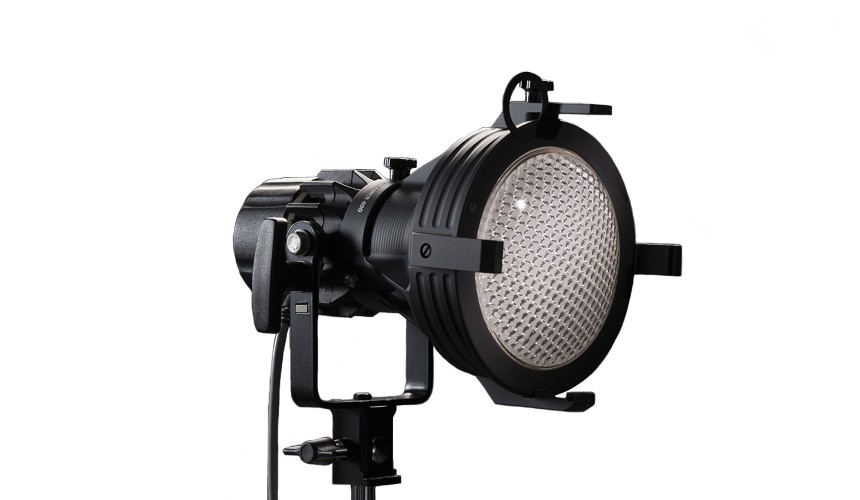
The K5600 Joker-Bug 400 is a compact 400 W daylight discharge-light system that combines two arrangements: a PAR-style head with the removable Beamer reflector, and a Bug-Lite configuration for compatible lightbanks and other approved modifiers. It is useful for small location packages that need a hard daylight source, a bounce or a relatively compact soft-light system.
This is the original Joker-Bug 400, as described in the manufacturer’s archived brochure and family operating manual. Joker² products, Zoom Beamers and the Local News configuration require their own identification. Do not assign their ballast frequencies, controls or focus mechanisms to an original kit simply because the wattage is the same.
Key specifications
| Specification | Details |
|---|---|
| Lamp class | 400 W MSR/SE single-ended daylight discharge |
| Lamp socket | GZZ 9.5; not a generic tungsten GY9.5 substitution |
| Nominal colour in original brochure | 5600 K; meter the actual lamp and configuration |
| PAR optics | 5-inch specular parabolic Beamer reflector, PAR 46 class |
| Accessory size | 6⅝ inches |
| Mount | 5/8-inch baby hardware |
| Required safety enclosure | Correct clear or frosted UV-absorbing borosilicate glass beaker |
| Connectors in original brochure | VEAM quarter-turn locking |
| Cable arrangement in original brochure | 9 ft attached head cable; 25 ft shielded extension listed |
| Original ballast input | 90–132 V or selector-switched 180–265 V, 50/60 Hz |
| Legacy quoted current | 5.5 A in the original brochure; actual ballast nameplate and supply govern circuit planning |
| Original ballast cooling | Convection cooled; do not block ventilation |
| Historical lamp-life figure | 700 h maximum in the brochure; the installed approved lamp’s instructions control replacement |
| Configuration distinction | Beamer removed for approved Bug-Lite speed ring; the protective beaker remains required |
| 25 ft head extension | K5600 C0900U, the shared 25 ft head extension for the Joker 200, 400 and 800. Use the ballast specified for the particular head and lamp. |
Strengths and limitations
Strengths
- A hard daylight source supports throw, bounce and large diffusion.
- Matched ballast options support production control.
Limitations
- Lamp, reflector or lens and ballast must be specified as a complete system.
- High-speed performance depends on the actual lamp, ballast mode and camera test.
Practical uses
With its Beamer installed, the Joker-Bug behaves as a small PAR system. Use the correct converter lens to select the needed field. The medium and wide configurations have asymmetric coverage, so lens orientation matters. A lens described as Fresnel frost is an accessory configuration here, not evidence that the head is a continuously focusable conventional Fresnel.
Removing the Beamer allows installation of the dedicated Bug-Lite speed ring described in the manual. That arrangement makes use of the lamp’s surrounding emission inside an approved lightbank or modifier. Keep the UV-absorbing beaker installed: removing the reflector does not remove the need for protective glass. Specify the correct speed ring, modifier and thermal clearances as a complete system.
The manual distinguishes Local News fixtures, whose Beamer is twisted for focus and which do not use the same lens arrangement. A seller’s generic “Joker 400” description is therefore incomplete. Ask which optical configuration and accessories are actually present before comparing coverage or price.
| Setup | Working approach |
|---|---|
| Window or exterior push | Choose beam coverage and throw before calculating the required circuit and rig. |
| Large diffusion | Meter the useful lit area after diffusion and allow for transmission loss. |
Output and colour
The manufacturer brochure lists these centre readings in footcandles, with beam length and width in feet. One footcandle is approximately 10.764 lux. A narrow spot’s high centre value should be compared with its very small coverage; it does not describe a broad soft-light result.
| Configuration | At 10 ft: centre | Beam L × W at 10 ft | At 20 ft: centre |
|---|---|---|---|
| Spot | 15,440 fc | 0.5 × 0.5 ft | 3,860 fc |
| Medium | 1,520 fc | 4.6 × 1.9 ft | 380 fc |
| Wide | 444 fc | 11 × 3.3 ft | 111 fc |
| Super wide | 188 fc | 11 × 11 ft | 47 fc |
| Fresnel frost | 144 fc | 7.9 × 7.9 ft | 36 fc |
Power and batteries
The original brochure describes an electronic square-wave supply with 90–132 V or 180–265 V input ranges selected by a switch. The owner’s manual requires the voltage selector to be set correctly before connection to mains, and the ballast to have a reliable protective earth. Do not assume this older supply automatically detects the line voltage.
The historical 5.5 A claim is useful identification context, not a universal current rating for every voltage, replacement ballast or condition. The 400 W lamp rating is not the complete mains load. Use the actual ballast’s input rating and include other circuit loads, cable and distribution requirements. A household tungsten dimmer is not a suitable substitute for the discharge ballast.
Control, cooling and camera operation
Use an approved 400 W MSR/SE lamp with the correct GZZ 9.5 base and operating characteristics. The original brochure’s 5600 K and 700-hour maximum-life figures describe its specified lamp era; they do not certify a random replacement globe. The installed lamp’s documentation determines its limits and retirement criteria, while actual colour and output should be metered after stabilisation.
The manual recommends leaving a freshly ignited lamp running for two to three minutes before switching it off, rather than rapid cycling. That is operating guidance, not a promise of final colour stability at exactly two minutes. The original square-wave “flicker-free” description also does not establish the frequency, dimming or high-speed capability of an unidentified replacement ballast. Test the intended camera and shutter settings.
Modifiers, rigging and the working package
Compatible accessory profiles · K5600 Joker-Bug Speed Ring A0400AMB
Use accessories approved for the exact head and support their complete working load. Confirm retention, clearances and cable routing before raising or hanging the fixture.
Alternatives and related fixtures
| Fixture | Choose it for |
|---|---|
| Joker-Bug 800 original | The other original lamp class; identify the matching ballast and optics. |
| Joker2 | A later generation with different package and control details. |
What people are saying
Owner experience: the original Joker-Bug package
The Notes on a Film review discusses ownership of the larger Joker-Bug 800 and the appeal of a compact HMI kit. It is a related-model account; its output and electrical figures should not be assigned to the original 400. View the source.
Videos
K5600 Joker-Bug 400 (Original): family guide
Grip Tips: original Joker-Bug 800 accessories. The 400 needs its own lamp, ballast and matched accessories.
Rental and used-fixture checks
Never energise the lamp without the required UV-absorbing beaker. Inspect it for damage and correct retention, whether clear or frosted. A UV-reducing lamp envelope does not cancel the manufacturer’s protective-glass requirement. The head, glass and ballast can become hot; keep vents clear and do not close the barn doors over an operating head.
Before relamping, disconnect the head from the ballast and let the assembly cool as instructed. High ignition voltage makes casual cable or connector modifications inappropriate. Do not operate damaged plugs, cables or a damaged lamp holder, and check that the lamp remains correctly seated after transport. Use approved parts and proper electrical service for faults.
Check the Beamer reflector, converter lenses, accessory ears and latch, beaker/retaining ring, yoke brake, baby mount, lamp socket and cable locks. Confirm the ballast model, input selector and complete cable set. Shared connector styling within the Joker family does not make every lamp, ballast, modifier or current-generation accessory interchangeable.
A head without a ballast or a Beamer without its lens set is a different purchase from a working kit. Budget for an approved serviceable lamp and any missing safety glass before assessing output. A modern LED may simplify dimming and batteries; the original Joker remains useful where its small discharge head, PAR options and existing lightbank kit suit the shot.
Documentation and specifications
K5600 C0900U head-extension specifications
Original manufacturer 400 brochure and photometric chart, manufacturer-authored family operating manual and PhotoCineRent original Joker-Bug 400 listing. Archive copies retain their original manufacturer attribution.
Product photograph: PhotoCineRent Joker-Bug 400 rental photograph.
Browse K5600 lights · HMI lights · all equipment.