
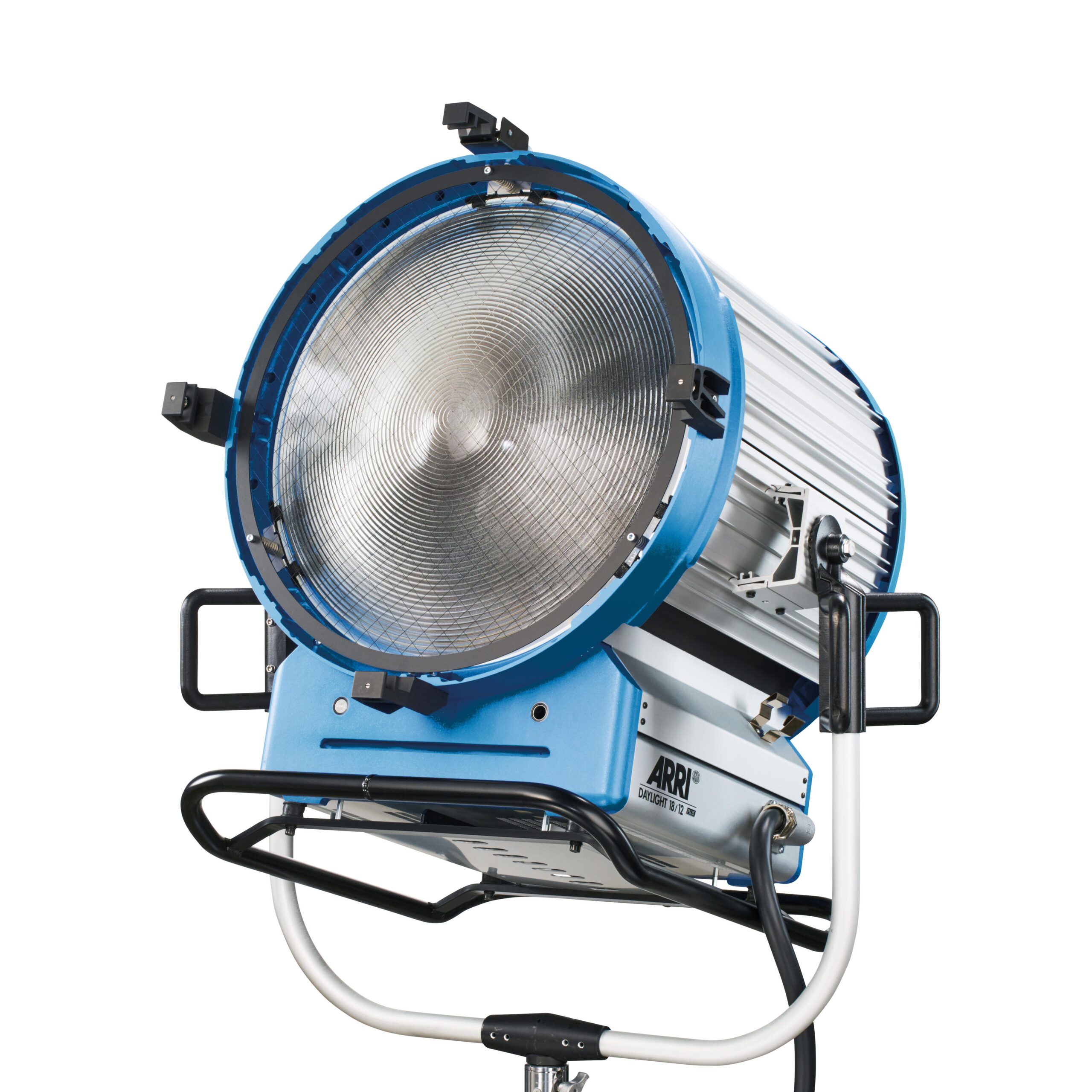
HMI lights are high-intensity discharge lighting fixtures designed for film, television, and commercial production. They produce a powerful daylight-balanced source and have historically been the standard choice for exterior scenes, large interiors, and situations requiring significant output and throw.
Before high-output LED fixtures became common, HMIs were the primary solution for simulating sunlight, lighting large areas, and pushing light through windows on professional sets.
⮞Go to Lighting Categories.
⮞Browse Lighting by Brands.
⮞Browse All Equipment.
Lights
What HMI Lights Are
HMI (Hydrargyrum Medium-arc Iodide) lights generate light by striking an electrical arc through a gas-filled bulb. This process produces a very bright, efficient daylight-balanced source, typically around 5600K.
HMI fixtures require external ballasts to regulate power and operate safely. These ballasts can be magnetic or electronic and are a defining part of HMI workflows.
What HMI Lights Are Known For
Extremely high output
Daylight color temperature
Long throw and punch
Efficient light output per watt
Industry-standard solution for “sunlight”
HMIs defined professional exterior lighting for decades and are still widely respected for their power and beam quality.
Common Types of HMI Lights
HMI Fresnels
Focused, controllable fixtures used for key, backlight, and simulated sun sources.
HMI PARs
High-output fixtures with interchangeable lenses used for long throw and exterior work.
Open-face HMI lights
Broad, powerful sources often used for bouncing or washing large areas.
Ballasts and head systems
Separate lamp heads and ballasts designed for flexible rigging and power management.
Where HMI Lights Are Used
Exterior day and night scenes
Lighting through windows
Large interior spaces
Simulating sunlight
High-budget narrative and commercial productions
HMIs are most effective when large output and distance are required.
HMI vs Modern LED
Compared to high-output LED:
HMIs still offer exceptional punch and throw
LEDs offer instant start, dimming, and color flexibility
Compared to tungsten:
HMIs use less power for similar output
Produce less heat at the source
Compared to LED COB lights:
HMIs require ballasts and warm-up time
COBs are simpler and more portable
Advantages of HMI Lighting
Very high output
Excellent daylight punch
Proven beam quality
Long-established workflows
Ideal for exterior and large-scale lighting
Limitations of HMI Lighting
Requires external ballasts
Warm-up and restrike time
Bulb replacement costs
Heavier cabling and infrastructure
Increasingly replaced by high-output LED fixtures