
Last Updated 2 days ago
Overview
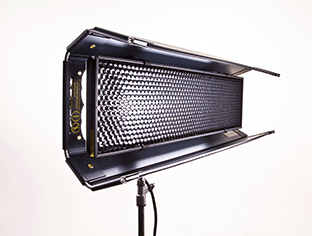
The Kino Flo Diva-Lite 200 is a two-lamp compact fluorescent softlight with a built-in dimming ballast. Its narrow body suits a small interview setup, close fill, a soft edge or a background accent where the four-lamp Diva 400 is wider and heavier than necessary.
This is the original fluorescent DIV-200, using two 55 W compact lamps. The ‘200’ is not its actual lamp-wattage total: the two specified lamps add up to 110 W nominally, while mains input also includes the ballast. The later 201 and LED Diva products should not be silently substituted when identifying a used fixture.
Key specifications
| Specification | Details |
|---|---|
| Fixture / source | DIV-200; two 55 W compact fluorescent lamps |
| Lamp base / examples | 2G11; 55C-K32 and 55C-K55 manufacturer lamps |
| Original regional supplies | 120 V or 230 V, 50/60 Hz; use the labelled version |
| Original current figures | 1.1 A at 120 V or 0.6 A at 230 V |
| Output frequency / dimming | 30 kHz ballast; published 100–5% range |
| Colour control | Lamp-set choice and correction gel; no built-in tunable-white or RGB engine |
| Dimensions | 26 × 7½ × 6 inches; 3½-inch barn doors in the original catalogue |
| Weight with lamps | 9 lb / 4.1 kg, not the complete kit or case |
| Mount | Centre mount with supplied receiver/lollipop hardware; inspect exact version |
| Accessories | Diva 200 louver, DFS-D2 Flozier, gel frame and suitable offset mount |
| Remote adjustment | Only if the specific unit has the documented compatible remote input |
| Variant boundary | DIV-200 data here; do not assume every later DIV-201 electrical or mechanical detail applies |
Strengths and limitations
Strengths
- A bank of fluorescent tubes provides a broad close source.
- The established modifier and mounting system supports fast setup.
Limitations
- Lamp type, age and ballast configuration affect colour and output.
- Inspect older connectors, lamp holders and ballast cabling before use.
Practical uses
The 200 is useful when the source needs to be close and relatively small. It can sit beside a camera for controlled fill, work as a soft edge in a tight room or add a modest pool to a background. Its longer-than-wide face produces a different reflection from a square softbox, and rotating it can change how that reflection appears.
It has less output and a smaller emitting area than a Diva 400. Once placed well back or covered with dense diffusion, its reserve is limited. For a small interview, start by finding the useful source distance and angle, then judge whether more output is needed. Choosing a larger light is often better than forcing a small fluorescent into an unsuitable throw.
The original catalogue’s two-lamp 200 dimensions, weight and input ratings are the original model’s specifications. The manufacturer’s later combined manual includes the 201 and 400 Universal, which is useful family operating context but not a reason to rename or merge all models. Read the actual plate and identify which controls and input connectors are present.
Some used Kinos have replacement LED tubes or other conversions. Their power method, dimming, colour and spectrum belong to the replacement system. Ask for the conversion brand, lamp type and wiring documentation, then use its photometrics rather than the fluorescent chart. A black body and a Kino badge do not establish what is emitting the light.
| Setup | Working approach |
|---|---|
| Close interview key | Set lamp arrangement and diffusion, then check white balance through the camera. |
| Reflection or fill | Orient the bank for the required highlight and control spill with the correct louver. |
Output and colour
The original Kino Flo catalogue publishes the following Diva-Lite 200 readings. They describe that catalogue’s fluorescent configuration, not an LED-retrofitted shell or a guarantee for every later ballast generation. Lamp condition, operating temperature, louver, diffusion and ballast selection can change the delivered level.
| Distance | Centre illuminance |
|---|---|
| 4 ft / 1.22 m | 84 fc |
| 6 ft / 1.83 m | 39 fc |
| 8 ft / 2.44 m | 22 fc |
| 10 ft / 3.05 m | 14 fc |
Power and batteries
The original catalogue specifies two 55 W compact fluorescent lamps and separate 120 V or 230 V fixture versions. Use the matching rated unit on the correct supply; a replacement cord is not a voltage converter. Do not infer a 200 W mains draw from the name or assume that two lamps’ nominal wattages equal the complete ballast input.
Kino’s original DIV-200 part information identifies 55C-K32 and 55C-K55 lamps. Match both tubes for colour and condition. A substitute with the same base can have different colour rendering, output or ballast behaviour. Check the exact lamp specification and availability before buying an otherwise inexpensive older head.
Control, cooling and camera operation
The published 100–5% adjustment range is useful, but it should not be read as a promise that colour remains identical at every setting. Kino’s fluorescent Diva family instructions describe warmer colour and a magenta shift with deeper dimming. Let the lamps stabilise, assess the level at the intended setting and check the result against the other sources in the scene.
A Flozier or gel also costs output. If the light must be run very low while preserving a precise colour match, a different placement, optical attenuation or a modern regulated LED may be preferable. The original Diva 200 does not acquire RGB, wireless control or an LED-style DMX personality because a newer product uses the Diva name.
Modifiers, rigging and the working package
Use the two-lamp Diva louver, gel frame and correctly sized DFS-D2 diffusion sleeve. A 400 accessory is not automatically a good fit. Keep cooling paths open and avoid wrapping the lamp compartment in extra material. The source runs cooler than a comparable tungsten package, but the ballast and lamps still require ventilation and care.
The listed nine-pound fixture mass excludes a complete case, stand and accessory kit. Inspect the centre mount, tilt lock, receiver and any offset for secure operation, and manage the power lead so it does not pull on the stand. For a used purchase, verify that the essential mount and louver are included rather than assuming a bare fixture photograph represents a complete setup.
Alternatives and related fixtures
The Diva 400 provides more output and a wider source, while a two-foot Double uses linear tubes and a remote ballast. A current small LED panel is usually simpler for continuous colour adjustment, batteries and wireless control. The Diva 200 remains a practical option when its narrow fluorescent source and a complete healthy existing kit fit the job.
| Fixture | Choose it for |
|---|---|
| Kino Flo FreeStyle LED | A separate LED engine and controller system. |
| Kino Flo Diva-Lite LED | An LED alternative with different colour modes and power hardware. |
What people are saying
Erik Naso: original lamps and retrofit differences
Erik Naso describes using fluorescent Diva 400s for broadcast work, but later favouring other sources for output and colour. His retrofit article explains why the actual installed lamps matter; a converted unit is a different configuration. View the source.
Videos
Kino Flo Diva-Lite 200 (Fluorescent): family guide
An overview and setup guide for the fluorescent Diva-Lite kit; verify the model and ballast revision.
Rental and used-fixture checks
Check lamp sockets, lamp clips, power-cable insulation, strain relief, switch and dimmer. Test starting and dimming with known matched lamps after warm-up, looking for unstable output, visible colour mismatch or intermittent connections. Disconnect before relamping, and have internal electrical problems serviced appropriately.
Test the actual light with the camera for unusual shutter angles or high-speed work. Transport fragile fluorescent lamps in suitable protection and follow lamp-manufacturer handling and recycling guidance. A used unit is most useful when it can be kept working reliably; replacement lamps and service matter as much as the initial sale price.
Documentation and specifications
Manufacturer operating manual, original manufacturer catalogue with photometrics, Kino Flo manual archive and photograph and rental-inventory source. Current lamp and service-part availability should be confirmed for the exact unit. Original DIV-200 lamp identity is documented in the manufacturer DIV-200 parts sheet; later fluorescent Diva operating guidance is identified as family context.
Product photograph: Kino Flo official product image.
Browse Kino Flo lights · fluorescent lights · all equipment.