
Last Updated 15 hours ago
Overview
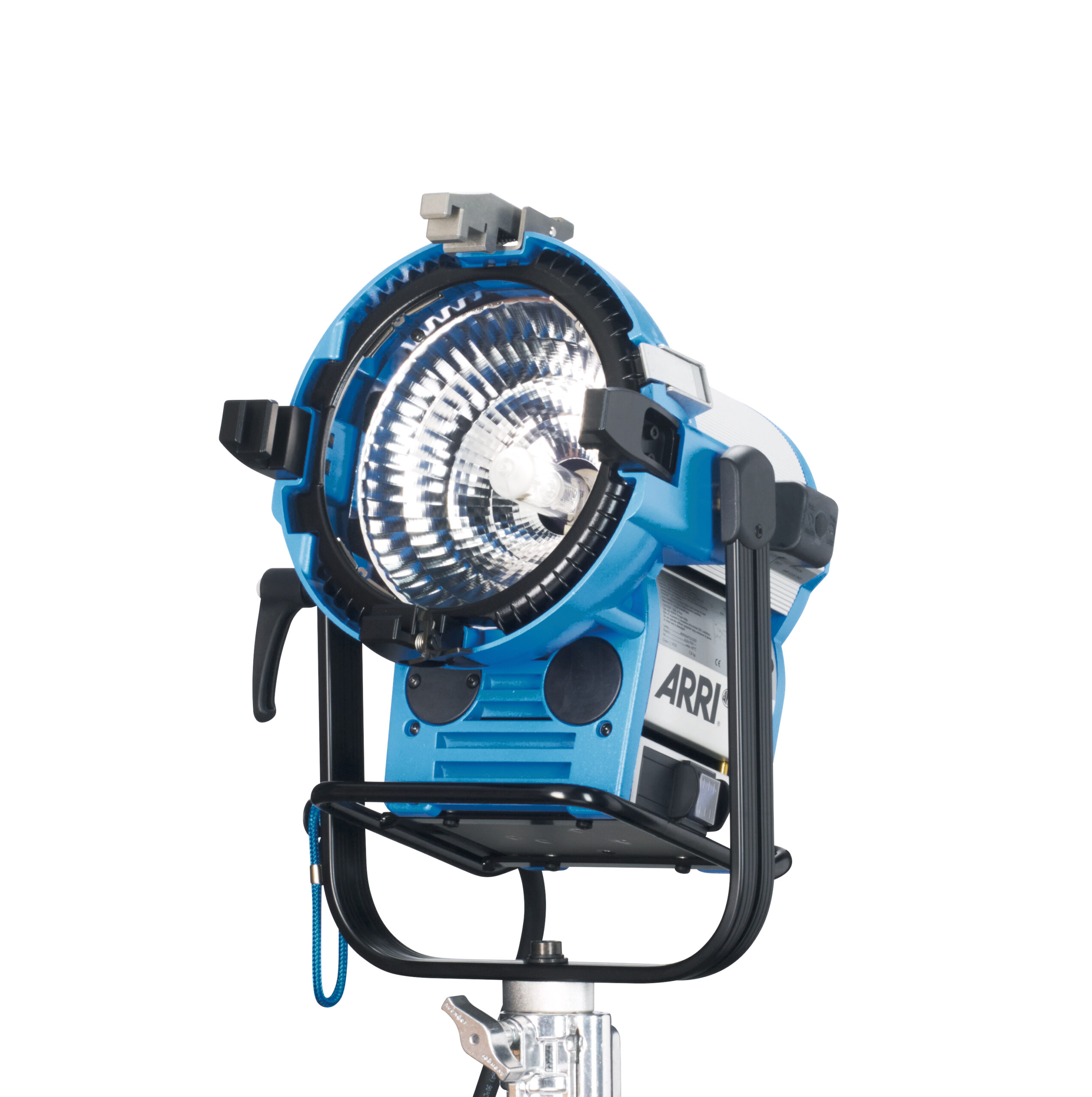
The ARRI M8 is an 800 W single-ended daylight discharge head using ARRI’s faceted MAX reflector. It provides an adjustable hard beam without exchanging PAR spread lenses. It is useful for controlled daylight accents, small window effects, bounce and location work where a conventional discharge system is appropriate.
The complete package requires an approved lamp, compatible electronic ballast and head cable. “Lens-less” describes the absence of beam-spreading converter lenses; the required UV-protection glass and safety enclosure remain essential. The M8 is not a direct-to-mains 800 W incandescent light.
Key specifications
| Specification | Details |
|---|---|
| Lamp class | Only the approved 800 W/SE metal-halide type |
| Lamp base | G22 |
| Optical design | Open-face MAX faceted reflector with required protective glass |
| Focus range | 15–60° |
| Nominal daylight colour | Approximately 5600 K; actual lamp and operating condition govern measured colour |
| Head weight | Approximately 8.4 kg in the July 2025 poster |
| Packed weight | Approximately 10.7 kg |
| Poster dimensions, including flange | 476 × 350 × 319 mm |
| Mount | 28 mm / 1⅛-inch junior spigot |
| Listed ballast options | EB MAX 1.8 or EB 575/800 HS, correctly configured for the M8 |
| Accessory sizes | 230 mm / 245 mm |
| Protection | Class I protective earth; IP23 |
| Maximum ambient / surface temperature | 45°C / 150°C |
| Permitted tilt | Up to 90° upward or downward |
| Clearances in poster | 3.5 m to illuminated surfaces; 0.5 m around the head |
Strengths and limitations
Strengths
- A hard daylight source supports throw, bounce and large diffusion.
- Matched ballast options support production control.
Limitations
- Lamp, reflector or lens and ballast must be specified as a complete system.
- High-speed performance depends on the actual lamp, ballast mode and camera test.
Practical uses
The M8 is the compact end of the M-Series. A hard daylight head of this size can create a small sun direction, pick out an architectural feature, add an edge from a distance or feed a modest bounce. Its focused field is useful when a broad soft panel would spill into too much of a location.
The focus knob changes the field continuously without a separate spread-lens set. That reduces the number of fragile optical accessories needed for a coverage change. It does not make the head a profile projector: barn doors can control spill, but a sharply focused window image requires a different optical or external shaping arrangement.
| Setup | Working approach |
|---|---|
| Window or exterior push | Choose beam coverage and throw before calculating the required circuit and rig. |
| Large diffusion | Meter the useful lit area after diffusion and allow for transmission loss. |
Output and colour
The M-Series poster lists these M8 readings and diameters. They describe the specified discharge head and focus positions, not a softbox or a different lamp wattage. Narrow focus produces more centre intensity by concentrating the field.
| Focus | At 5 m: centre / diameter | At 10 m: centre / diameter |
|---|---|---|
| Spot, 15° | 16,200 lux / 1.3 m | 4,050 lux / 2.6 m |
| Medium, 40° | 3,020 lux / 3.6 m | 755 lux / 7.3 m |
| Flood, 60° | 1,600 lux / 5.8 m | 400 lux / 11.6 m |
Power and batteries
Use the specific approved 800 W lamp. A compatible-looking G22 base alone is not proof that another discharge or tungsten lamp is suitable. Arc position, electrical characteristics, power and UV requirements all matter. Confirm the lamp code, head and ballast compatibility before an operating test.
ARRI lists the EB MAX 1.8 and EB 575/800 HS families for the M8. A multi-wattage ballast still needs the correct operating configuration. The lamp’s nominal operating voltage is separate from the ballast’s mains input; do not connect the head directly to a household outlet or ordinary tungsten dimmer.
The model datasheet identifies compatible international-connector head cables in ARRI’s 575–1800 W family. Use the approved cable and permitted extension arrangement, rather than treating connector similarity as unlimited compatibility. Include the ballast, cable and local supply connector when specifying a rental package.
Control, cooling and camera operation
The M8 can be used in a high-speed system when paired with the suitable ballast and lamp. The head name alone does not identify the operating frequency, available modes or camera result. Check the ballast model, selected frequency, lamp condition and the intended shutter/frame-rate combination.
A discharge system’s ballast adjustment is not the same as LED dimming from zero to one hundred percent. Use the documented ballast range and appropriate scrims or other approved light control when needed. Allow the lamp to reach a stable condition before judging colour and exposure, and avoid making a hot-restrike promise for an unidentified old lamp/ballast combination.
Modifiers, rigging and the working package
The M8 uses the documented 230/245 mm accessory family, including appropriate barn doors, scrims, snoot, spill ring and compatible lightbank hardware. An accessory should fit its intended slot and be positively retained. Check whether the kit has the clear or frosted protective-glass arrangement relevant to the planned beam.
Removing converter lenses is a normal PAR workflow; removing the M8’s required UV-protection glass is not. Inspect that glass and the front-door safety arrangement, and never bypass an interlock. Disconnect the head as instructed and allow cooling before lamp work; ignition voltage and hot discharge lamps require the proper service procedure.
The poster specifies 3.5 m to an illuminated surface and 0.5 m around the head, with a 45°C maximum ambient and 150°C maximum surface temperature. Those are meaningful planning limits for a small location. Keep ventilation clear and follow the actual unit’s label and instructions.
Use support rated for the head, accessories and cable load, plus appropriate secondary retention for overhead use. IP23 is the head’s protection classification; it does not make every ballast, mains plug and cable junction suitable for unrestricted rain exposure. Plan the complete electrical package and weather protection.
Alternatives and related fixtures
Inspect reflector condition, protective glass, lamp holder, door latch/interlock, focus mechanism, yoke, spigot and electrical connectors. Test the ballast and head cable as part of the system after their electrical condition is established. A cheap head without the right ballast, approved lamp or sound cable is not a complete working bargain.
A daylight LED may simplify dimming, battery use and colour stability, while another discharge head may provide more output at a different beam size. Compare complete systems at the required field and throw. The M8’s useful combination is a compact 800 W discharge head, adjustable MAX reflector and existing professional ballast/accessory infrastructure.
| Fixture | Choose it for |
|---|---|
| ARRI M-Series | Compare the exact lamp class, reflector and compatible ballast. |
| High-output LED spotlight | A different power, dimming and modifier system; compare coverage as well as centre lux. |
What people are saying
Mike Wagner: the compact M-Series head
ARRI’s Mike Wagner introduces the 800 W M8 as the smallest M-Series head using MAX reflector technology. This is a manufacturer product explanation rather than a measured comparison. View the source.
Videos
ARRI M8: family guide
A demonstration or system guide; use the exact model’s lamp and ballast documentation.
Rental and used-fixture checks
Check the exact model and revision, complete power package, mounting hardware and control leads. Inspect lamp holders, protective glass and ballast connections. Test the intended operating level, fade and camera settings before rigging.
Documentation and specifications
Official M8 page, M8 datasheet, M8 operating instructions and M-Series technical poster.
Product photograph: ARRI official product photograph.
Browse Arri lights · HMI lights · all equipment.