
Last Updated 1 day ago
Overview
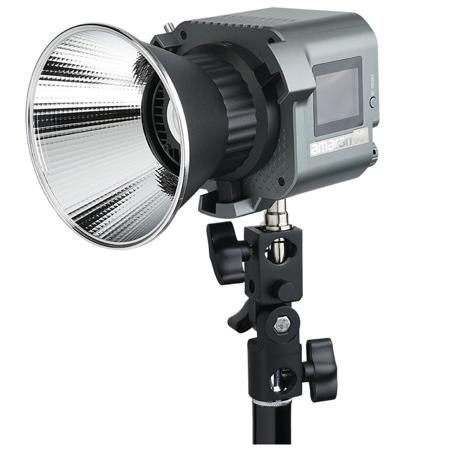
The original amaran COB 60d is a compact daylight-balanced Bowens-mount COB for interviews, small studios and portable production kits. It uses onboard controls, Sidus Link and a separate power supply.
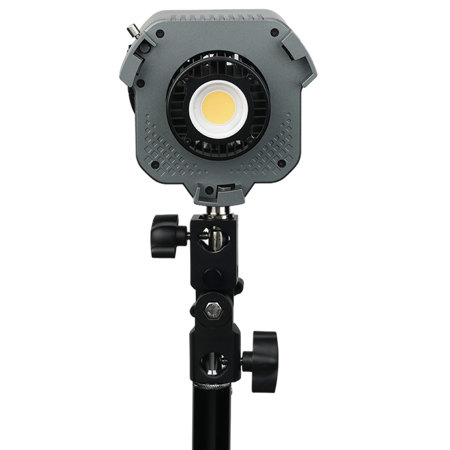
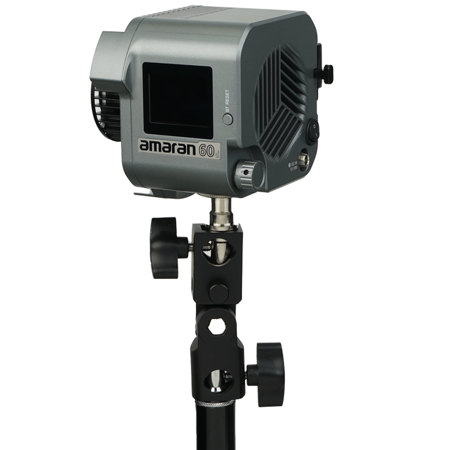
Product photographs: amaran / original product archive. Select an image to view it at full size.
This entry covers the original COB 60d, before the S-series light-engine update. The later COB 60d S has different colour-quality and photometric specifications; the two generations should be identified from the label before comparing a used kit.
Key specifications
| Specification | Details |
|---|---|
| Generation | Original, before the S update |
| Light type | Daylight COB |
| CCT | 5,600K |
| Maximum consumption in original manual | 76W |
| Fixture input | 19V DC |
| AC adapter supply | 100–240V, 50/60Hz |
| Accessory interface | Bowens |
| CRI / TLCI in original manual | 96+ / 96+ |
| Dimming | 0–100% onboard; Sidus Link control |
| Controls | Onboard and Bluetooth Sidus Link |
| Cooling | Active |
| Dimensions in original manual | 117 × 111 × 111mm |
Strengths and limitations
Strengths
- Small head and a familiar Bowens accessory interface.
- Onboard dimming and Bluetooth app control.
- Simple fixed-daylight operation suits a controlled studio.
Limitations
- Original chipset; later S-series colour specifications do not apply.
- Plastic body and mounting parts need inspection on a used fixture.
- Active cooling, no built-in CRMX and no listed direct DMX control.
Practical uses
| Setup | Working approach |
|---|---|
| Budget interview | Fit a lightweight compatible softbox and bring it close enough for the required softness. Listen to the warmed-up fan from the microphone position before committing to a quiet dialogue setup. |
| Bounce or fill | Aim into a nearby white surface and assess the usable illuminated area. Reflector centre readings can overstate what remains after creating a broad source. |
| Existing-kit match | Compare the original head with the other fixtures on the production camera. Record model generation and CCT rather than treating a new S-series setting as a guaranteed match. |
Output and colour
The following are original-generation manual readings. Keep the supplied reflector, CCT and distance attached to the result. They should not be replaced with later S-series data even when the fixture body and accessory names look similar.
| Original manual configuration | 1m | 3m | 5m |
|---|---|---|---|
| Bare at 5,600K | 3,310 lux | 379 lux | 145 lux |
| Original reflector at 5,600K | 45,100 lux | 4,720 lux | 1,664 lux |
CRI, TLCI and SSI describe different aspects of colour reproduction. A high CRI value does not establish a perfect match to daylight, tungsten or another LED. Compare important skin tones, wardrobe and product colours on the camera used for the job.
Power and batteries
The original manual specifies 76W consumption and 19V DC at the light. Use the matching supply and inspect its label and connectors. The external adapter accepts the documented 100–240V AC range.
The compact 60-series package supports the specified battery plate and battery-handle arrangement. Batteries are separate items, and the voltage, polarity and current rating must suit the light.
Control, cooling and camera operation
The rear control provides local intensity adjustment. Sidus Link uses Bluetooth for remote control and documented effects. Test pairing on a used head before it is placed somewhere inaccessible.
Run the fan and output at the intended settings long enough to reach normal operating temperature. Test the camera’s frame rate, shutter and dimming range. A Bluetooth app connection does not add a built-in CRMX receiver or a direct console patch.
Modifiers, rigging and the working package
The original 60d/60x manual limits the Bowens accessory load to 2.5kg and names lightweight modifiers. Treat that limit as a maximum, not a recommendation to hang any long or unbalanced optic from the small body.
Keep the correct reflector with the head and identify it in photometric comparisons. Remove the protective transport cap before powering up, support the external adapter independently and leave slack for tilting without stressing the DC connector.
Alternatives and related fixtures
| Fixture | Choose it for |
|---|---|
| amaran COB 60d S | The revised chipset generation; compare spectral quality and the exact accessory package. |
| amaran 150c | A full-colour alternative for RGB effects and tint adjustment. |
| amaran P60x | A compact bi-colour panel when a fitted diffuse source is more useful. |
What people are saying
Graham Sheldon’s original COB 60d/60x field review. Sheldon discusses portability, the concentrated reflector beam, plastic construction and mounting hardware. These are the original heads, before the S-series chipset revision.
Videos
Original COB 60d and 60x: Caleb Pike’s review
Original-generation comparison, lighting demo and handling observations.
Rental and used-fixture checks
- Confirm the exact model and generation on the label, then compare the included supply, cables and accessories with the matching manual.
- Inspect the emitting face, housing, connector pins, mounting threads and locks. Test every supplied modifier and make sure the release mechanism fully engages.
- Run the light at the intended output until it reaches normal operating temperature. Check for flicker, unexpected shutdown, uneven emitters and unusual fan noise.
- Test white light and every available colour mode; check low-level dimming, blackout and the camera/shutter combination used for the job.
Documentation and specifications
Browse amaran lights or search the equipment directory.