
Last Updated 1 day ago
Overview
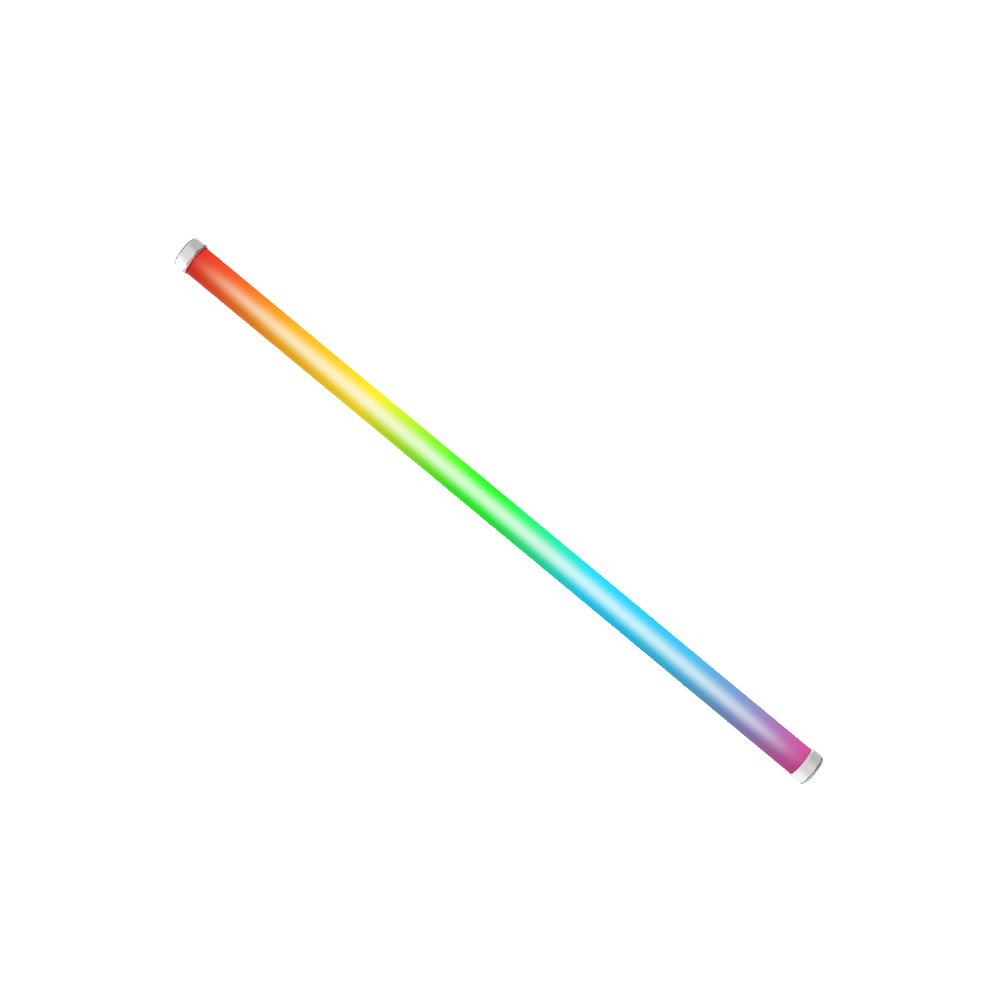
The amaran PT4c is a 4-foot rechargeable RGBWW pixel tube with 16 independently controlled zones. It supports solid colour, adjustable white and moving pixel effects for visible practicals, backgrounds and close accents.


Product photographs: amaran. Select an image to view it at full size.
The PT4c uses an internal 77Wh battery and USB-C charging rather than the detachable grip of the T-series. The emitting length and number of zones affect both the visible graphic pattern and the reflection it creates.
Key specifications
| Specification | Details |
|---|---|
| Length / diameter | 1200 × 42mm |
| LED output / maximum draw | 23W / 32W |
| Pixel zones | 16 |
| CCT | 2,700–10,000K |
| Colour | RGBWW |
| CRI / TLCI at 5,600K | 95 / 98 |
| SSI P3200 / D56 | 85 / 75 |
| Battery | 77Wh |
| Full-output runtime | About 170 minutes |
| Weight | 1375g |
| Beam | 180° |
| Protection | IP20 |
| Cooling | Passive |
| Control | Onboard, Sidus Link; DMX via optional powered USB-C adapter |
Strengths and limitations
Strengths
- 16 addressable zones create spatial effects within one tube.
- Internal power avoids a protruding T-series battery grip.
- Passive cooling is useful beside microphones.
Limitations
- IP20 means an indoor fixture, not a rain-rated tube.
- Pixel effects divide the available emitting length; they do not raise whole-fixture output.
- The internal battery requires a charge or suitable external supply during longer use.
Practical uses
| Setup | Working approach |
|---|---|
| Visible pixel practical | Choose effect direction and speed for the composition, then expose the bright surface to retain colour. A photographed rainbow is a different requirement from lighting skin with the same tube. |
| Hidden rim | Place the tube close to the edge of a subject and use a solid colour or white mode. Watch the narrow reflected line in hair, glasses and glossy costumes. |
| Product reflection | Choose horizontal or vertical placement to create the intended strip reflection. For a smooth highlight, use a static colour and check whether individual zones or diffuser variations are visible in the object. |
Output and colour
The figures describe the whole tube emitting white, not a single moving pixel. A chase with only one lit region produces a different total field. At close distances, the long source also behaves differently from a single COB or reflector.
| 5,600K, no accessory | 0.5m | 1m |
|---|---|---|
| Published illuminance | 956 lux | 332 lux |
CRI, TLCI and SSI describe different aspects of colour reproduction. A high CRI value does not establish a perfect match to daylight, tungsten or another LED. Compare important skin tones, wardrobe and product colours on the camera used for the job.
Power and batteries
The battery capacity is 77Wh and the manufacturer quotes about 170 minutes at full intensity under its test conditions. The longer PT models use an internal battery rather than a field-swappable grip.
USB-C supplies charging and, with the appropriate adapter arrangement, external operation during DMX control. Use the specified supply and account for cable strain. A long, low-current USB lead can be a different package from the rated charging source.
Control, cooling and camera operation
Local buttons and the TFT display provide CCT, colour and effect selection, while Sidus Link controls the Bluetooth connection. Map the 16 zones in the correct orientation so that a programmed chase travels in the intended direction.
For wired control, use the amaran USB-C to DMX Adapter with USB-C Input and the correct profile. The adapter is optional on a single tube and is included in some production kits. There is no built-in CRMX receiver in the listed specifications.
Modifiers, rigging and the working package
The integrated diffuser and optional size-matched fabric grid determine the visible beam. A grid reduces spill and useful output; check the face-on appearance if the tube remains in the frame.
Use the model’s magnetic mounting hardware and 3/8-inch threaded rigging points as described in the manual. Protect the plastic tube during transport and provide appropriate secondary retention overhead. Keep the charging connector reachable when the battery will not last the whole session.
Alternatives and related fixtures
| Fixture | Choose it for |
|---|---|
| amaran T2c | A brighter single-zone tube format with a detachable battery handle. |
| Aputure MT Pro | A short professional pixel tube with a different radio-control package. |
| Godox KNOWLED TP2R | A production tube to compare for console control, mounting and pixel workflows. |
What people are saying
Curtis Judd’s pixel-tube review. Judd measured near-three-hour runtimes on the longer models and discussed handling and battery indication. The small PT1c has a different battery and runtime.
Videos
PT1c, PT2c and PT4c: official user guide
Manufacturer guide to pixel control, power and accessories.
Rental and used-fixture checks
- Confirm the exact model and generation on the label, then compare the included supply, cables and accessories with the matching manual.
- Inspect the emitting face, housing, connector pins, mounting threads and locks. Test every supplied modifier and make sure the release mechanism fully engages.
- Run the light at the intended output until it reaches normal operating temperature. Check for flicker, unexpected shutdown, uneven emitters and unusual fan noise.
- Test white light and every available colour mode; check low-level dimming, blackout and the camera/shutter combination used for the job.
- Test the battery under load rather than accepting a full-charge indicator as proof of capacity. Include the correct charger, cable and any removable grip in the handover.
Documentation and specifications
- Official model information
- Manufacturer kit contents and accessories
- Pixel tube specifications and photometrics
- Wired DMX operation
- Manufacturer product manual
Browse amaran lights or search the equipment directory.