
Last Updated 2 hours ago
Overview
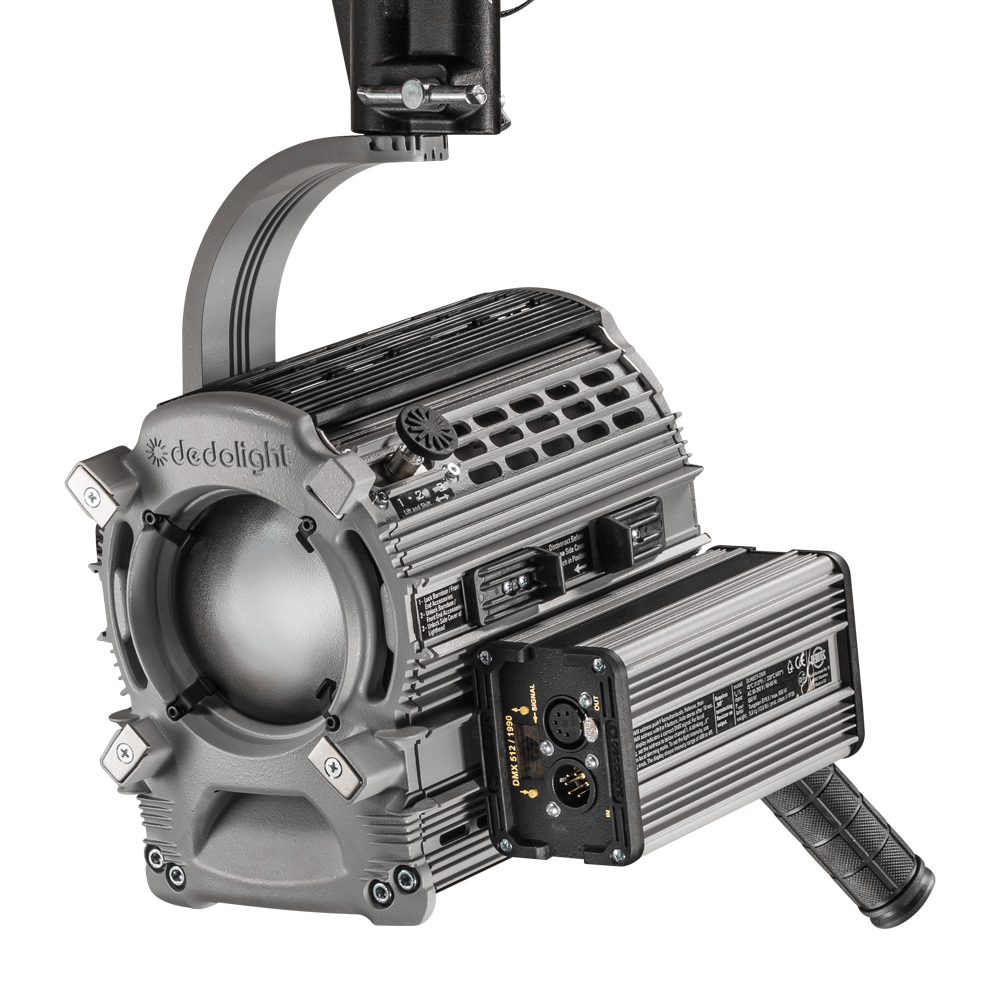
The Dedolight DLH652T-DMX is a tungsten-halogen focusing fixture with integrated manual and DMX dimming. It accepts approved 300W, 500W or 650W lamps and uses A-size optical accessories.
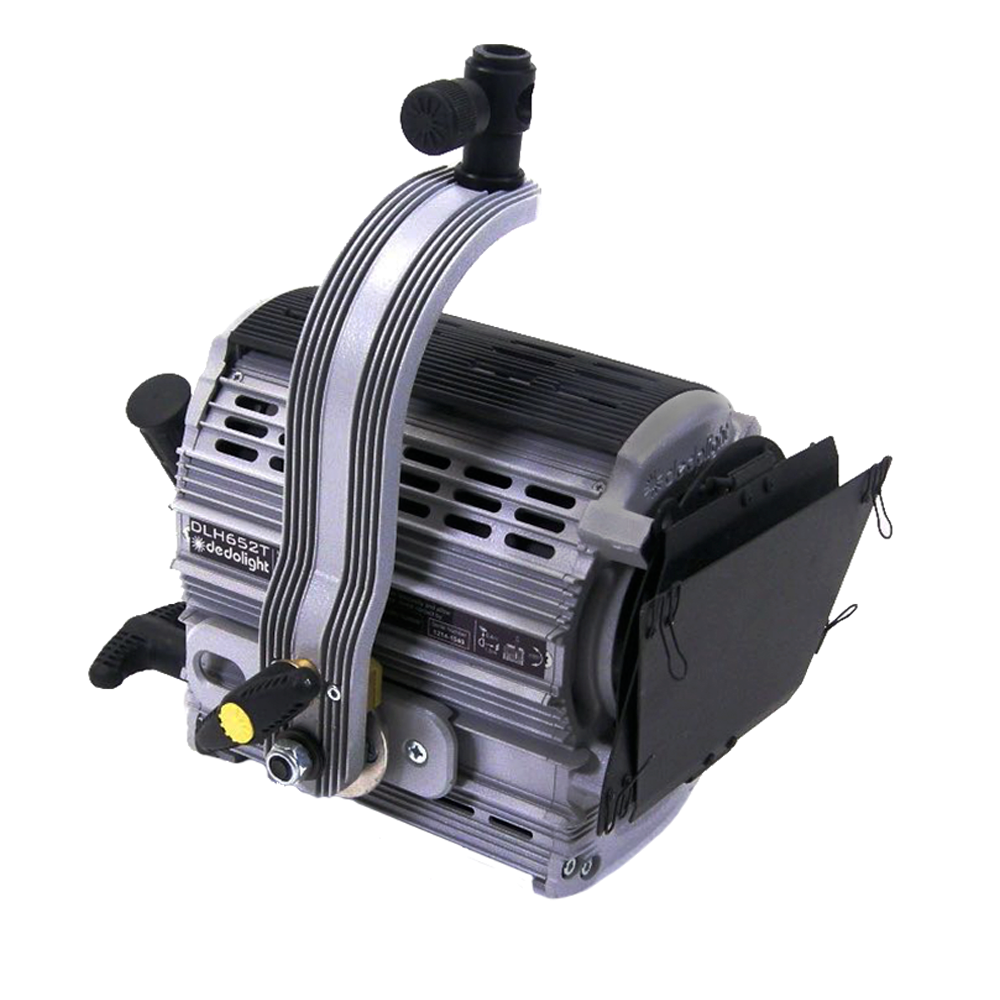
Product views: Dedolight California. Select an image to enlarge.
The non-DMX DLH652T is a different direct-mains version needing a suitable external dimmer for electrical level control. This entry covers the integrated-DMX head. Neither is a bare low-voltage DLH4 needing a separate Dedo transformer. The integrated-DMX model must be fed as specified; the distributor explicitly excludes dimming it through an external mains dimmer.
Key specifications
| Specification | Details |
|---|---|
| Source | Tungsten-halogen with aspheric focusing optics |
| Power reference | Up to 650W; approved 300/500/650W lamps |
| Colour / white-light range | Lamp and voltage dependent; electrical dimming warms the light |
| Native beam | 8–56° |
| Optical accessory family | A |
| Cooling | Passive; hot tungsten fixture |
| Weight reference | Approx. 11.7lb DMX head; excludes the complete rig |
| Control | Integrated manual and 5-pin DMX dimming |
| Working package | Head, fitted optics, support, appropriate power electronics and cables; battery/AC accessories depend on configuration |
Strengths and limitations
Strengths
- Continuous tungsten light with integrated DMX.
- Approved lamp choices and larger-format optics.
Limitations
- Heat, lamp wear and warmer colour when dimmed.
- Larger head and front optics increase leverage.
Practical uses
| Setup | Working approach |
|---|---|
| Warm key | Choose the approved lamp and focus to the working area; scrim to retain colour. |
| Tungsten projection | Use the specified DP400 optics and support the front load. |
| Reflected accent | Keep hot parts clear while aiming the approved A-size beam attachment. |
Set the head position for the direction and shadow first, then choose focus and accessories for coverage. A sharp gobo or precisely shuttered image needs imaging optics; closing barn doors around a small spot does not create the same optical result.
Output and colour
Electrical dimming lowers filament temperature and warms the light. Use scrims or a suitable lower-output lamp when retaining operating colour matters more than a remote fade. Lamp voltage must match the documented supply arrangement; a broad controller-input claim does not make any installed lamp universal-voltage.
For a useful comparison, record colour setting or lamp, dimming level, optic, focus position, distance and illuminated area. Measure after diffusion or reflection when that is the working setup. Wattage, centre intensity and coverage describe different parts of the result.
Power and batteries
Match the lamp’s code, voltage and maximum wattage to the exact fixture. The DLHM4-300 contains a transformer for approved 24V lamps, while the DLH652T-DMX uses its documented mains-powered lamp/dimmer arrangement. These are different electrical systems.
Check the actual mains-input label before using a region-specific head. Keep ventilation clear, allow the lamp and housing to cool before service, and use the approved procedure for relamping. The head, cable and front accessories all contribute to the working package.
Control, cooling and camera operation
| Control path | Operating notes |
|---|---|
| Local | Manual dimming on the integrated electronics, with mechanical beam focus. |
| DMX | Included on DLH652T-DMX; DLHM4-300 requires the separate DMX variant for onboard console control. |
| Colour/camera | Electrical dimming warms tungsten. Check camera exposure and colour at the intended setting; use compatible scrims when preserving operating colour matters. |
Cooling reference for this head: Passive; hot tungsten fixture. Listen to the complete working package, including its controller or ballast, rather than checking only the head.
Modifiers, rigging and the working package
| Item | Compatibility and working notes |
|---|---|
| Accessory family | A-size; confirm the exact lamphead and accessory compatibility. |
| Projection | DP400-family system with the selected lens and shutter/gobo/iris module. |
| Beam control | Correct DBD400-class barn doors and approved wide-angle or parallel-beam attachment. |
| Soft light | Correct speedring and softbox; include front weight and clearance in the support plan. |
Aspheric focusing optics are different from a conventional Fresnel. Check the actual accessory’s compatibility list, locking method and lens choice. A brand name or similar front diameter is not enough to establish fit.
Fit the intended front accessory before choosing the stand position. Check tilt clearance, balance, cable movement and independent support for any external electronics. Use the documented mounting hardware and appropriate secondary retention for the installation.
Alternatives and related fixtures
| Fixture | Reason to compare |
|---|---|
| Dedolight DLHM4-300 | Self-contained mains package with manual dimming. Up to 150W at 24V with approved lamps; M-size optical system. |
| Dedolight DLH400DT | Precise focus and substantial projection ecosystem. 400/575W approved lamp and ballast configurations; A-size optical system. |
| Dedolight DLED10-BI | Tunable white in the larger A-size optical system. 220W light-engine class; published maximum power 245W; A-size optical system. |
Classic Dedolight DLH4: the original low-voltage tungsten alternative with a separate supply. Compare the full power and accessory package, rather than the bare-head price.
What people are saying
Manufacturer and distributor demonstrations
Dedolight’s explanation of parallel-beam intensifiers and reflected light. This is an optical-system demonstration with other heads, rather than a DLH652T-DMX operating guide. View the demonstration.
Videos
Dedolight’s explanation of parallel-beam intensifiers and reflected light. This is an optical-system demonstration with other heads, rather than a DLH652T-DMX operating guide.
Watch the demonstration on Vimeo.
Rental and used-fixture checks
- Verify lamp code, wattage and unit input label.
- Check the lamp socket, protective optics, focus mechanism and hot housing for damage.
- Run the dimmer through its range and inspect cable insulation and accessory retention.
Confirm availability of service and replacement parts with the relevant supplier before buying older equipment. Check the actual kit contents against the shot: a missing controller, imager, lens or cable can matter more than a low head-only price.
Documentation and specifications
- Dedolight California: Dedolight DLH652T-DMX product and package information
- Dedolight manuals, technical sheets and photometric documents
- Dedolight imaging systems and optical size families
- Dedolight manufacturer and dealer contacts
Product photographs: Dedolight California. Published specifications describe the referenced configuration; check the markings and instructions of the actual head, controller and fitted accessories.
Browse Dedolight lights · tungsten lights · all equipment.