
Last Updated 3 hours ago
Overview
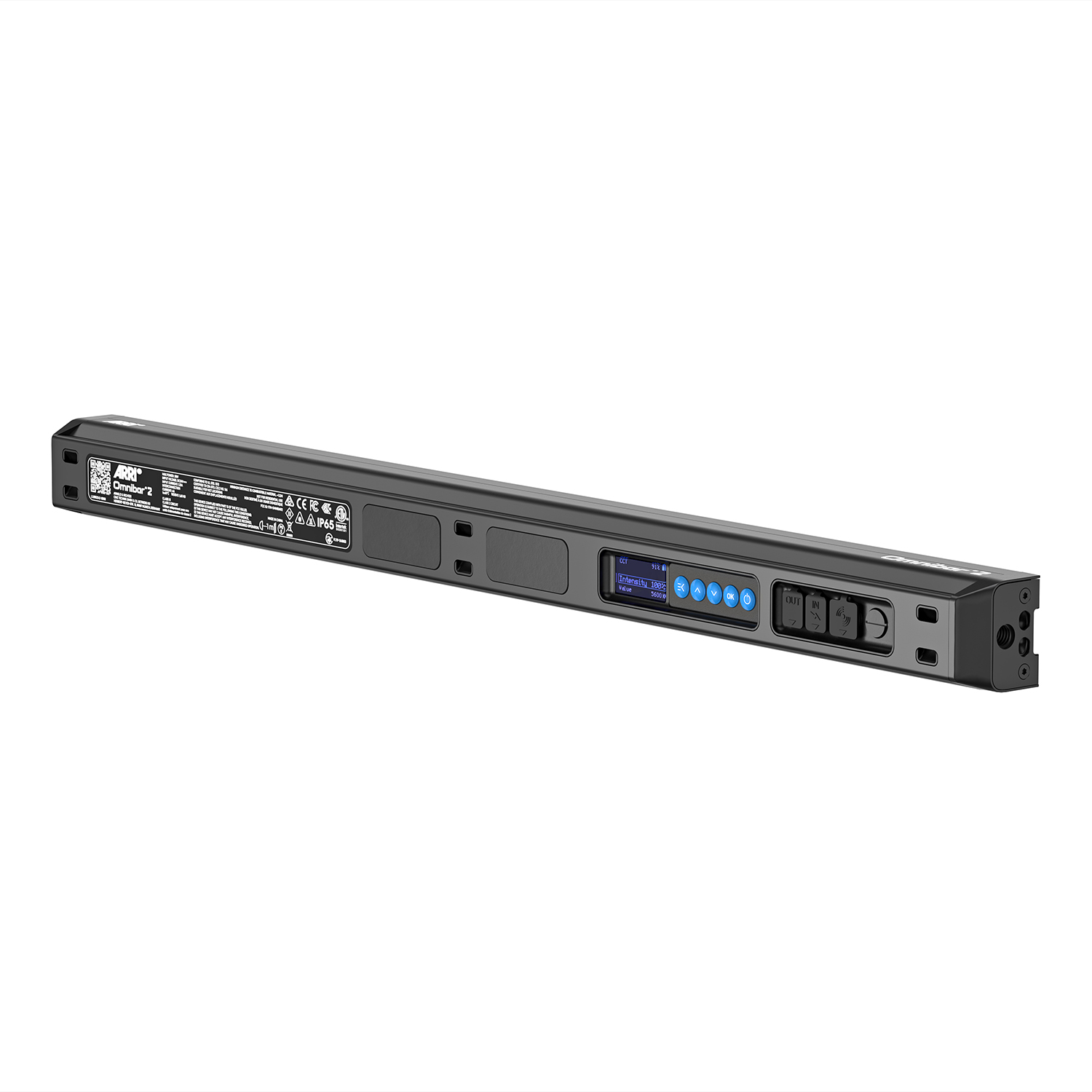


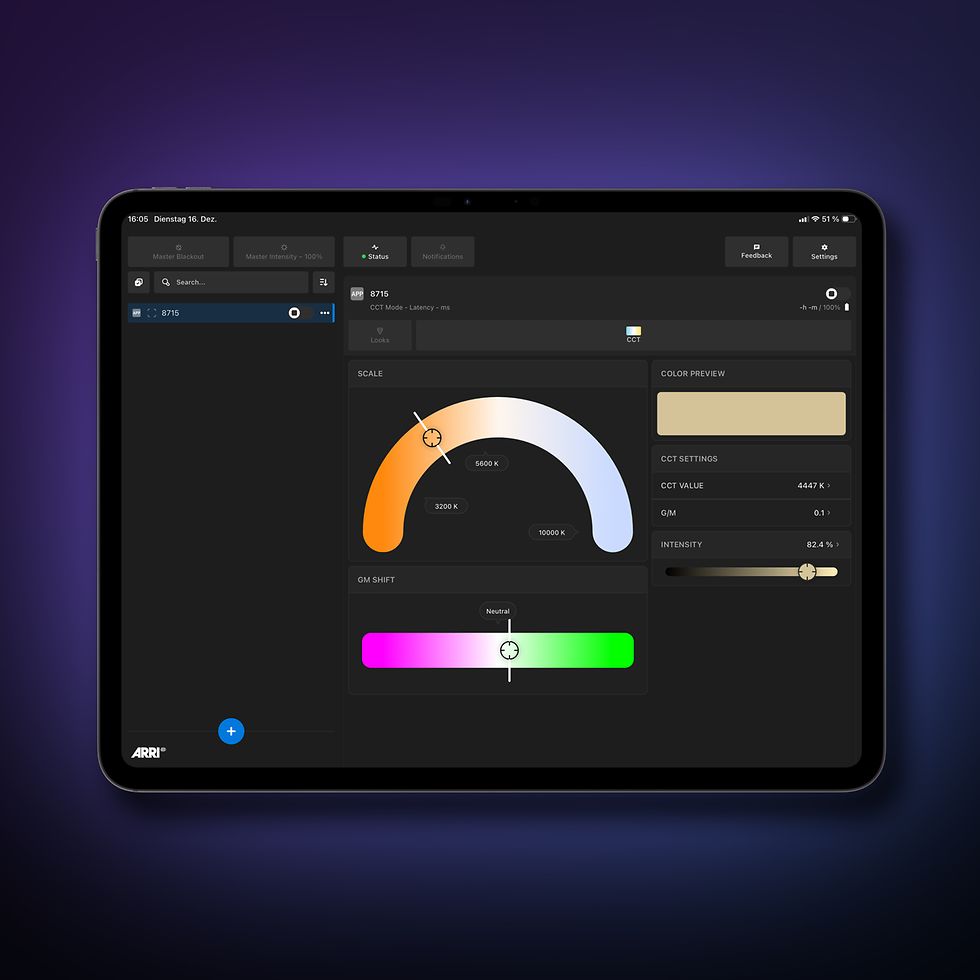
The ARRI Omnibar 2 is a 2ft-class battery-powered LED bar with 16 pixel zones, a 49Wh internal battery and magnetically swappable front optics. Its RGBMA engine provides adjustable white light and full-colour effects. The flat bar body, end connections and dedicated rigging system make it useful as a hidden source, a visible design element or part of a larger pixel array.
This is the shorter bar. Pick it when a four-footer will not fit in frame or behind a practical; use the Output Calculator to compare the published readings for different optics.
- RGBMA LED Bar 2 ft class; 16 pixel zones and interchangeable magnetic optics.
- 25 W Nominal 49 Wh internal battery; approximately 2 hours at full brightness. Separate 24 V DC supply; runtime varies with settings.
- Colour Temperature1700–20,000 K Continuously adjustable white light with green–magenta correction.
- Weight 1.3 kg Without Optics. 2 magnetic mounting points; dedicated Omnigrip / Omnipin 16 mm pin options. Add optics, rigging and cable weight.
- Beam Control 115° open face; 145° Round Diffuser, 130° Flat Diffuser or 60° Intensifier. Choose the optic for coverage and centre output.
- IP RatingIP65 Fixture. Dust-tight and protected against water jets under test conditions, not submersible. Follow connection and operating requirements. What IP65 Means.
Key Specifications
| Specification | Details |
|---|---|
| Fixture / light engine | 2ft-class modular linear LED; five-colour RGBMA (red, green, blue, mint, amber) |
| Nominal consumption | 25W |
| Pixel zones | 16 |
| White range / tint | 1,700–20,000K; continuous green–magenta adjustment |
| Modes | CCT, HSI, RGBMA, xy, gels, cinema and pixel effects |
| Interchangeable optics | 115° open face; 145° Round Diffuser; 130° Flat Diffuser; 60° Intensifier |
| Internal battery | 49Wh; manufacturer runtime about 2 hours at maximum brightness, up to 24 hours at lower levels |
| Nominal charging time | 2 hours |
| DC supply / connection | 24V DC; published supply reference 2.1A; 5.5 × 2.1mm barrel in and through |
| Wireless control | Bluetooth Mesh / Omnibar Control app; internal LumenRadio CRMX |
| Wired control | DMX, Art-Net and sACN through the separate Omnibase and compatible power/data cables |
| Bare-fixture dimensions | 609 × 44.6 × 40mm; optics excluded |
| Bare-fixture weight | 1.3kg; optics and rigging excluded |
| Mounting | 2 built-in magnetic connection points; dedicated clip/grip, pin, tie and eyebolt options |
| Protection / ambient | IP65; 0–40°C normal operation; 0–25°C in Boost |
| Manufacturer colour ratings | High Color Rendition mode at 3,200–5,600K: average CRI >98, TLCI >98, TM-30 >93 |
Output Calculator
Select the published setup and a manufacturer distance, or enter a custom throw where supported. The results describe centre-beam output, not the brightness across the whole beam.
Camera Settings
If the calculator does not load, use the published photometric table or source on this page. JavaScript is required.
F-stop is a planning estimate, not a meter reading. It uses direct, on-axis illuminance and includes only the optics and diffusion named in the selected setup. Meter on set to account for lens transmission, filters, added diffusion, bounce, dimming and ambient light.
How the exposure estimate works
N = √(E × ISO × t / C), where E is illuminance in lux and t = shutter angle ÷ (360 × fps). The default C = 340 is a dome reference; C = 250 is a flat reference. These are calibration constants, not a measured T-stop. A small nonzero digit is tenths of a stop above the displayed full stop.
Distance estimates and comparisons
Published points are used as given. Between published points the calculator fits a curve through the two nearest readings. Outside those points it uses the inverse-square law only when the fixture’s dataset permits it. Distances outside a configuration’s supported range are reported separately. Comparisons use one shared distance and camera setup; equal lux does not imply equal coverage.
View published readings for the selected configuration
Technical reference: ARRI specifications.
Strengths and Limitations
- Strengths: internal battery, integrated CRMX, swappable optics and a mounting system designed for single bars and connected arrays.
- Trade-offs: a 2ft narrow aperture creates a different key and reflection from a broad soft panel; wired control and multi-bar power require the correct additional hardware.
- Choose it for: fast concealed lighting, controlled line reflections or visible pixel effects where a battery bar saves cable and rigging time.
Practical Uses
| Setup | Working approach |
|---|---|
| Small concealed source | The shorter body fits where a four-foot tube is awkward, including tight set details and small product rigs. Keep the control and charging end reachable after the bar is installed. |
| Visible pixel effects | Use the 16 zones for a chase or changing colour pattern. Record the mounting direction and pixel order so effects travel the intended way across a multi-bar rig. |
| Close key or strip reflection | Use the Round Diffuser or a compatible soft-light modifier close to the subject. The long, narrow source creates a different reflection and shadow pattern from a broad panel. |
Output and Colour
ARRI’s Omnibar photometric chart lists these illuminance values at 5,600K. They are manufacturer measurements for this exact length and optic, not figures borrowed from the other Omnibar size.

| 5,600K configuration | 1m | 3m | 5m |
|---|---|---|---|
| Open face, 115° | 784 lux | 96 lux | 34 lux |
| Round Diffuser, 145° | 473 lux | 56 lux | 20 lux |
| Flat Diffuser, 130° | 419 lux | 50 lux | 18 lux |
| Intensifier, 60° | 834 lux | 105 lux | 38 lux |
The Intensifier narrows the field; the Round Diffuser spreads the light more widely. Its lower centre reading is part of that broader distribution, not a measurement of total light by itself. Open face is a separate optical configuration with a more exposed LED appearance.
The RGBMA engine differs from the RGBW engine in SkyPanel Classic and Pro and the RGBACL engine in Orbiter and SkyPanel X. Match the bars through the production camera and working modifier; a shared Kelvin setting does not establish an identical spectrum.
Power and Batteries
The internal battery is 49Wh. ARRI’s approximately two-hour full-brightness runtime and “up to 24 hours” reduced-output runtime refer to different brightness conditions. Nominal recharge time is 2 hours; check runtime at the required CCT, effect, brightness and battery condition before a long take.
The universal 100–240V AC charger is intended for one bar. ARRI’s FAQ explicitly excludes using that single-fixture charger for daisy-chaining. Use Omnibase and the prescribed power/data wiring for a powered multi-bar system.
Omnibase supports up to six Omnibar 4s, twelve Omnibar 2s, or a mixed total length of 24ft. Ports 1–2 each allow up to 12ft; ports 3–6 each allow up to 6ft, while the overall 24ft limit still applies. These are different per-port and whole-system limits.
The battery is service-replaceable through rental houses and authorized service partners. A replaceable internal battery is not the same as a hot-swappable V-mount slot. Include battery condition and the charging plan in a used purchase or rental order.
Control, Cooling and Camera Operation
| Control route | Hardware and operating detail |
|---|---|
| Onboard / app | Use the local controls or dedicated Omnibar Control app. Bluetooth Mesh relays commands between compatible bars. |
| CRMX | The integrated receiver accepts supported wireless DMX. Confirm pairing, universe and personality before the bar is hidden or hung. |
| Wired DMX / network | Omnibase provides the wired DMX / Art-Net / sACN workflow through the compatible power/data connections. The bar itself has no conventional 5-pin XLR socket. |
| Pixel control | This model has 16 zones. Match console personality, channel footprint and pixel orientation to the fixture’s configuration. |
Normal ambient range is 0–40°C; Boost has the lower 0–25°C range. Set the intended output mode before exposure and runtime tests. Confirm dimming and pixel effects at the production shutter and frame rate, including low-level fades.
Modifiers, Rigging and the Working Package
| Accessory / interface | Use |
|---|---|
| Round Diffuser | A wider, tube-like emitting surface; 145° manufacturer beam. |
| Flat Diffuser | A flat emitting face for line effects and more defined panel-style reflections; 130°. |
| Intensifier | A narrower 60° beam for more directional illumination. |
| Omnigrip / Omnipin | Dedicated mounting system with a 16mm pin option; also used for bar-to-bar connections. |
| Magnets / clips / eyebolts | Select the proper fitting for the surface and orientation; provide independent retention where required. |
Bare weight is 1.3kg before optics, grip fittings and cables. The integrated magnets are useful mounting points, but the surface condition, geometry and load direction determine their practical hold. Use an appropriate safety attachment for suspended work. IP65 applies to the fixture in its prescribed configuration; it does not automatically weather-rate a separate power supply or connection.
Alternatives and Related Fixtures
| Fixture | Why compare it |
|---|---|
| Omnibar 4 | The other length in the same system changes aperture, pixel count, battery capacity and working footprint. |
| ARRI SkyPanel S30-C | A broader soft panel for a key or fill when a narrow bar is the wrong source shape. |
| ARRI Orbiter | A point source with interchangeable optics for a directional beam or a larger external softbox. |
| ARRI Omnibar 4 | The four-foot version has 32 zones and a longer emitting aperture; choose it for extended line reflections or larger pixel arrays. |
What People Are Saying
Field Feedback at a Glance
The review below includes hands-on use of the short Omnibar 2. Allard’s detailed measurements used the longer Omnibar 4 and are not the 2’s output figures.
What worked
- Matthew Allard’s Newsshooter review shows an Omnibar 2 alone through a Caligri Airtube Switch 60/2ft XL. Allard found it useful as a close interview key in a partly controlled room.
- Allard liked the mounting options after using the bars, including the adjustable Omnigrip. Gaffer Danny Durr also highlighted rigging in ARRI’s published user feedback; that second account was selected by the manufacturer.
- Cinematographer Benjamin-Martyn Wheeler highlights the straightforward interface in ARRI’s published feedback. This is a family-level user observation, not a test of light output.
Drawbacks to plan for
- Allard found the 2 had less output than the 4, limiting where the short bar could work as a key. Meter the 2 through your chosen modifier rather than borrowing the 4’s readings.
- Matthew Allard’s Newsshooter review lists 1.3 kg for the 2 before rigging accessories and notes that several other short tube-style fixtures are lighter. Include the grip and modifier in the supported load.
- Allard notes that USB-C cannot directly power the Omnibar. Prep the correct DC cable or supplied charger; do not assume a common USB-C supply can replace it.
Videos
ARRI Omnibar: The Guided Tour. Manufacturer demonstration of the two lengths, optics, mounting and control.
ARRI Tech Talk: Omnibar. A longer manufacturer discussion of the linear lighting system.
Rental and Used-fixture Checks
- Confirm the actual 2ft model, included optics and whether the order is a bare fixture, individual set or multi-bar kit.
- Charge fully and test the needed working brightness, including battery condition after sustained operation.
- Inspect the barrel connectors, optical retainers, clip fittings and safety points; verify each intended mounting surface.
- Check firmware, app connection, CRMX pairing, DMX personality and pixel orientation before installing the bars.
- For wired multi-bar operation, confirm Omnibase, compatible power/data cables, per-port load and the overall length limit.
Documentation and Specifications
- ARRI Omnibar product overview
- ARRI Omnibar technical data and downloads
- ARRI Omnibar photometric chart
- ARRI Omnibar FAQ, power and control limits
Browse ARRI lights · LED tubes and bars · all equipment.