
Last Updated 1 day ago
Overview
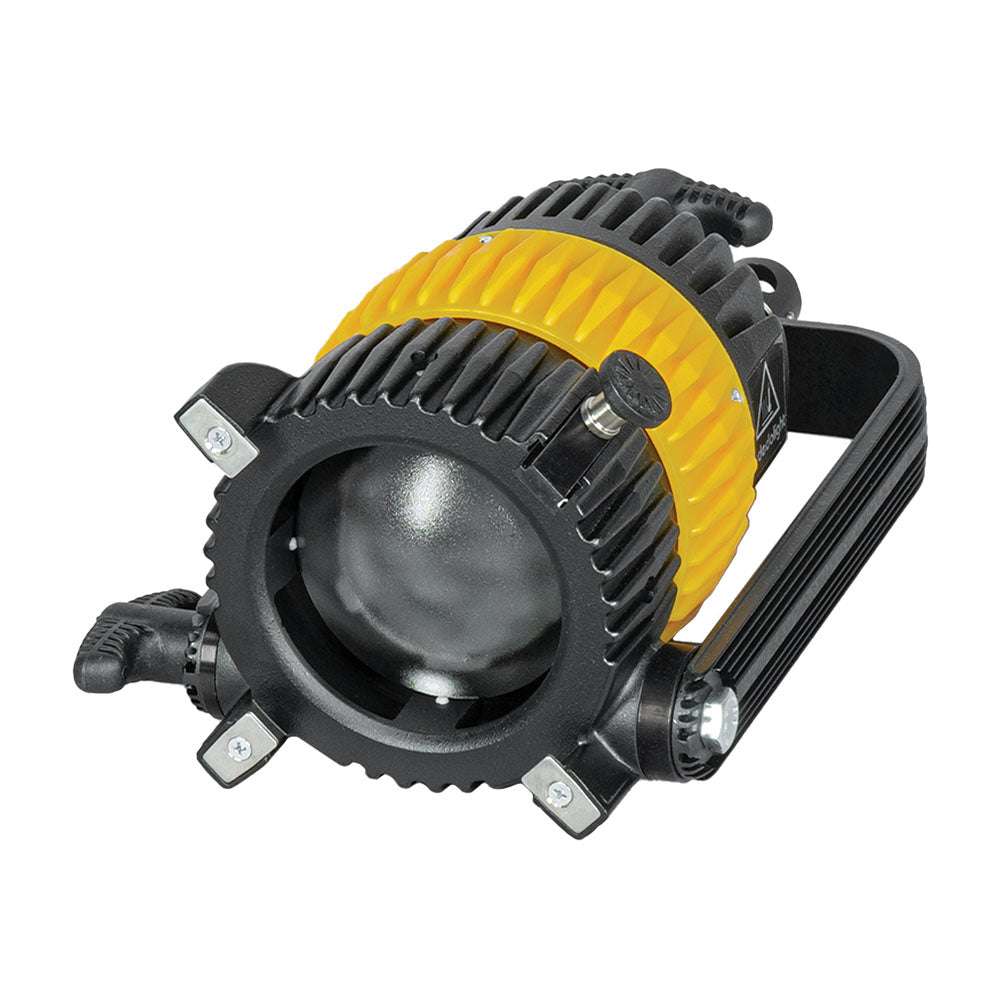
The Dedolight DLED9N-BI is a larger-format 80W-class bi-colour NEO spotlight. Its larger lens and A-size accessories distinguish it from the compact DLED7N, despite the same head power in the current California listing.
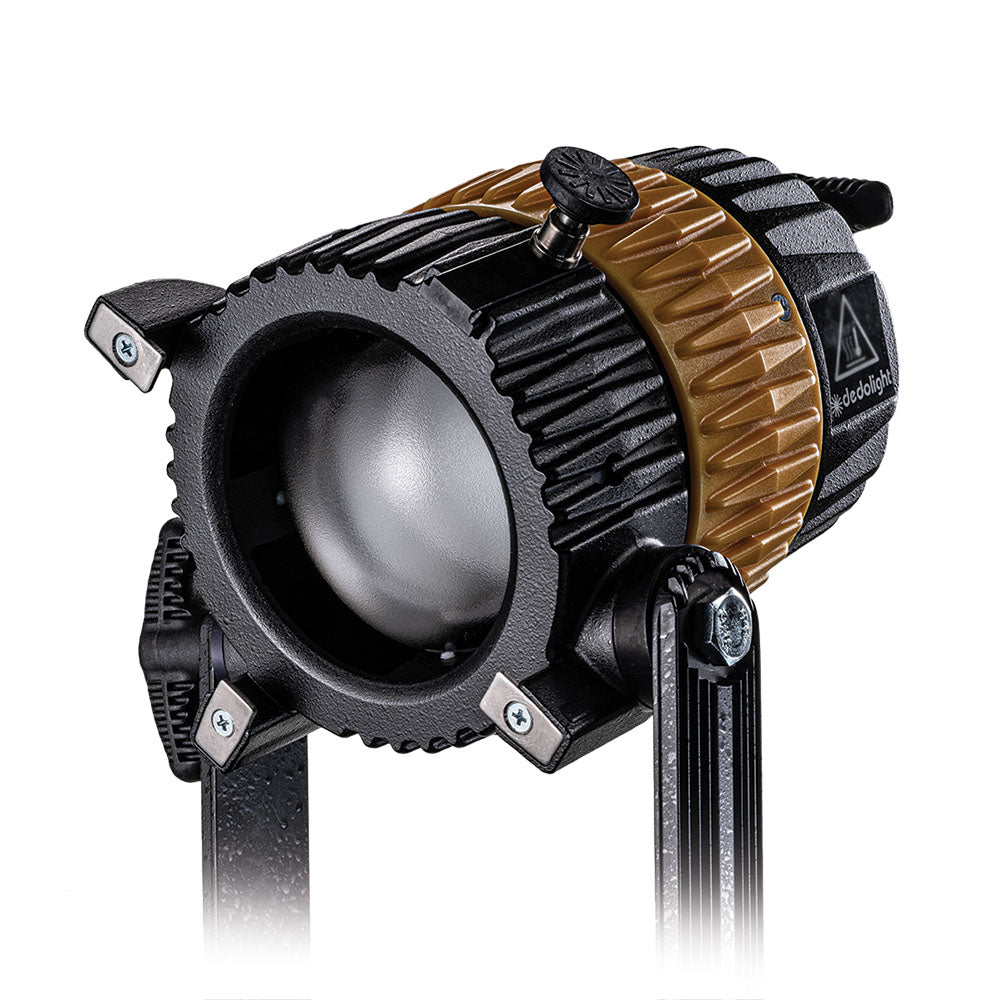
Product views: Dedolight California. Select an image to enlarge.
Choose it for the optical format and larger projection system, rather than assuming a higher model number means greater electrical power. It uses NEO controllers and remains distinct from the earlier DLED9-BI.
Key specifications
| Specification | Details |
|---|---|
| Source | LED with aspheric focusing optics |
| Power reference | 80W head in the current California NEO listing |
| Colour / white-light range | 2,700–6,600K |
| Native beam | 4–50° |
| Optical accessory family | A |
| Cooling | Product narrative specifies passive cooling; confirm the supplied head |
| Weight reference | Approx. 8.2lb head reference; excludes the complete rig |
| Control | DTneo/DTneo+: local and DMX; wireless with DTneo+ |
| Working package | Head, fitted optics, support, appropriate power electronics and cables; battery/AC accessories depend on configuration |
Strengths and limitations
Strengths
- Larger lens and A-size optical system.
- Wide native focus range with tunable white.
Limitations
- Substantially heavier than compact NEO heads.
- Large optics and controller increase support needs.
Practical uses
| Setup | Working approach |
|---|---|
| Larger projection | Order the DP400-family optics, correct lens and shutter or gobo module. |
| Distant accent | Set the beam to the target, then meter centre and edges. |
| Reflected lighting | Use the intended A-size beam attachment; M-size optics do not directly substitute. |
Set the head position for the direction and shadow first, then choose focus and accessories for coverage. A sharp gobo or precisely shuttered image needs imaging optics; closing barn doors around a small spot does not create the same optical result.
Output and colour
The distributor narrative calls the DLED9N passively cooled, but its table includes an active-cooling row and an inconsistent holder dimension. The A-size optical family is documented separately. Confirm cooling and exact accessory fit with the supplier. Those repeated rows are not a reliable basis for promising silent operation.
For a useful comparison, record colour setting or lamp, dimming level, optic, focus position, distance and illuminated area. Measure after diffusion or reflection when that is the working setup. Wattage, centre intensity and coverage describe different parts of the result.
Power and batteries
Use the correct DTneo or DTneo+ controller with a DPOWN-series head cable. The controller accepts the documented 12–18V DC range through the specified battery or supply arrangement. The optional DLPS15-100 AC adapter attaches through the V-mount interface; a head-only purchase is not a mains-powered kit.
The head wattage and the controller’s maximum rating answer different questions. Size a battery by both usable watt-hours and continuous discharge capability, then allow for controller losses and reserve capacity. Do not assume every V-mount pack is suitable solely because the mount fits.
Control, cooling and camera operation
| Control path | Operating notes |
|---|---|
| DTneo | OLED/local control and wired 5-pin DMX; documented 8/16-bit options and dimming curves. |
| DTneo+ | Adds CRMX and Bluetooth to the supported NEO control package; check the exact controller supplied. |
| Camera operation | Test the intended dimming level, frame rate and shutter with the selected high-speed mode. A headline maximum frame rate is not a result for every camera setting. |
Cooling reference for this head: Product narrative specifies passive cooling; confirm the supplied head. Listen to the complete working package, including its controller or ballast, rather than checking only the head.
Modifiers, rigging and the working package
| Item | Compatibility and working notes |
|---|---|
| Accessory family | A-size; confirm the exact lamphead and accessory compatibility. |
| Projection | DP400-family system with the selected lens and shutter/gobo/iris module. |
| Beam control | Correct DBD400-class barn doors and approved wide-angle or parallel-beam attachment. |
| Soft light | Correct speedring and softbox; include front weight and clearance in the support plan. |
Aspheric focusing optics are different from a conventional Fresnel. Check the actual accessory’s compatibility list, locking method and lens choice. A brand name or similar front diameter is not enough to establish fit.
Fit the intended front accessory before choosing the stand position. Check tilt clearance, balance, cable movement and independent support for any external electronics. Use the documented mounting hardware and appropriate secondary retention for the installation.
Alternatives and related fixtures
| Fixture | Reason to compare |
|---|---|
| Dedolight DLED7N-BI NEO | Useful output in a compact M-size package. 80W head in the current California NEO listing; M-size optical system. |
| Dedolight DLED10-BI | Tunable white in the larger A-size optical system. 220W light-engine class; published maximum power 245W; A-size optical system. |
| Dedolight DLED4N-BI NEO | Fan-free head and tunable white light. 40W head; M-size optical system. |
Classic Dedolight DLH4: the original low-voltage tungsten alternative with a separate supply. Compare the full power and accessory package, rather than the bare-head price.
What people are saying
Manufacturer and distributor demonstrations
Overview of the dedolight NEO family. Use the model-specific specifications above when comparing the larger DLED9N head. View the demonstration.
Videos
Overview of the dedolight NEO family. Use the model-specific specifications above when comparing the larger DLED9N head.
Watch the demonstration on Vimeo.
Rental and used-fixture checks
- Read both head and controller model labels; original DLED electronics are not interchangeable by appearance.
- Test the full fade, warm/cool adjustment and any CRMX link actually needed.
- Inspect the focus travel, front optics, pigtail connector and cable strain relief.
Confirm availability of service and replacement parts with the relevant supplier before buying older equipment. Check the actual kit contents against the shot: a missing controller, imager, lens or cable can matter more than a low head-only price.
Documentation and specifications
- Dedolight California: Dedolight DLED9N-BI NEO product and package information
- Dedolight manuals, technical sheets and photometric documents
- Dedolight imaging systems and optical size families
- Dedolight manufacturer and dealer contacts
Product photographs: Dedolight California. Published specifications describe the referenced configuration; check the markings and instructions of the actual head, controller and fitted accessories.
Browse Dedolight lights · directional LED lights · all equipment.