
Last Updated 20 hours ago
ColorSource Spot V Overview
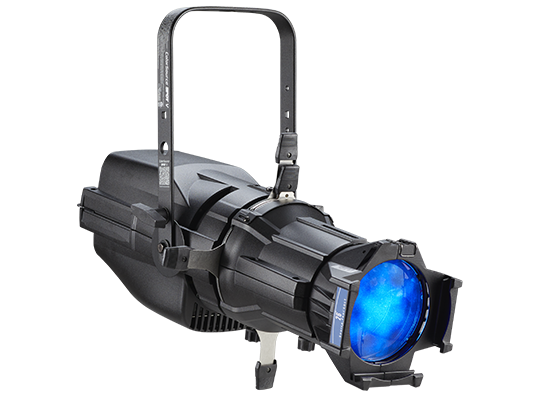
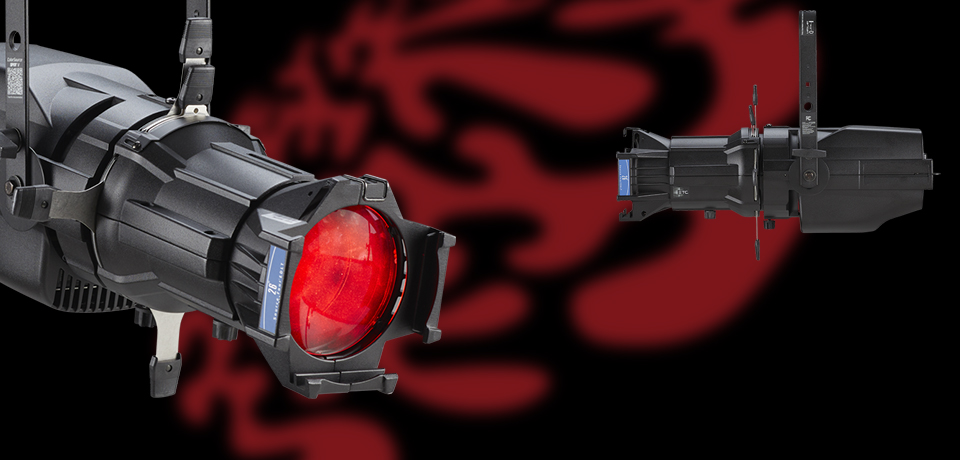

The ETC ColorSource Spot V is a five-colour RGBIL LED profile spotlight for shuttered specials and pattern projection.
Indigo and lime extend the colour-mixing options beyond a basic RGB fixture; this is a different engine from ETC’s eight-colour Lustr X8.
- RGBIL LED Profile Five-colour array: red, green, blue, indigo and lime.
- 197 W Typical Typical draw at 120 V AC.
- Colour Temperature 3,200 K / 5,600 K ETC’s warm and cool white presets; other colour mixing depends on the profile.
- Weight 7.7 kg with shutter barrel; 5.9 kg without. Excludes lens tube and mounting hardware.
- Beam Angle 5°–90° nominal fixed lens options; zooms use separate assemblies.
- IP Rating IP20 Indoor dry locations only. Read the IP Rating.
ColorSource Spot V Specifications
| Specification | Details |
|---|---|
| Light engine | RGBIL: red, green, blue, indigo and lime |
| White-light range | Colour mixing; white settings depend on the control profile |
| Optical system | Interchangeable profile lens system |
| Beam coverage | 5–90° with the appropriate lens tube |
| Typical input at 120V | 197W; see power section for test conditions |
| Published weight | 7.7kg; see working-package notes |
| DC operation | AC powered; no direct battery input listed |
| Protection | IP20; indoor dry-location equipment |
| Control | 5-pin DMX/RDM; Multiverse on equipped models; NFC configuration |
| Flicker settings | 5kHz default / 25kHz via RDM |
| Wireless | Multiverse on equipped versions; verify the ordered model |
ColorSource Spot V Output Calculator
Compare lens tubes, zoom positions or the Fresnel adapter at the same throw. The numbers use the on-axis candela from ETC’s July 2022 ColorSource Spot V IES files, all labelled Full On / Direct. A menu angle names the physical lens or adapter setting, not a universal beam width.
Camera Settings
At 5 m, the 19° EDLT is approximately 3,633 lx at beam centre; the standard 19° is approximately 3,405 lx. The published reference tables below work without JavaScript.
IES data and calculation method
Estimates use lux = on-axis candela ÷ distance in metres squared. The 10 ft (3.048 m) lower limit is conservative, not a tested accuracy threshold. The estimates apply to an open beam at centre, not the edges, a dimmed light, a colour setting, shutters or gobos. F-stop uses the selected ISO, shutter time and meter reference, not a measured T-stop.
| Optic | On-axis intensity |
|---|---|
| Standard fixed · 5° | 489,444.2 cd |
| Standard fixed · 10° | 295,313.88 cd |
| Standard fixed · 14° | 140,645.2 cd |
| Standard fixed · 19° | 85,133.31 cd |
| Standard fixed · 26° | 58,818.42 cd |
| Standard fixed · 36° | 34,991.6 cd |
| Standard fixed · 50° | 19,699.44 cd |
| Standard fixed · 70° | 11,209.61 cd |
| Standard fixed · 90° | 8,346.18 cd |
| EDLT · 19° | 90,833.03 cd |
| EDLT · 26° | 63,961.14 cd |
| EDLT · 36° | 36,852.13 cd |
| EDLT · 50° | 17,694.06 cd |
| XDLT · 5° | 628,030.47 cd |
| XDLT · 10° | 323,448.33 cd |
| XDLT · 14° | 189,056.52 cd |
| XDLT · 19° | 122,571.78 cd |
| XDLT · 26° | 64,893.33 cd |
| XDLT · 36° | 35,317.87 cd |
| XDLT · 50° | 16,362.48 cd |
| XDLT · 70° | 10,990.04 cd |
| Standard 15–30° zoom · Narrow | 130,885.86 cd |
| Standard 15–30° zoom · Mid | 67,793.33 cd |
| Standard 15–30° zoom · Wide | 40,911.39 cd |
| Standard 25–50° zoom · Narrow | 50,586.29 cd |
| Standard 25–50° zoom · Mid | 31,710.54 cd |
| Standard 25–50° zoom · Wide | 22,840.13 cd |
| Fresnel adapter · Spot | 87,677.84 cd |
| Fresnel adapter · Mid | 44,921.77 cd |
| Fresnel adapter · Flood | 13,807.83 cd |
ETC’s separate 50 fc throw chart
The current datasheet’s 50 fc chart reports the listed throw and maximum field lumens. The chart does not identify a test mode or the zoom notch for these rows. It is a separate reference, not input to the calculator. Its 15–30° XDLT zoom is a distinct optic, not a setting of the standard 15–30° zoom above.
| Lens | Maximum field lumens | Throw at 50 fc | Throw at 50 fc |
|---|---|---|---|
| 5° | 5,906 | 36 m | 118.1 ft |
| 10° | 5,615 | 23.2 m | 76 ft |
| 14° | 6,690 | 16.5 m | 54 ft |
| 19° | 6,031 | 12.8 m | 42 ft |
| 19° EDLT | 6,863 | 13.1 m | 43 ft |
| 26° | 7,086 | 10.4 m | 34.1 ft |
| 26° EDLT | 8,418 | 11 m | 36 ft |
| 36° | 7,890 | 8.1 m | 26.5 ft |
| 36° EDLT | 8,145 | 8.2 m | 27 ft |
| 50° | 7,864 | 6.1 m | 20 ft |
| 50° EDLT | 7,980 | 5.8 m | 18.9 ft |
| 70° | 9,498 | 4.6 m | 15 ft |
| 90° | 9,360 | 4 m | 13.1 ft |
| 15–30° standard zoom | 7,220 | 7.6 m | 25 ft |
| 25–50° standard zoom | 9,050 | 11.3 m | 37.2 ft |
| 15–30° XDLT zoom | 8,754 | 10.3 m | 33.8 ft |
Strengths and Limitations
| Aspect | Working implication |
|---|---|
| Strength | Precise gate, shutter and pattern control with interchangeable optics. |
| Strength | NFC setup and a console control path for repeatable programming. |
| Limitation | The lens and barrel configuration affects output, size and accessory compatibility. |
| Limitation | Active cooling and IP20 protection require attention to sound and location conditions. |
Practical Uses
- Frame a clean special with shutters; choose a lens angle that covers the target without excessive shuttering.
- Project texture onto a wall or stage floor using the correct holder and pattern size.
- Use an optional Fresnel or CYC adapter when the job requires a wash rather than gate projection.
Fixed and zoom lenses are separate configurations. Fixed optics need the appropriate shutter barrel, while zoom assemblies and adapters have their own mounting arrangement. Check the complete light-engine, barrel and lens order rather than assuming the photographed optic is included.
Output and Colour
Independent measurements
In Alexandre Roy’s SONO Mag test, the Spot V delivered 2,050 lx at 5 m at a stated 25°. The test does not identify the lens tube, CCT or output mode for that reading. Keep it separate from the ETC IES calculator rather than treating the two as equivalent setups.
| Manufacturer reference | Published value |
|---|---|
| Published maximum flux | 9,498 lumens |
| Typical input, 120V | 197W |
Lumen ratings describe total flux, while lux describes light arriving at a surface. Do not read the flux table as a lux measurement at a particular distance. See ETC’s ColorSource Spot V photometry files for the exact lens and setup. Its datasheet lists a 13.1 m (43 ft) throw for 50 fc with the 19° EDLT lens; that does not apply to the standard 19° tube or to a different lens. Meter the working setup after adding colour, diffusion or other modifiers.
The RGBIL engine uses five colours, including indigo and lime. It is a colour-mixing system rather than a dedicated variable-white fos/4 engine. Select the correct console personality and calibrated operating mode before matching units; a raw emitter mix is a different control choice from a calibrated colour request.
Power and Batteries
ETC lists 197W typical input at 120V. The operating range is 100–240V AC, 50/60Hz. Supply constant power and use the fixture’s electronic dimming; the power-through connector does not make the fixture suitable for a conventional phase-dimmed circuit.
Check the supply lead, grounding, connector rating and total circuit load. Published fixture-per-circuit counts assume a particular breaker and supply condition; they are not a universal instruction for every outlet or distribution system. Account for startup current as well as steady running draw.
Control, Cooling and Camera Operation
| Control path | Operation |
|---|---|
| Wired control | 5-pin DMX and RDM. Match operating mode and DMX footprint to the console profile. |
| Wireless control | City Theatrical Multiverse on equipped versions. It is a different system from CRMX; confirm the transmitter and receiving hardware. |
| NFC | ETC Set Light configures supported fixture properties at close range. NFC setup is separate from continuous wireless DMX control. |
| Cooling and PWM | Active fan cooling; use the specified frequency choices and test the actual fan setting, dimming level, shutter and frame rate. |
Test low-level fades as well as full output. A high PWM frequency alone does not prove flicker-free results at every frame rate and shutter combination. Listen to the fan at the microphone position after the fixture has reached working temperature. Save cooling, colour and operating-mode settings with the lighting notes.
Modifiers, Rigging and the Working Package
The 7.7kg quoted weight excludes the lens. Add the intended lens, holder, clamp and accessories before planning the support. A shutter-barrel kit and a body-only order are different packages.
IP20 describes an indoor fixture, so plan a suitable dry environment. Keep vents unobstructed and follow the regional manual’s mounting and clearance instructions. For overhead work, use the designated mounting and secondary attachment points with hardware rated for the complete assembly.
Alternatives and Related Fixtures
For ETC’s Series 3 Lustr X8 platform, see the ETC Source Four LED Series 3 Lustr X8.
| Compare | When it helps |
|---|---|
| ETC Source Four tungsten | A tungsten profile when shutter cuts and pattern projection matter; it needs an appropriate lamp and external dimming. |
| ETC lighting hub | Compare ETC’s panel, Fresnel and profile formats by the beam needed for the job. |
| All equipment | Compare other manufacturers with the same source size, working distance and modifier. |
What People Are Saying
Field Feedback at a Glance
What worked
- Good colour matching on Eos. In Roy’s comparison, the Spot V produced colours close to the 614SX reference when controlled from an Eos console using the fixture profile. (Alexandre Roy, SONO Mag (2024))
- Indigo emitters gave strong deep blues. Roy found the indigo channel especially useful for reaching deep blue rather than a paler mix. (Alexandre Roy, SONO Mag (2024))
- Automatic cooling stayed quiet. Roy could barely hear the fan in automatic mode during the hour-long heat and output test. (Alexandre Roy, SONO Mag (2024))
What to watch for
- The built-in display is very small. Roy found the three-character display restrictive and thought the three setup buttons felt flimsy. NFC setup was the alternative with a compatible phone. (Alexandre Roy, SONO Mag (2024))
- White-light colour rendering trailed other units in that test. Roy liked the whites visually but found white-light colour rendering weaker than on the competing heads in his comparison. (Alexandre Roy, SONO Mag (2024))
- Cuts and gobos lost some sharpness through the zoom optics. Roy found the projected field even, but the zoom optics he tried did not give especially crisp shutter or pattern edges. (Alexandre Roy, SONO Mag (2024))
ETC’s overview demonstrates Spot V’s optical configurations and controls. Treat it as a manufacturer demonstration, rather than independent evidence of output or silent operation. View the source.
Videos
The following demonstration provides an operating reference. Specifications above refer to the named model and configuration.
Rental and Used-Fixture Checks
Before You Book
- Confirm the model label, array and regional power rating; housing appearance alone may not identify the light engine.
- Inspect the lens, shutters, barrel lock, pattern holder and focus travel.
- Test every colour channel, low-level fades, fan operation and the intended wired or wireless control mode.
- Check firmware against the manufacturer’s support notes and run the required camera test before rigging.
Documentation and Specifications
ETC colour-calibration modes · ETC fixture directory and photometry downloads
Photographs: ETC. Family photographs and shared housing details are identified in their captions.
Browse ETC lighting · all equipment.