
Last Updated 6 hours ago
P3 COLOR Overview
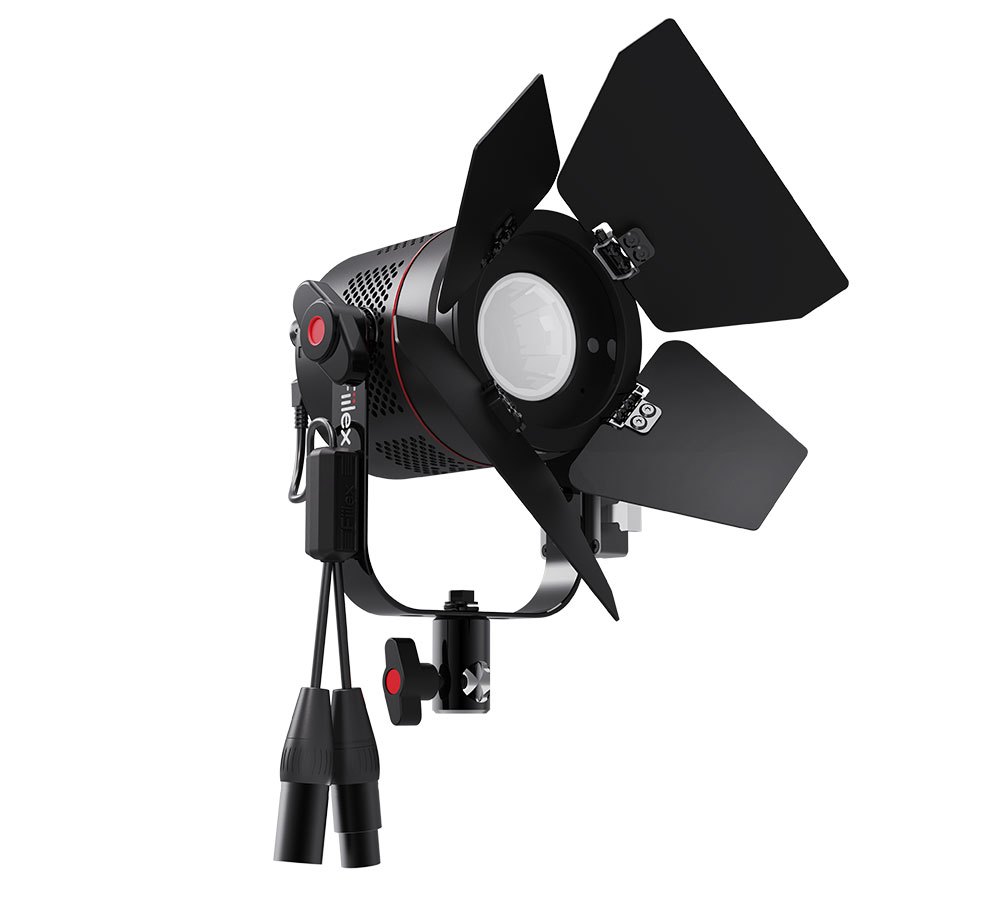


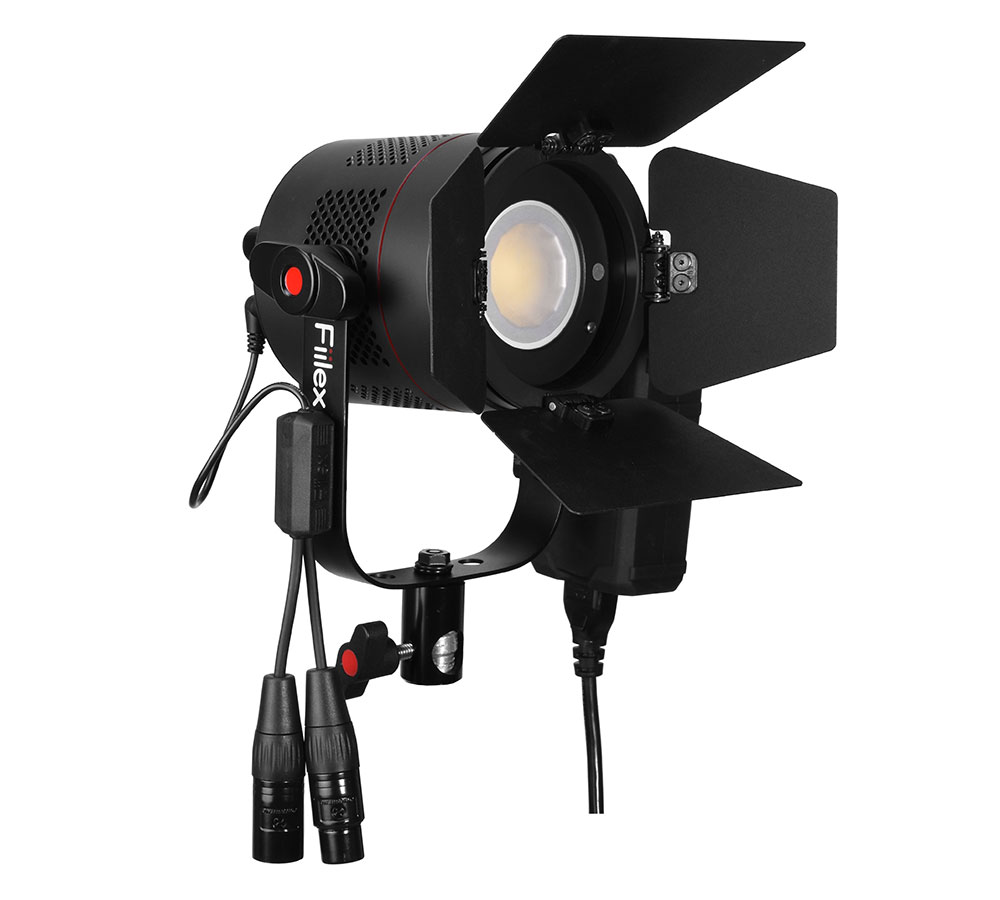
The P3 COLOR combines a compact RGBW point source with a magnetic accessory system. It can make a clean cut on a wall or a coloured edge in a room too small for a larger COB head.
Compare bare and 20° Fresnel output before choosing a working distance.
- Type Compact RGBW LED
- Power 90 W max AC; 80 W max DC
- Colour Temperature2000–10000 K
- Weight 0.9 kg
- Beam Control 60° nominal bare beam; the photometric diagram labels it 58°. Optional 20° Fresnel.
- IP RatingIPX5 Water-resistant; X does not establish dust protection. Read the IP Rating.
P3 COLOR Specifications
| Specification | Details |
|---|---|
| Manufacturer and model | Fiilex P3 COLOR |
| Source or rated power | 90 W maximum AC, 80 W DC |
| Optics, colour or format | RGBW, 2,000 to 10,000 K |
| Head or system detail | 0.9 kg, 14 to 30 V DC |
Output Calculator
Select the published setup and a manufacturer distance, or enter a custom throw where supported. The results describe centre-beam output, not the brightness across the whole beam.
Camera Settings
If the calculator does not load, use the published photometric table or source on this page. JavaScript is required.
F-stop is a planning estimate, not a meter reading. It uses direct, on-axis illuminance and includes only the optics and diffusion named in the selected setup. Meter on set to account for lens transmission, filters, added diffusion, bounce, dimming and ambient light.
How the exposure estimate works
N = √(E × ISO × t / C), where E is illuminance in lux and t = shutter angle ÷ (360 × fps). The default C = 340 is a dome reference; C = 250 is a flat reference. These are calibration constants, not a measured T-stop. A small nonzero digit is tenths of a stop above the displayed full stop.
Distance estimates and comparisons
Published points are used as given. Between published points the calculator fits a curve through the two nearest readings. Outside those points it uses the inverse-square law only when the fixture’s dataset permits it. Distances outside a configuration’s supported range are reported separately. Comparisons use one shared distance and camera setup; equal lux does not imply equal coverage.
View published readings for the selected configuration
Strengths and Limitations
- The small emitter keeps shadows and barn-door cuts defined.
- The native head is a small hard source, so a soft key needs diffusion or a modifier.
Practical Uses
Fit the 20° Fresnel for a more concentrated edge. Leave the head open when filling a small diffusion surface and check the resulting shadow size at the subject.
Output and Colour
| Configuration | Distance | Lux | Foot-candles |
|---|---|---|---|
| 5,600 K · Bare 58° | 1 m | 2,787 | 259 |
| 5,600 K · Bare 58° | 3 m | 366 | 34 |
| 5,600 K · Bare 58° | 5 m | 158 | 14.7 |
| 5,600 K · 20° Fresnel | 1 m | 9,484 | 881 |
| 5,600 K · 20° Fresnel | 3 m | 1,039 | 96.5 |
| 5,600 K · 20° Fresnel | 5 m | 375 | 34.8 |
| 3,200 K · Bare 58° (photometry label) | 1 m | 2,697 | 250.6 |
| 3,200 K · Bare 58° (photometry label) | 3 m | 354 | 32.9 |
| 3,200 K · Bare 58° (photometry label) | 5 m | 153 | 14.2 |
| 3,200 K · 20° Fresnel | 1 m | 9,179 | 852.8 |
| 3,200 K · 20° Fresnel | 3 m | 1,005 | 93.4 |
| 3,200 K · 20° Fresnel | 5 m | 363 | 33.7 |
Photometric source and test conditions.
The manufacturer’s chart provides separate 3,200 K and 5,600 K readings for the named optical configurations at 1, 3 and 5 m. Lux values are transcribed from that chart; foot-candles are converted from lux. The calculator is bounded to 1–5 m, with intermediate values labeled as estimates rather than additional factory measurements. These readings do not establish output at other colour temperatures or with different accessories. The chart does not separately identify AC versus DC operation for the photometric test.
The photometric diagram labels the bare beam 58°, while the specification table lists 60°. These are retained as distinct manufacturer labels; no beam diameter is calculated from either angle.
On-set check
Compare the bare head and 20° Fresnel at the same distance with your subject and background both in place. Spot will make the centre brighter but will not give you the same coverage. There is no published curve here for the dome or snoot.
Power and Batteries
The P3 accepts 14 to 30 V DC. Fiilex lists different maximums on AC and DC.
Control, Cooling and Camera Operation
Green–magenta trim is available alongside CCT and saturated colour. Fiilex lists a controllable fan; check the actual fan setting and noise at the microphone position before recording dialogue.
For wired control, Fiilex lists a TRRS input with an optional five-pin DMX adapter. Check the control cable in the case rather than assuming the bare head accepts a standard five-pin lead.
Modifiers, Rigging and the Working Package
Magnetic front optics change beam width quickly. For a clean cut, check what the doors do with and without the Fresnel attached.
Fit and setup
Put the doors on the actual optic you plan to use and check the cut on set. The small head makes it easy to hide a narrow accent, but a diffuser is usually the better choice when you want the beam to fill a small soft surface.
Alternatives and Related Fixtures
For a larger full-colour Fiilex Fresnel, see Fiilex Q5 COLOR.
Also compare the Fiilex Q8 COLOR-LR.
What People Are Saying
Lee Morris’s hands-on review for Fstoppers covers the P3 COLOR specifically. The review found the features worthwhile for professional production but flagged price as a drawback for general videography. That’s a reviewer’s cost judgment, not a finding about output or colour accuracy.
What Worked
- A soft key in a tight lobby. Roger Deakins combined four or five P3 COLORs for premiere close-ups in Empire of Light, switching from Fresnels to hexagonal softboxes. He compared the look, not the photometric output, to a 1K Pup. American Cinematographer’s crew interview.
- Control over where the key fell off. On the same setup, the crew dimmed the lights at the edges of the group instead of treating it as one even source. That helped shape the key without changing the overall rig. Deakins’s lobby setup.
- A compact option when you still need a hard edge. Fiilex documents a roughly 0.9 kg bare head and a small Dense Matrix emitter for tight barndoor cuts. That is a manufacturer-stated optical advantage, not a measured claim from the Deakins setup. Fiilex’s product and optics reference.
Working Limitations
- Budget for the complete look, not just one head. The Empire of Light key used several heads and softboxes; the result is not evidence that one bare P3 replaces an old 1K. Production account.
- Cost was a drawback for smaller jobs. Lee Morris at Fstoppers liked the professional feature set but questioned the value for a general videographer. That was his judgment at review time, not a current price comparison. Morris’s exact-model review.
- Power and control need kit checks. Fiilex lists 90 W maximum on AC versus 80 W on DC, and its fixture DMX/RDM ports use TRRS. Confirm approved power and the matching five-pin adapter when the job needs one. Fiilex power and control specifications · P3 COLOR user guide.
Videos
Lee Morris reviews the exact P3 COLOR head for Fstoppers. Fiilex P3 Color Review, Portable RGB LED Lighting.
Rental and Used-Fixture Checks
Ask for the specific Fresnel, DMX adapter and DC cable your setup requires. AC and DC maximum power ratings differ.
Before you book
Check for the matching 20° Fresnel, doors, power supply and control adapter rather than relying on the kit name. If using batteries, also verify the correct DC barrel cable and plan for the listed lower DC maximum.