
Last Updated 4 days ago
L-light Overview
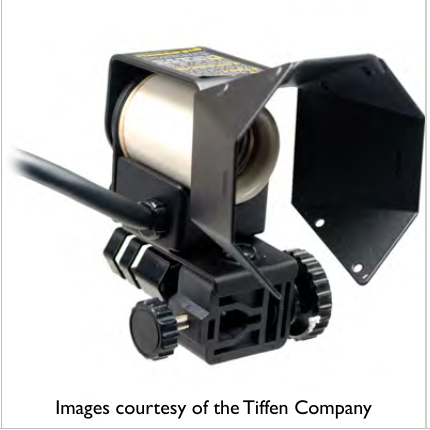
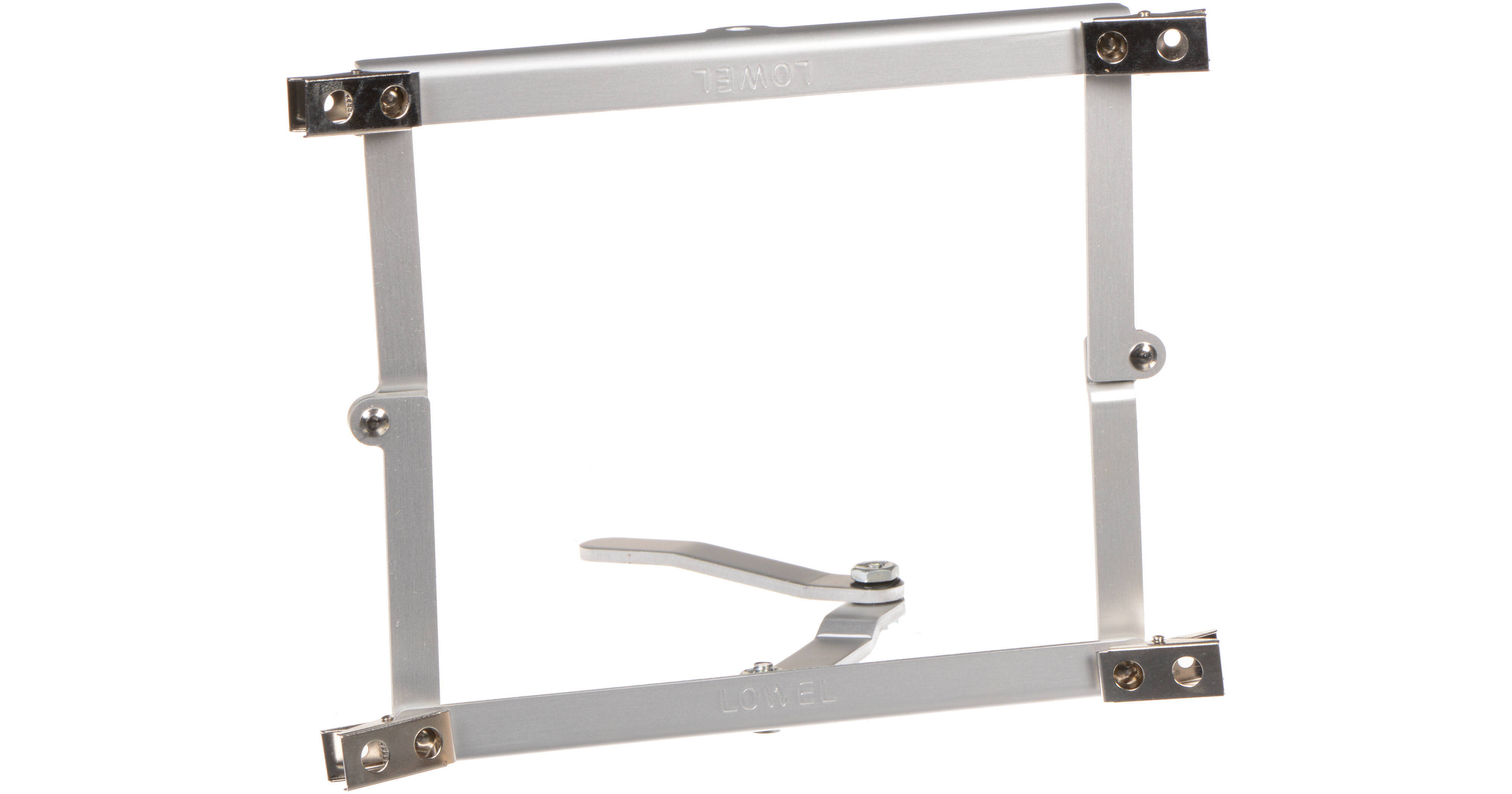
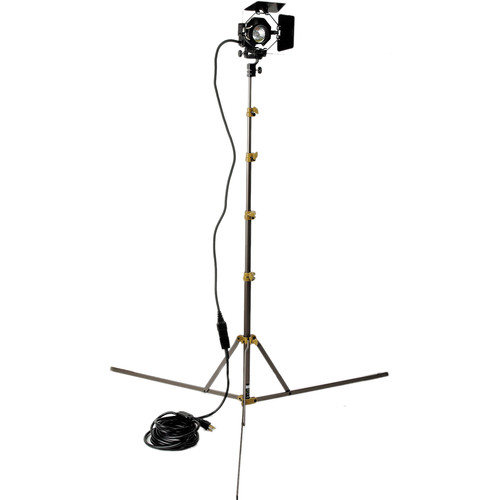
The Lowel L-light is a compact E26 screw-base accent light with interchangeable mounting pieces. It can hide behind set dressing, sit on its Home-plate, or mount through the Stand-link. It is not a 500 W open-face head.
- Fixture Type E26 tungsten accent fixture · L-light
- Power 300 W maximum; NO 500 W ECT.
- Colour Temperature 3,000 K with Lowel’s documented 100 W MR16 lamps.
- Weight No verified published head weight.
- Beam Angle Spot or flood depends on fitted lamp; no bare-head angle.
- IP Rating No numerical IP rating stated in the checked material. Read the IP Rating.
L-light Specifications
- E26 medium screw-base socket
- Approved reflector shapes: R14, R20, R25, R30 and R40, plus specified screw-base MR16 lamps
- Maximum 300 W according to Lowel’s instructions
- Supplied with captive #18/3 lead and a 16 ft switched AC cable
- Stand-link accepts 5/8-inch and smaller studs; Home-plate supports floor, pipe and concealed mounting
Output Calculator
Select the published setup and a manufacturer distance, or enter a custom throw where supported. The results describe centre-beam output, not the brightness across the whole beam.
Camera Settings
If the calculator does not load, use the published photometric table or source on this page. JavaScript is required.
F-stop is a planning estimate, not a meter reading. It uses direct, on-axis illuminance and includes only the optics and diffusion named in the selected setup. Meter on set to account for lens transmission, filters, added diffusion, bounce, dimming and ambient light.
How the exposure estimate works
N = √(E × ISO × t / C), where E is illuminance in lux and t = shutter angle ÷ (360 × fps). The default C = 340 is a dome reference; C = 250 is a flat reference. These are calibration constants, not a measured T-stop. A small nonzero digit is tenths of a stop above the displayed full stop.
Distance estimates and comparisons
Published points are used as given. Between published points the calculator fits a curve through the two nearest readings. Outside those points it uses the inverse-square law only when the fixture’s dataset permits it. Distances outside a configuration’s supported range are reported separately. Comparisons use one shared distance and camera setup; equal lux does not imply equal coverage.
View published readings for the selected configuration
Strengths and Limitations
The exposed reflector lamp offers a small, concealable source and a choice of beam shapes. Beam angle comes from the lamp; it is not a focusable fixture. Larger reflectors restrict the front accessories, and the bare head has no tunable colour.
Practical Uses
Use a narrow approved lamp for a small backlight or accent, or a wider reflector to cover more of a wall. Test bare and modified output at the actual mark instead of assuming accessories leave the reading unchanged.
Output and Colour
Lowel lists L1-100F flood and L1-100S spot at 10 ft. Lux values below are rounded conversions. Other calculator distances are inverse-square estimates from these single anchors. The output table does not identify which required glass accessory was fitted, so no filter-loss adjustment is assumed.
| Configuration | Beam | 10 ft / 3.048 m |
|---|---|---|
| 100 W MR16 flood | 40° | 25 fc / 269 lux |
| 100 W MR16 spot | 13° | 28 fc / 301.3 lux |
Power and Batteries
Match the lamp voltage to the supply and keep within the 300 W fixture limit. Lowel documents 120 V, 100 W screw-base MR16 spot and flood lamps with 2,000-hour average life. The 2010 Lowel catalogue lists 3200 K for L1-100F flood and 3000 K for L1-100S spot; check the actual lamp before relying on either value. MR16 lamps require the matching glass accessory. Larger reflector lamps may require the rotating baffle to be removed, which also removes compatibility with several front accessories.
Control, Cooling and Camera Operation
The switched lead controls power. Dimming compatible tungsten shifts it warmer; check colour and exposure at the intended setting. The lamp and glass become hot, and Lowel instructs users to allow cooling before storage.
Modifiers, Rigging and the Working Package
The Home-plate can be secured with its chain, suitable fasteners or Lowel gaffer tape only as described by the manufacturer. Test the mounting before loading it. The clip-on doors fit screw-base MR16 and reflector lamps no larger than R20. Lamps larger than R20 require the larger Tota gel arrangement and generous air spacing. Lowel specifies L1-52H clear glass (5% light loss), L1-50H diffused glass (about 50%) and L1-51H dichroic glass (about one stop); these are accessory descriptions, not separate measured calculator configurations.
Alternatives and Related Fixtures
Choose a focusable Lowel Pro-light if the beam needs to change without swapping lamps, a Tota for a broader spread, or a Rifa for soft fill. Their lamp and modifier charts do not apply to this E26 accessory light.
What People Are Saying
Field Feedback at a Glance
Producer and DP Dan Drasin describes the Lowel L-light by name. Lowel’s L-light manual documents the other capabilities and limitations below; they are not additional owner accounts.
What worked
- Small interview backlight. In a Cinematography Mailing List discussion, Drasin describes using a Lowel L-light with a 30 W halogen PAR, stock doors and a dimmer for separation in a hotel-room interview. That is not the 100 W output test or a recommendation for an unspecified replacement lamp.
- Choose spot or flood. Lowel documents 13° and 40° with its 100 W screw-base spot and flood lamps respectively.
- Two factory mounting packages. Lowel offered L2-10 Stand-link and L2-15 Home-plate options for supported or concealed placements.
Drawbacks to plan for
- 300 W maximum. This head is not rated for the 500 W ECT cited elsewhere.
- Some lamps need front glass. Lowel specifies its holder and glass with screw-base MR16 lamps; the published 10 ft readings do not identify which glass was fitted.
- Door fit depends on reflector size. The clip-on doors fit reflector lamps up to R20, not the larger R-lamp front.
Videos
The illustrated Lowel L-light manual shows both Stand-link and Home-plate packages, the rotating baffle and the correct front glass. It is an exact model reference rather than footage of a Lowel Tota or Pro-light.
Rental and Used-Fixture Checks
Check the lamp’s voltage, wattage and E26 base, then inspect socket, lead, switch, mount lock and baffle. A screw-base MR16 package should include the required glass and holder; confirm the appropriate mounting package and doors before load-in.
Documentation and Specifications
Browse Lowel lights · browse tungsten lights · lamp code lookup