
Last Updated 21 hours ago
Daylight Boxer 200W Overview
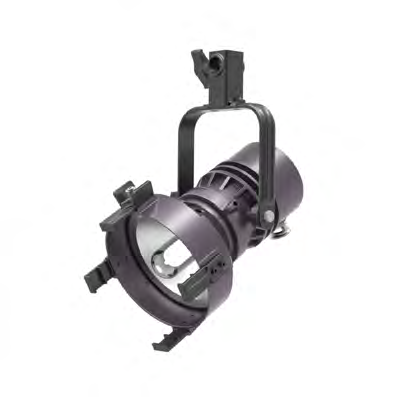
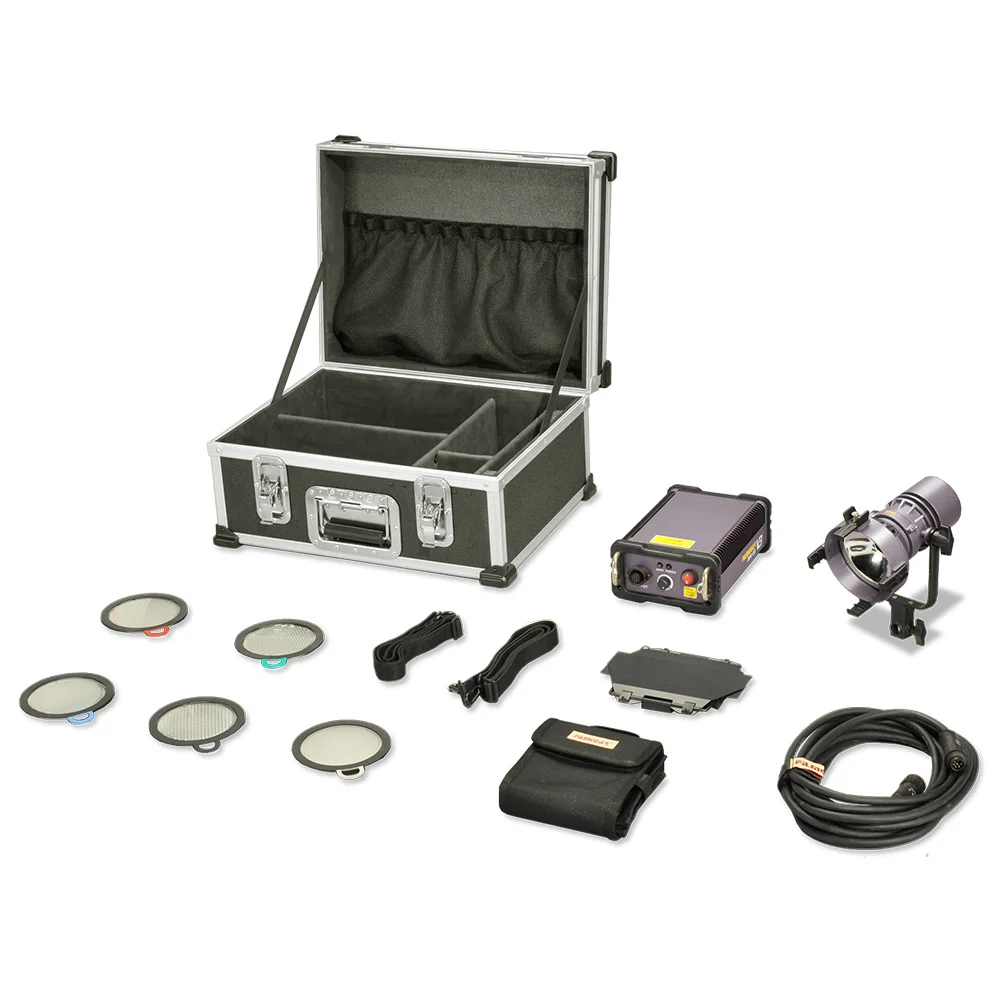

The FilmGear Daylight Boxer 200W (L00200BX) is a compact HMI PAR with interchangeable 112 mm optics. It takes a 200 W GZY9.5 single-ended lamp and weighs 1.2 kg bare.
The Boxer is rated IP20 for the documented head. Keep the lamphead and the matching ballast and cable in dry conditions. Order optics for the 200 W model, not the 400 W Boxer or the larger 200 W PAR.
- Daylight Boxer HMI Compact Boxer PAR head; Ø112 mm PAR lens; Ø16 mm / 5/8 in socket.
- 200 W lamp + external ballast GZY9.5. Use the matched ballast. 3.1 A / 70 V AC is the lamp-circuit rating, not mains.
- Colour Temperature5,600 K Nominal daylight lamp rating.
- Weight 1.2 kg lamphead; support also carries accessories and cable pull.
- Beam Angle Spot 9°; Medium flood 10° × 20°; Wide flood 20° × 40°; Super wide flood 40°; Frosted super flood 32°.
- IP RatingIP20 Lamphead; dry use, no rated water protection. Read the IP Rating.
Daylight Boxer 200W Specifications
| Specification | Details |
|---|---|
| Identity number | L00200BX |
| Capacity | 200 W |
| Lamp circuit | 3.1 A / 70 V AC lamp circuit |
| Optic | Ø112 mm PAR lens |
| Lamp | HMI 200W SE |
| Colour temperature | 5600 K |
| Lamp holder | GZY9.5 |
| Stirrup | Ø16 mm / 5/8 in socket |
| Class / IP rating | Class 1 / IP20 |
| Maximum surface temperature | 170 °C |
| Maximum ambient temperature | 45 °C |
| Minimum distance to illuminated object | 2 m |
| Minimum distance to flammable object | 0.5 m |
| Operating range | +45° to -45° |
| Lamphead weight | 1.2 kg |
The FilmGear identity number, lamp type, lamp voltage, optic, mount, IP rating, clearances and weights are preserved exactly from the manufacturer material. Lamp voltage is kept separate from ballast input voltage.
Output Calculator
The calculator uses FilmGear’s readings from 2–6 m only and estimates between the published points. It does not extrapolate beyond the test range. Stay at least 2 m from the illuminated object, or farther if the unit’s instructions require it.
Output Calculator
Select the published setup and a manufacturer distance, or enter a custom throw where supported. The results describe centre-beam output, not the brightness across the whole beam.
Camera Settings
If the calculator does not load, use the published photometric table or source on this page. JavaScript is required.
F-stop is a planning estimate, not a meter reading. It uses direct, on-axis illuminance and includes only the optics and diffusion named in the selected setup. Meter on set to account for lens transmission, filters, added diffusion, bounce, dimming and ambient light.
How the exposure estimate works
N = √(E × ISO × t / C), where E is illuminance in lux and t = shutter angle ÷ (360 × fps). The default C = 340 is a dome reference; C = 250 is a flat reference. These are calibration constants, not a measured T-stop. A small nonzero digit is tenths of a stop above the displayed full stop.
Distance estimates and comparisons
Published points are used as given. Between published points the calculator fits a curve through the two nearest readings. Outside those points it uses the inverse-square law only when the fixture’s dataset permits it. Distances outside a configuration’s supported range are reported separately. Comparisons use one shared distance and camera setup; equal lux does not imply equal coverage.
View published readings for the selected configuration
Strengths and Limitations
The five PAR optics let the compact 200 W head change from a concentrated 9° spot to much wider coverage. Lens choice changes both the shape and centre level. The IP20 head needs dry conditions, a matched ballast and at least 2 m to the illuminated object.
Practical Uses
| Use | Working approach |
|---|---|
| Hard daylight punch | Use the spot optic for reach, then confirm beam diameter as well as centre level. |
| Beam shaping | Use the lens set to trade centre intensity for wider coverage. |
| Indoor window work | Keep the IP20 lamphead and ballast in a dry location; the lamphead has no rated water protection. |
A lamphead wattage is not an input-current specification. Ballast version, mains voltage, power factor and connector determine the supply load.
The hard PAR lens readings do not describe the output of a softbox or lantern. Meter the modified setup separately.
Output and Colour
FilmGear measured the centre of the beam for each configuration below.
| Configuration | 2 m | 4 m | 6 m |
|---|---|---|---|
| Spot 9° | 149,430 lux | 37,358 lux | 16,603 lux |
| Medium flood 10° × 20° | 24,443 lux | 6,111 lux | 2,716 lux |
| Wide flood 20° × 40° | 7,625 lux | 1,906 lux | 847 lux |
| Super wide flood 40° | 2,955 lux | 739 lux | 328 lux |
| Frosted super flood 32° | 2,273 lux | 568 lux | 253 lux |
Use these centre-beam readings only with the stated lamp, optic and test configuration. They do not describe an average across the beam.
Power and Batteries
FilmGear lists 400W/200W, 400W/200W AC/DC, 200W or 200W AC/DC electronic ballast options. The head also requires the matching lamphead-to-ballast cable and lamp.
The 70 V AC and 3.1 A values describe the lamp circuit, not mains or battery input. A DC supply feeds a compatible AC/DC ballast through its specified cable, not the head directly. Check the exact ballast’s own input range. Use the matched FilmGear ballast, head cable and connectors, then size distribution from the ballast nameplate for the local supply.
Control, Cooling and Camera Operation
Choose the PAR lens for the required beam, then meter its centre and edge rather than treating the head as a focusing Fresnel. Verify stable output and flicker at the intended ballast setting, shutter and frame rate. Let the head cool before touching the installed lens or lamp.
Modifiers, Rigging and the Working Package
Use the published stirrup mount with a rated stand or clamp and a separate safety cable. Fit only the correct-diameter FilmGear lens, barndoor, scrim or filter accessories.
The exact FilmGear sheet lists 7 m and 15 m head cables, five 112 mm PAR lenses, doors and retention. Its T-ring, softbox and lantern illustrations show supported accessory configurations, not measured output. Check the actual modifier package and keep the published clearances. Inspect the safety glass or lens, yoke, lamp holder, interconnect and accessory retention before energising the head.
Alternatives and Related Fixtures
Compare a daylight Fresnel if you want to change output spread without swapping front lenses. The 400 W Boxer and other 200 W HMI PARs have their own matched lamp, ballast and measured configurations; do not reuse their photometry.
What People Are Saying
Field Feedback at a Glance
The FilmGear L00200BX sheet documents these model-specific working characteristics and limitations. They are not independent user reviews.
What worked
- A concentrated spot from a 1.2 kg head: FilmGear’s 9° optic measures 37,358 lx at 4 m on axis.
- Five documented lens choices: at 4 m the wide flood covers a 1.41 × 2.91 m published field, compared with 0.63 m diameter in spot.
- AC/DC ballast options exist for remote work, without connecting the head directly to a battery.
Drawbacks to plan for
- The strong spot figure does not carry across optics: at 4 m the frosted super flood reads 568 lx.
- The hard-lens chart does not measure the optional lantern or softbox. Meter those configurations on the set.
- IP20 is not water protection. Keep the head dry and observe the 2 m illuminated-object and 0.5 m flammable-object minima.
Videos
The illustrated FilmGear L00200BX model sheet shows the exact head, hard optics and separate T-ring configurations. Its lux chart covers only the five documented PAR lenses.
Rental and Used-Fixture Checks
Confirm the identity number on the head, the exact lamp code and base, ballast model, mains input, head-cable connectors, optic set, barndoor and safety wire. Test cold start, warm-up stability, hot restrike and camera flicker behaviour before accepting the package.
Confirm head model L00200BX. Match it with HMI 200W SE, GZY9.5, actual ballast model/input and keyed head cable. Check 16 mm / 5/8 in socket, 112 mm PAR lens, safety glass, accessory retention, and then test stable output and flicker at your intended camera settings. Observe 2 m illuminated-object clearance and unit-specific manufacturer instructions.
Documentation and Specifications
FilmGear model documentation · FilmGear daylight family.
Browse FilmGear · HMI lights · all equipment.