
Last Updated 21 hours ago
Overview
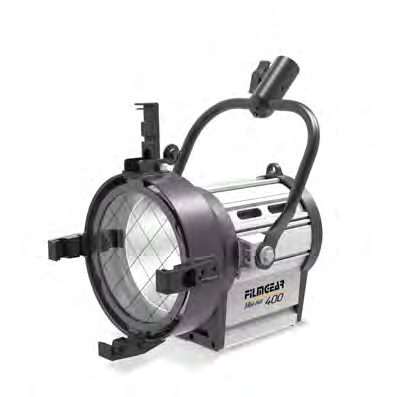

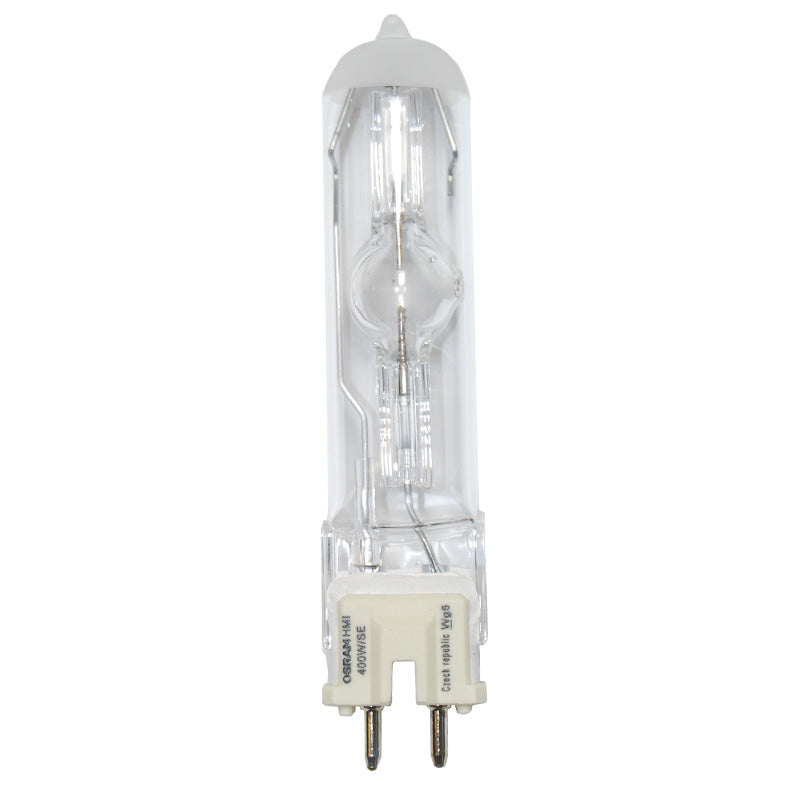
The FilmGear Daylight Par 400W Mini (L00400DM) is a 400 W HMI head with interchangeable 130 mm lenses. It takes a GZZ9.5 single-ended lamp and weighs 3.0 kg bare.
Do not confuse the optics or lamp with those in the 200 W Mini. Match the external ballast, head cable and lens package to the model number.
- Daylight HMI PAR Interchangeable-lens daylight PAR; Ø130 mm protective and PAR lens; Ø16 mm / 5/8 in socket.
- 400 W lamp + external ballast GZZ9.5. Use the matched ballast. 70 V belongs to lamp circuit, not mains.
- Colour Temperature5,600 K Nominal daylight lamp rating.
- Weight 3.0 kg lamphead; 3.3 kg with barndoor.
- Beam Angle Spot 9°; Medium flood 10° × 20°; Wide flood 20° × 42°; Super wide flood 40°; Frosted super flood 34°.
- IP RatingIP23 Lamphead; not waterproof; ballast/cable rating separate. Read the IP Rating.
Key specifications
| Specification | Details |
|---|---|
| Identity number | L00400DM |
| Capacity | 400 W |
| Lamp circuit | 70 V |
| Optic | Ø130 mm protective and PAR lens |
| Lamp | HMI 400W SE |
| Colour temperature | 5600 K |
| Lamp holder | GZZ9.5 |
| Stirrup | Ø16 mm / 5/8 in socket |
| Class / IP rating | Class 1 / IP23 |
| Maximum surface temperature | 170 °C |
| Maximum ambient temperature | 45 °C |
| Minimum distance to illuminated object | 3 m |
| Minimum distance to flammable object | 0.5 m |
| Operating range | +45° to -45° |
| Lamphead weight | 3.0 kg |
| Weight with barndoor | 3.3 kg |
The FilmGear identity number, lamp type, lamp voltage, optic, mount, IP rating, clearances and weights are preserved exactly from the manufacturer material. Lamp voltage is kept separate from ballast input voltage.
Photometrics are not safety clearances. FilmGear specifies 3 m (9.8 ft) to illuminated objects and 0.5 m (1.6 ft) to flammable objects. L00400DM specifications.
Output Calculator
The calculator uses FilmGear’s 3–7 m readings and estimates between those distances only. FilmGear specifies a 3 m minimum distance to illuminated objects.
Output Calculator
Select the published setup and a manufacturer distance, or enter a custom throw where supported. The results describe centre-beam output, not the brightness across the whole beam.
Camera Settings
If the calculator does not load, use the published photometric table or source on this page. JavaScript is required.
F-stop is a planning estimate, not a meter reading. It uses direct, on-axis illuminance and includes only the optics and diffusion named in the selected setup. Meter on set to account for lens transmission, filters, added diffusion, bounce, dimming and ambient light.
How the exposure estimate works
N = √(E × ISO × t / C), where E is illuminance in lux and t = shutter angle ÷ (360 × fps). The default C = 340 is a dome reference; C = 250 is a flat reference. These are calibration constants, not a measured T-stop. A small nonzero digit is tenths of a stop above the displayed full stop.
Distance estimates and comparisons
Published points are used as given. Between published points the calculator fits a curve through the two nearest readings. Outside those points it uses the inverse-square law only when the fixture’s dataset permits it. Distances outside a configuration’s supported range are reported separately. Comparisons use one shared distance and camera setup; equal lux does not imply equal coverage.
View published readings for the selected configuration
Strengths and Limitations
The 400 W Mini combines a 3 kg head with five 130 mm PAR optics. Allow for a separate ballast and the 3 m illuminated-object clearance when comparing its footprint to a panel.
Practical Uses
| Use | Working approach |
|---|---|
| Hard daylight punch | Use the spot optic for reach, then confirm beam diameter as well as centre level. |
| Beam shaping | Use the lens set to trade centre intensity for wider coverage. |
| Exterior or window work | Use the IP rating only with the complete, correctly closed head and protected ballast connections. |
A lamphead wattage is not an input-current specification. Ballast version, mains voltage, power factor and connector determine the supply load.
The 400W Mini’s 130 mm lens diameter alone does not establish parts interchange. Compare the medium and wide lens configurations at your working distance and orient the wider axis to suit the setup.
Output and Colour
FilmGear measured the centre of the beam for each configuration below.
| Configuration | 3 m | 5 m | 7 m |
|---|---|---|---|
| Spot 9° | 50,182 lux | 18,059 lux | 9,214 lux |
| Medium flood 10° × 20° | 20,368 lux | 7,333 lux | 3,741 lux |
| Wide flood 20° × 42° | 5,710 lux | 2,056 lux | 1,049 lux |
| Super wide flood 40° | 4,363 lux | 1,571 lux | 802 lux |
| Frosted super flood 34° | 3,199 lux | 1,151 lux | 587 lux |
Use these centre-beam readings only with the stated lamp, optic and test configuration. They do not describe an average across the beam.
Power and Batteries
FilmGear lists 400W/200W or 400W/200W AC/DC electronic ballast options. The head also requires the matching lamphead-to-ballast cable and lamp.
The lamp voltage belongs to the controlled lamp circuit. It is not the mains supply voltage. Use the matched FilmGear ballast, head cable and connectors, then size distribution from the ballast nameplate for the local supply.
Control, Cooling and Camera Operation
Match the lens to the shot and check the orientation of the 20° × 42° wide asymmetric field on the subject. Test the fitted ballast’s warm-up and flicker at the actual camera settings; FilmGear lists 45°C maximum ambient and ±45° tilt.
Modifiers, Rigging and the Working Package
Use the published stirrup mount with a rated stand or clamp and a separate safety cable. Fit only the correct-diameter FilmGear lens, barndoor, scrim or filter accessories.
Keep the published minimum illuminated-object and flammable-object clearances. Inspect the safety glass or lens, yoke, lamp holder, interconnect and accessory retention before energising the head.
Alternatives and Related Fixtures
The L00200DM 200 W Mini has 112 mm optics and a different lamp base. The L00400BX 400 W Boxer is a separate head; use the specific chart, accessories and clearance for the unit booked.
What People Are Saying
Practical takeaways from FilmGear’s exact L00400DM specifications, not independent owner reviews.
What worked
- At 5 m the 9° spot gives 18,059 lux in a 0.79 m field, a useful reference for a small hard shaft.
- The 10° × 20° medium flood covers 0.87 × 1.76 m at 5 m for a rectangular opening.
- FilmGear’s documented kit includes five optics and 168 mm full/half scrims, so coverage changes need not depend on moving the head.
Drawbacks to plan for
- The 130 mm protective and beam-shaping lenses share a listed diameter but do different jobs; retain the proper protective assembly.
- Use the specified GZZ9.5 400 W/SE lamp package. The 70 V figure is the lamp circuit, not the ballast mains supply.
- The 3 m illuminated clearance excludes closer placements, and the external ballast and cable are separate from the 3.3 kg head-with-doors figure.
Videos
Illustrated fixture reference: FilmGear’s L00400DM drawing and accessory sheet shows the head and its model-specific optical and ballast package.
Rental and Used-Fixture Checks
Confirm the identity number on the head, the exact lamp code and base, ballast model, mains input, head-cable connectors, optic set, barndoor and safety wire. Test cold start, warm-up stability, hot restrike and camera flicker behaviour before accepting the package.
Confirm head model L00400DM. Match it with HMI 400W SE, GZZ9.5, actual ballast model/input and keyed head cable. Check 16 mm / 5/8 in socket, 130 mm protective and PAR lens, safety glass, accessory retention, and then test stable output and flicker at your intended camera settings. Observe 3 m illuminated-object clearance and unit-specific manufacturer instructions.
Documentation and Specifications
FilmGear model documentation · FilmGear daylight family.
Browse FilmGear · HMI lights · all equipment.