
Last Updated 8 hours ago
Overview
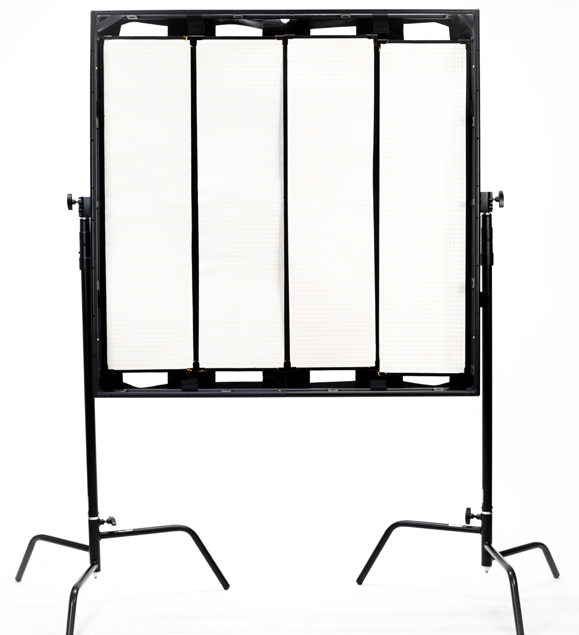
The Aladdin BI-FLEX 4×4 is an 800 W bi-colour assembly built from four 200 W BI-FLEX panels on a large frame. It predates the RGBWW MOSAIC 4×4 and uses a different arrangement of heads, dimmers and power equipment.
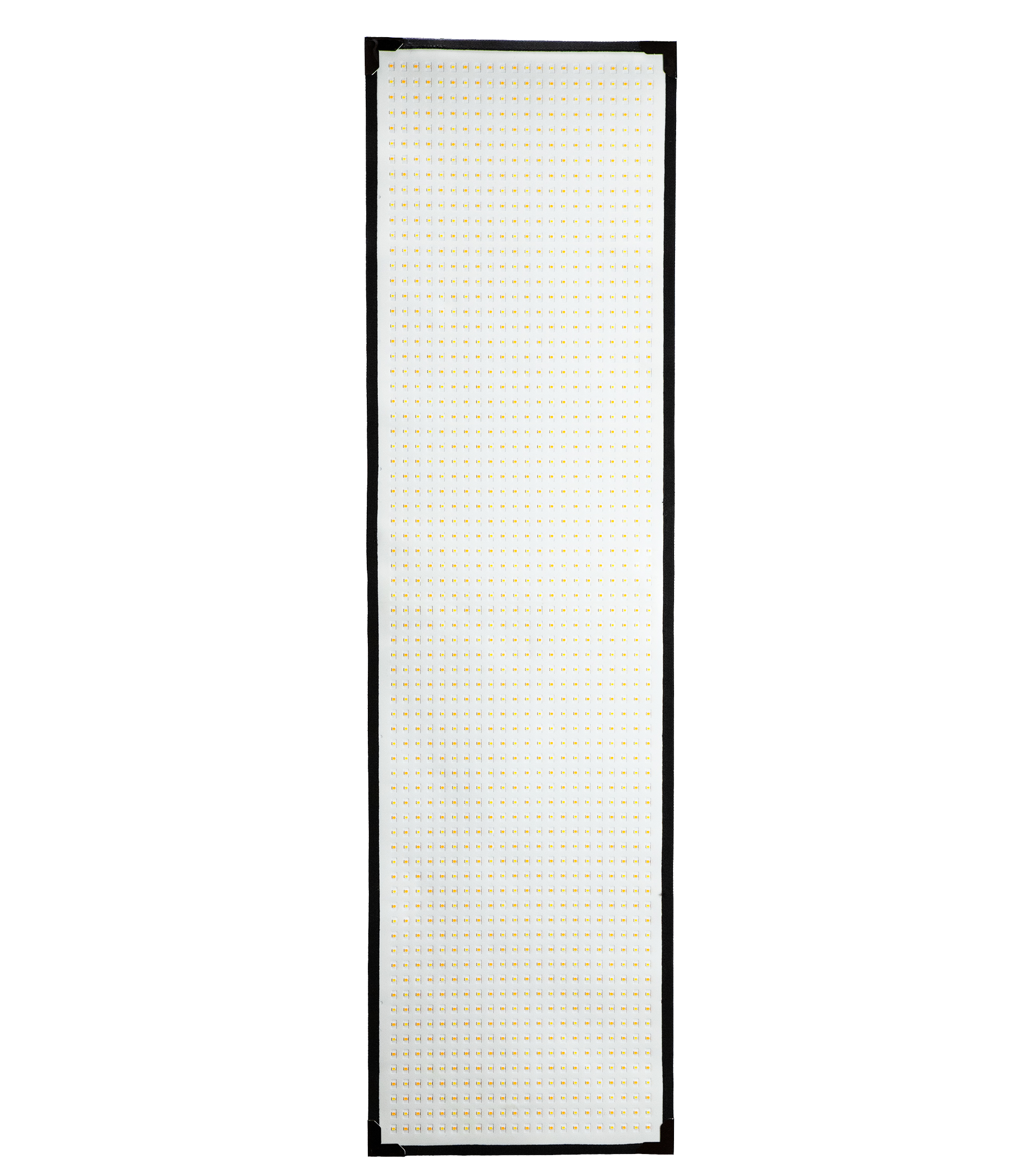
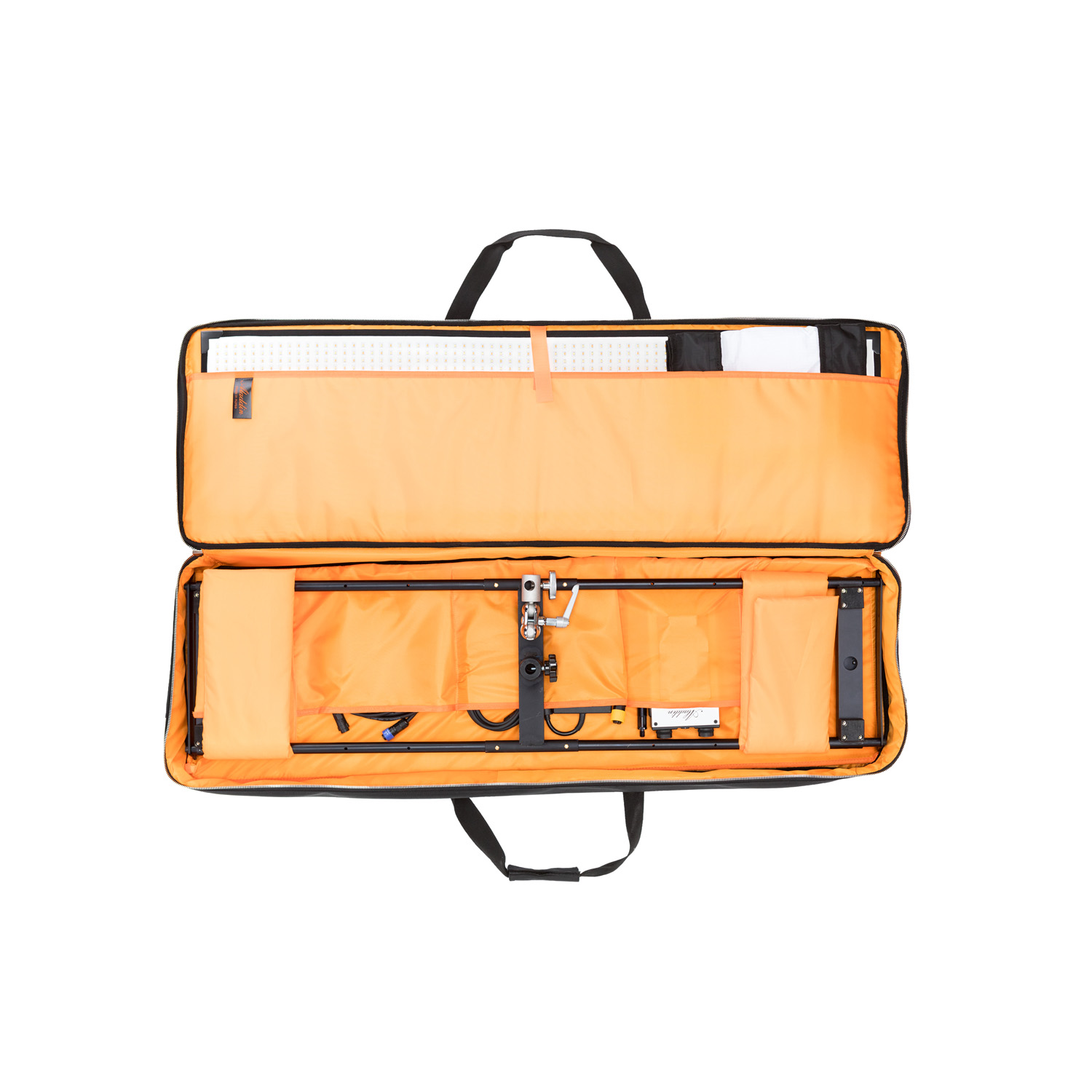
Select a photo to enlarge.
The component panels can be used separately with their matching 200 W dimmers. When assessing an older kit, count the working heads and complete electrical packages rather than treating it as a single modern 600 W mat.
Earlier model. This entry documents an older Aladdin fixture. Check replacement parts, batteries and controller support before buying a used kit.
Key specifications
| Specification | Details |
|---|---|
| Construction | Four 200 W original BI-FLEX panels |
| Combined nominal power | 800 W |
| Format | Nominal 4×4-foot assembly |
| Colour capability | Bi-colour white; no RGB engine |
| Original component CCT range | 2900–6000 K |
| Power / dimming | Matching 200 W panel dimmers and supplies |
| Control | Controller-dependent wired DMX |
| Important distinction | Different from MOSAIC 4×4 and MOSAIC 4×4 PIXEL |
Strengths and limitations
Strengths
- Large emitting surface
- Panels can work separately
- Broad soft-light format
Limitations
- Four panel and control packages add cabling and setup time.
- Every head must have the correct dimmer and support.
- No pixel control or saturated RGB capability.
Practical uses
Large overhead. Build the complete frame and diffusion package before calculating support and secondary retention. Keep all power equipment separately supported and accessible.
Wide interview or table key. Use the large face to cover more than one subject and check exposure across the whole playing area. Balance the individual panel settings to avoid a visible patchwork.
Split component package. Use the four 200 W heads in separate positions when the scene benefits from several smaller sources. That requires a complete power and control set for each.
Output and colour
The original catalogue gives the following illuminance figures for the assembled 800 W source. Keep that assembly and its stated CCT labels separate from the later MOSAIC ratings.
Do not treat an old HMI-equivalence marketing claim as a universal exposure comparison. Diffusion, beam spread, coverage and working distance determine whether a replacement can perform the same lighting job.
| Setting | 0.6 m | 1 m | 2 m | 3 m |
|---|---|---|---|---|
| 6000 K | 30000 | 15000 | 5000 | 2600 |
| 4200 K | 27000 | 14000 | 4800 | 2400 |
| 3000 K | 20000 | 10000 | 3600 | 1800 |
Power and batteries
The original concept uses four 200 W panels with their matching dimmers. Identify every supply and interconnect; the 48 V specification of a later MOSAIC 4×4 does not belong to this assembly.
For AC or battery use, account for the whole 800 W panel load and controller losses. Check individual continuous battery ratings and avoid improvised combining of supplies or battery outputs.
Control, cooling and camera operation
Control follows the installed original 200 W dimmers. Check whether they share a DMX mode and address them deliberately when a uniform large field is required.
Test every panel at warm, cool and low levels, then check the assembled source for colour or brightness differences. Leave airflow and keep the fabric clear of concentrated loads and sharp folds.
Balancing four component panels
Record a controller and address for each 200 W head. First set a static white cue across all four, then compare the assembled diffusion for seams and colour differences before programming a group fade. A replacement panel or a different dimmer revision may respond differently at the same nominal CCT and percentage. Keep the four working electrical packages with the frame in the rental inventory.
Modifiers, rigging and the working package
The four-foot assembly needs its correct frame, attachment hardware and appropriately sized diffusion. Individual panel frames and modifiers remain useful when the heads are split apart.
The full frame, four panels, modifiers, cables and separately supported electrical equipment determine the rig. Check all joints and use suitable secondary retention above a set.
Alternatives and related fixtures
| Fixture | Choose it for |
|---|---|
| LiteMat 4 Plus | A different broad variable-white source. |
| amaran F22x | A smaller single square bi-colour mat. |
| BI-FLEX 4 | Original 1080 × 300 mm, 200 W bi-colour BI-FLEX 4. A long narrow head with a matching original dimmer and frame. |
| MOSAIC 4×4 | 1100 × 1100 mm, 600 W white / 420 W RGB single-zone mat. Choose the square reflected shape when spatial pixel effects are unnecessary. |
| FABRIC-LITE 350 | 900 × 900 mm, 350 W bi-colour fabric panel with a 48 V power path. Choose its broad white source when saturated colour and pixel mapping are unnecessary. |
Rental and used-fixture checks
Count four working 200 W heads and the complete set of compatible dimmers, supplies and leads. A large frame with missing electrical parts is not a usable 800 W kit.
Inspect each fabric panel, attachment point and plug. Assemble the frame and diffusion, test one uniform DMX cue and check whether mismatched replacement heads change colour across the source.
Documentation and specifications
Browse Aladdin lights, LED mats or the equipment directory.