
Last Updated 7 hours ago
Overview
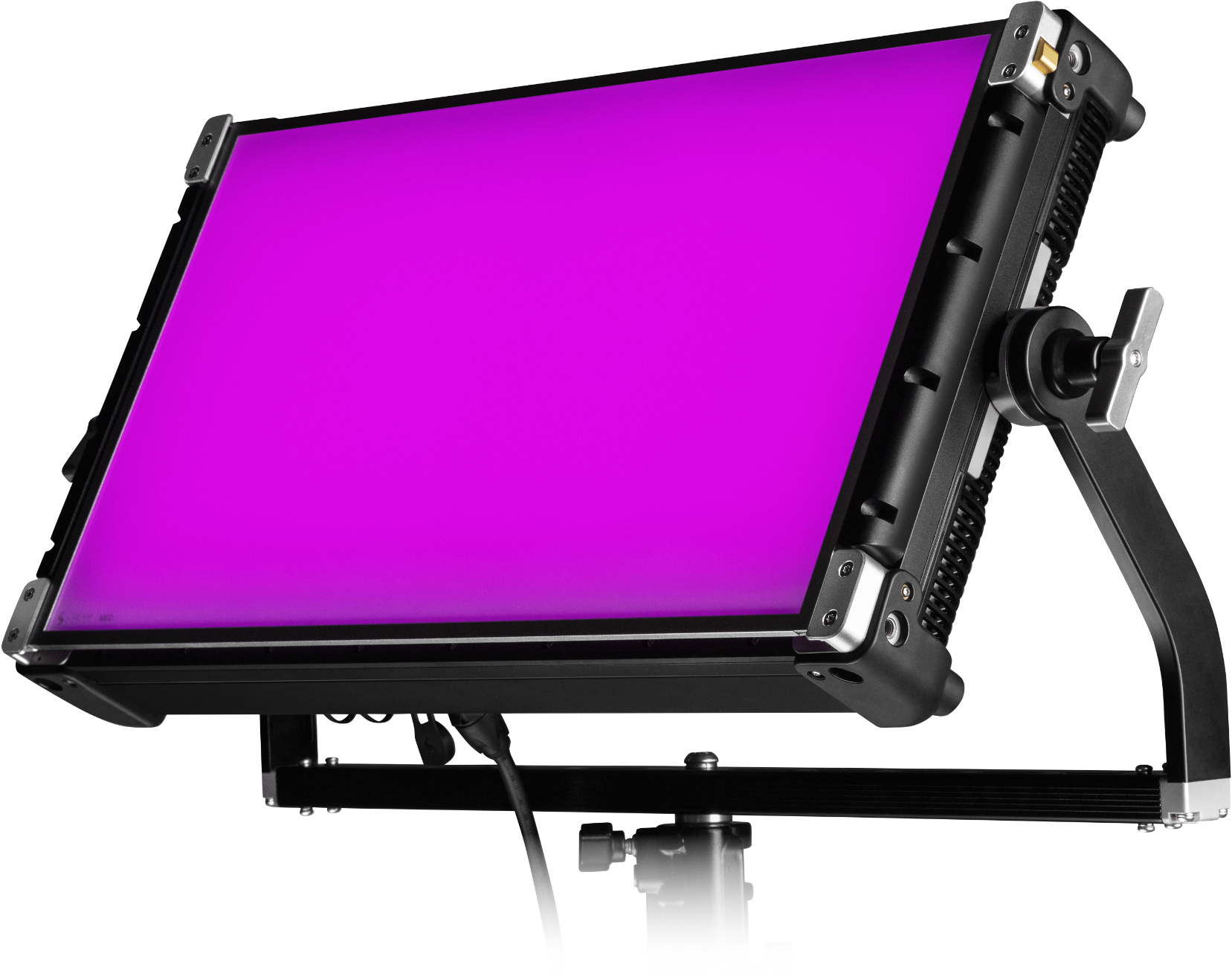
The Creamsource Vortex8 Soft is a 650W full-colour LED panel with 8 controllable zones and an integrated power supply. Its broad native distribution makes it a dedicated soft-source alternative to the original hard-beam Vortex8.
The “Soft” designation identifies a different optical design, not just a standard Vortex8 with a loose sheet of diffusion added. Compare the actual beam, output and source area when selecting between the two.
Key specifications
| Specification | Details |
|---|---|
| Engine | RRGBBW |
| Power | 650W |
| Controllable zones / pixels | 8 |
| CCT | 2,200–15,000K |
| Colour modes | CCT/tint, hue/saturation, x,y, gels, direct RGBW, effects |
| CRI / TLCI | Typical 95, manufacturer listing |
| Native beam | 110° open-face half-peak |
| AC input | 100–240V, 50/60Hz; max 6.6A |
| Direct DC | 48V DC, max 13.75A; full output with a suitable source |
| Weight | 16.0kg with yoke; 14.0kg excluding yoke |
| Size | 690 × 380 × 121mm without yoke |
| Yoke | Removable quick-release design |
| Rigging points | Eight ⅜in threaded points; four LNX sockets |
| Filter rails | Two; use the documented front-loading arrangement |
| Cooling / maximum ambient | Variable-speed fans / 40°C |
| Weather rating | IP65 |
| Control | Onboard, 5-pin DMX/RDM, wired remote option, LumenRadio TimoTwo, etherCON, USB-A |
Strengths and limitations
| Strength | Limitation |
|---|---|
| A broad emitting face suits soft keys and controlled reflections. | Diffusion and grids change both the exposure and the useful coverage. |
| Model-specific controls allow repeatable white or colour settings. | The controller, supply and rigging are part of the complete package. |
Practical uses
The Vortex8 Soft suits a broad close key, fill, studio base or controlled colour wash where a softer native distribution reduces the need for a separate large diffusion setup. Its AC/DC flexibility can help on location when the compatible portable-power system is available.
The Vortex4 and Vortex8 cover other sizes and optical priorities. Compare the complete working configuration at the required distance; model numbers and electrical power alone do not describe useful coverage.
| Setup | Working approach |
|---|---|
| Interview key | Set source size and distance for the required wrap, then add a grid or flags. |
| Product reflection | Watch the actual reflection while adjusting orientation and diffusion. |
Output and colour
Creamsource publishes separate open-face readings at 3,200K and 5,600K. The values below refer to the Soft model without an additional modifier, not to the original hard-beam Vortex8.
| Distance | 3,200K open face | 5,600K open face |
|---|---|---|
| 1m | 19,500 lux | 19,100 lux |
| 3m | 2,400 lux | 2,340 lux |
| 5m | 920 lux | 900 lux |
The Soft model’s 110° native beam spreads light broadly. That can be useful as a close key, fill, overhead base or ambient source, while also creating more spill than a narrow-beam panel. Plan grids or flags where the background must remain controlled.
Compare the original Vortex8 as a different optical tool. Matching wattage does not mean matching centre lux, beam coverage or modifier behaviour. A hard-beam panel through diffusion and a native soft source can produce different practical results.
8 controllable zones let the panel vary spatially rather than behave only as one uniform source. This is useful for effects, pixel patterns and interactive lighting, but the scene geometry determines how those zones blend on the subject.
x,y, hue-based and direct RGBW controls are different interfaces to the colour engine. A requested coordinate must lie within the achievable gamut, and white-light CRI does not predict saturated-colour exposure. Test the look through the intended camera, particularly for deep colours and reflected set materials.
Power and batteries
The Vortex8 Soft accepts 100–240V, 50/60Hz; max 6.6A. It also supports the specified 48V DC input up to 13.75A, with full brightness possible from a suitable source. That requires a power system that meets the actual continuous demand.
A battery’s capacity in watt-hours is not the same as its continuous-output capability. Use the documented compatible battery or regulated-DC arrangement and the correct connector and cable. The integrated AC supply means there is no separate ballast weight to move off the head.
Control, cooling and camera operation
The Vortex system supports wired DMX/RDM, Ethernet lighting workflows and a built-in LumenRadio TimoTwo system. USB-A supports documented system functions and can supply limited accessory power; it should not be confused with the fixture’s main power input.
Camera synchronization and High Speed mode address timing-sensitive work. Creamsource publishes a high-speed capability above 5,000fps in the specified mode. Treat that as a manufacturer claim requiring the correct setup, not a guarantee at every shutter, dimming level and camera phase.
Follow the current Vortex control and camera-sync guides, and match firmware and DMX profiles before shooting. A sync connection only helps when the signal, settings and camera timing are configured correctly.
IP65 applies to the specified fixture arrangement, with the required connector sealing and caps. It does not establish that third-party power distribution or an open cable connection has the same protection. The stated maximum ambient temperature is 40°C.
Variable-speed cooling means fan behaviour is part of the setup. Test at the actual light level and microphone position, with ventilation unobstructed. If an operating or power limit is selected for sound or thermal reasons, verify the resulting exposure before the take.
Modifiers, rigging and the working package
The system’s filter rails accept supported lenses, diffusers and other accessories. Creamsource’s naming and accessory range have developed over time. The current lens and intensifier guide is more useful for identification than assuming an older “flat diffuser” name describes every present option.
The manufacturer also documents a front-loading method for these models. Fit and secure the actual modifier as instructed, especially when a panel is already overhead. A shared accessory ecosystem does not mean that mounting procedure, frame colour or beam effect is identical on every Vortex size.
The published weight is 16.0kg with yoke, compared with 14.0kg excluding yoke. Add the actual modifier, extra rigging hardware and cable loading. Even a 2×1 soft panel is a substantial load once rigged high or combined with other fixtures.
Use LNX and threaded points according to the manufacturer’s rigging instructions. Combining fixtures into an array creates a new complete assembly: total mass, leverage, restraint and wind area all change. A mounting socket is part of a designed system, not a stand-alone approval for an improvised load path.
Alternatives and related fixtures
| Fixture | Choose it for |
|---|---|
| Vortex8 hard | A smaller or narrower-native-beam panel; identify the exact version. |
| SkyPanel S360-C | A different large soft-source format, power package and front-panel system. |
What people are saying
LCA: why the soft model differs
LCA’s overview distinguishes the wide native source of Vortex8 Soft and Vortex4 Soft from the harder Vortex panels. It also covers array building and the shared CreamOS workflow. View the source.
Videos
Creamsource Vortex8 Soft: review and operation
A walkthrough or review of the fixture and its working package.
Rental and used-fixture checks
Check the exact model and revision, complete power package, mounting hardware and control leads. Inspect emitting surface, connectors and support points. Test the intended operating level, fade and camera settings before rigging.
Documentation and specifications
Manufacturer product overview · Technical specification and photometrics · Data sheet · Operation, rigging, power and firmware documentation.
Product photograph: Creamsource.
Browse Creamsource lights · LED panels · all equipment.