
Last Updated 4 days ago
PATT 2013 Overview
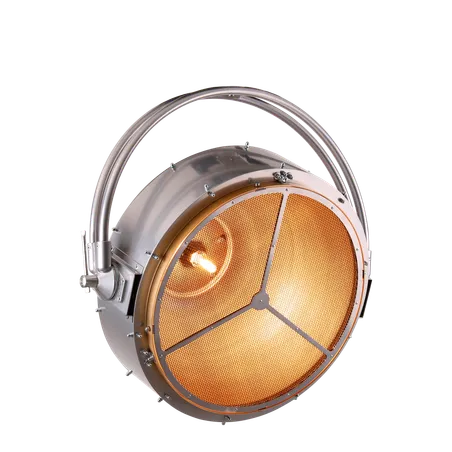
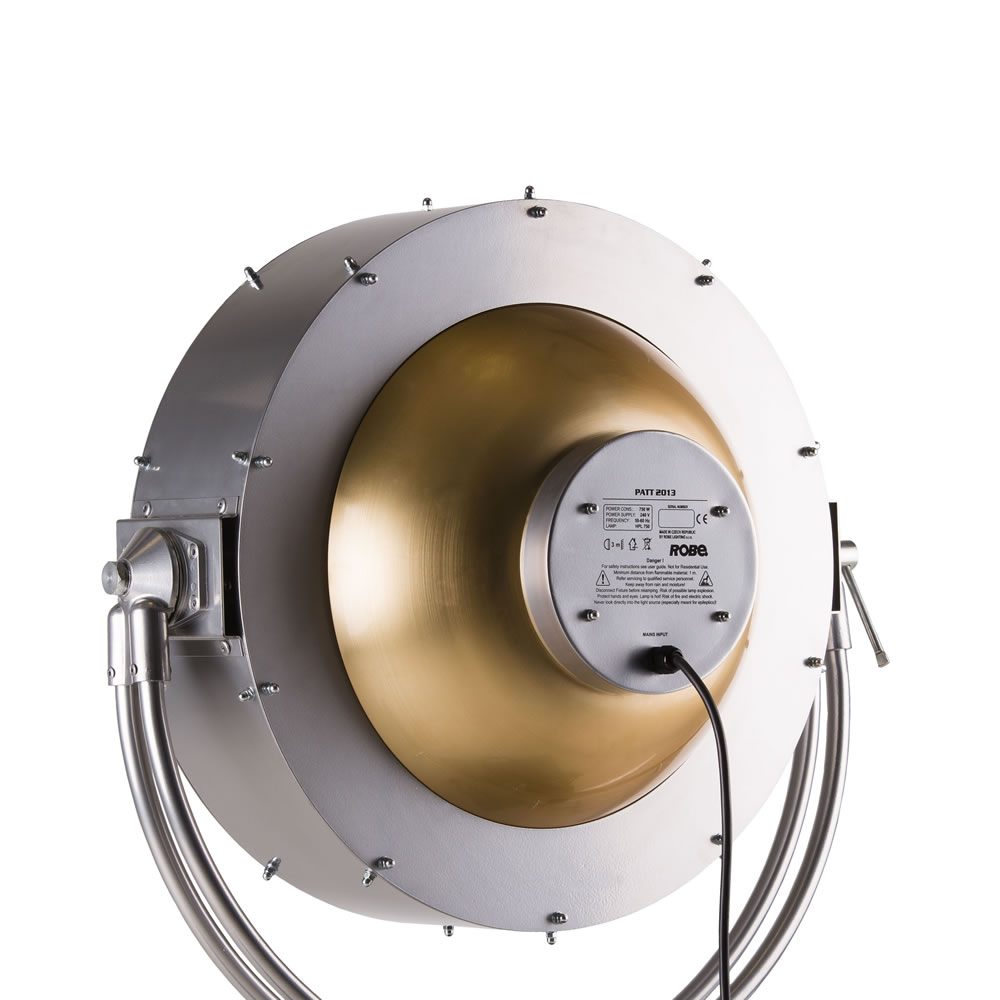
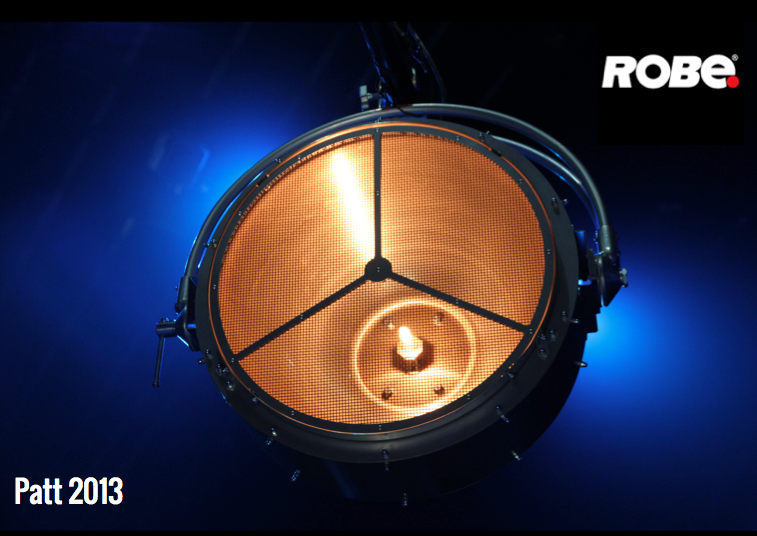
The Robe PATT 2013 is a 750 W tungsten scenic softlight with a 550 mm parabolic aluminium reflector. Tim Routledge’s retro broadcast-inspired design is intended to function both as a light source and an in-frame visual element.
At 550 mm across the reflector, this is the larger 750 W version, not the 575 W picklePATT. Use an external dimmer for level control and plan the view of the glowing reflector separately from the light it puts on a subject.
- Fixture Type Tungsten scenic softlight · Robe PATT 2013
- Power 750 W with voltage-matched HPL 750/X.
- Colour Temperature 3,050 K with Robe’s recommended HPL 750/X.
- Weight 7.2 kg / 15.9 lb.
- Beam Angle 550 mm parabolic reflector; no verified numeric beam angle.
- IP Rating IP20 per Robe. Read the IP Rating.
PATT 2013 Specifications
- 750 W high-performance tungsten lamp
- G9.5 special base with heat sink
- Recommended lamps: HPL 750/120/X for 120 V and HPL 750/230X or 750/240/X for 230–240 V
- 3050 K, 1,500-hour manufacturer lamp specification
- 550 mm high-reflectivity parabolic reflector
- 120 or 240 V, 50/60 Hz; 750 W power consumption
- External dimmer control
- IP20; M12 clamp or spigot mounting; 7.2 kg / 15.9 lb
Output Calculator
Select the published setup and a manufacturer distance, or enter a custom throw where supported. The results describe centre-beam output, not the brightness across the whole beam.
Camera Settings
If the calculator does not load, use the published photometric table or source on this page. JavaScript is required.
F-stop is a planning estimate, not a meter reading. It uses direct, on-axis illuminance and includes only the optics and diffusion named in the selected setup. Meter on set to account for lens transmission, filters, added diffusion, bounce, dimming and ambient light.
How the exposure estimate works
N = √(E × ISO × t / C), where E is illuminance in lux and t = shutter angle ÷ (360 × fps). The default C = 340 is a dome reference; C = 250 is a flat reference. These are calibration constants, not a measured T-stop. A small nonzero digit is tenths of a stop above the displayed full stop.
Distance estimates and comparisons
Published points are used as given. Between published points the calculator fits a curve through the two nearest readings. Outside those points it uses the inverse-square law only when the fixture’s dataset permits it. Distances outside a configuration’s supported range are reported separately. Comparisons use one shared distance and camera setup; equal lux does not imply equal coverage.
View published readings for the selected configuration
Strengths and Limitations
The 550 mm reflector is large enough to read as a shape on camera, and an external dimmer lets a console cue each circuit. It is an indoor, fixed-reflector tungsten fixture that gets very hot; treat it as an in-frame source first, not a replacement for the key.
Practical Uses
Use it as a visible warm practical, stage backdrop or row of repeating discs behind performers. Frame the dish and meter any spill on faces separately. If the look needs focused light on talent, add a separate key rather than pushing the scenic lights brighter.
Output and Colour
The Robe PATT 2013 US manual publishes a beam-distribution chart: 17° at half peak and 75° at one tenth of peak. The 5 m plot peaks near 410 lux on axis. Those are two intensity thresholds of the same beam, not spot and flood settings. The chart does not specify the test lamp voltage or dimmer setting. The calculator provides a single centre-beam reference at 4–14 m, not predictions for other lamps or dimmer levels. Values between the published distances are estimates; values outside that range are not given. The manual requires at least 3 m to illuminated objects, so its 2 m chart row is excluded.
Power and Batteries
At 120 V, 750 W is 6.25 A. At 240 V it is 3.13 A. The fixture uses an external dimmer, and the HPL lamp must match the supply voltage.
Control, Cooling and Camera Operation
The head has no onboard DMX, fan or colour control. The external dimmer determines control and tungsten warms when dimmed. Check the chosen dimmer and camera settings on the actual rig. Robe specifies convection cooling, up to 160°C surface temperature and roughly 40 minutes to cool before handling. Robe US manual.
Modifiers, Rigging and the Working Package
Robe specifies an M12 clamp or spigot through the yoke. Use suitable primary support and the manual’s secondary retention for overhead use. Do not cover the unit; keep at least 0.5 m from exterior surfaces to flammable materials and at least 3 m to illuminated objects. The fixture is IP20 and indoor-only. Robe US manual.
Alternatives and Related Fixtures
The 575 W Robe picklePATT has a smaller face and is a different fixture. Choose a conventional Fresnel or LED key when you need to shape and meter a subject instead of putting the fixture itself in shot.
What People Are Saying
These production accounts describe how crews used the fixture. The practical limits below come from the rig descriptions and manufacturer instructions, not an independent lab review.
Field Feedback at a Glance
What worked on stage and on camera
- Warm background in a music video. Lighting designer Myles Mangino chose 32 PATT 2013s for the warehouse backdrop in Lucky Daye and Mark Ronson’s Too Much. He wanted the glow and the large vintage-looking faces in frame. Mangino’s account in Robe’s case study.
- A matching look around tungsten set bulbs. At Radio 1’s Big Weekend, designer and co-developer Tim Routledge found the original PATT 2013 fitted the rest of the tungsten stage lighting. The broadcast director framed the visible dishes in multiple shots. This was the original James Thomas Engineering release of the design, before Robe made it. Routledge’s account in Live Design.
- Large repeatable shapes for console cues. At Creamfields, Jon Trincas used 48 Robe PATT 2013s across 12 upstage towers and mapped the grid for patterned cues from a grandMA2. Robe’s Creamfields production report.
Drawbacks to plan for
- Not the key or beam light by design. Routledge designed the fixture to be seen in the shot, not to replace a key or a narrow beam. Mangino’s music-video rig paired the scenic tungsten wall with separate ESPRITE movers. Routledge’s design account.
- External dimmers and separate lamp voltages. Robe specifies 750 W maximum and external dimming; the 120 V and 240 V HPL options are voltage-specific, not interchangeable. A wall of 48 at nameplate load is 36 kW of lamp load before other equipment. Robe specifications.
- Heat restricts placement. Robe’s operating instructions forbid covering the fixture and require at least 3 m from the light output to the illuminated surface. Treat it as a hot studio or stage fixture, not a bedside practical you can tuck against a set wall or curtain. PATT 2013 operating instructions.
Videos
Robe’s exact-model product video shows the PATT 2013’s visible reflector and stage appearance. Use the operating manual for lamp, fixture clearance and rigging checks.
Rental and Used-Fixture Checks
Confirm the fixture says PATT 2013, not picklePATT or the LED PATT variants. Check the rated HPL lamp voltage, earth and power cord, reflector and front guard, yoke and correct stand or clamp. Include the dimmer and cable package when booking, and test the fixture after it is safely installed.