
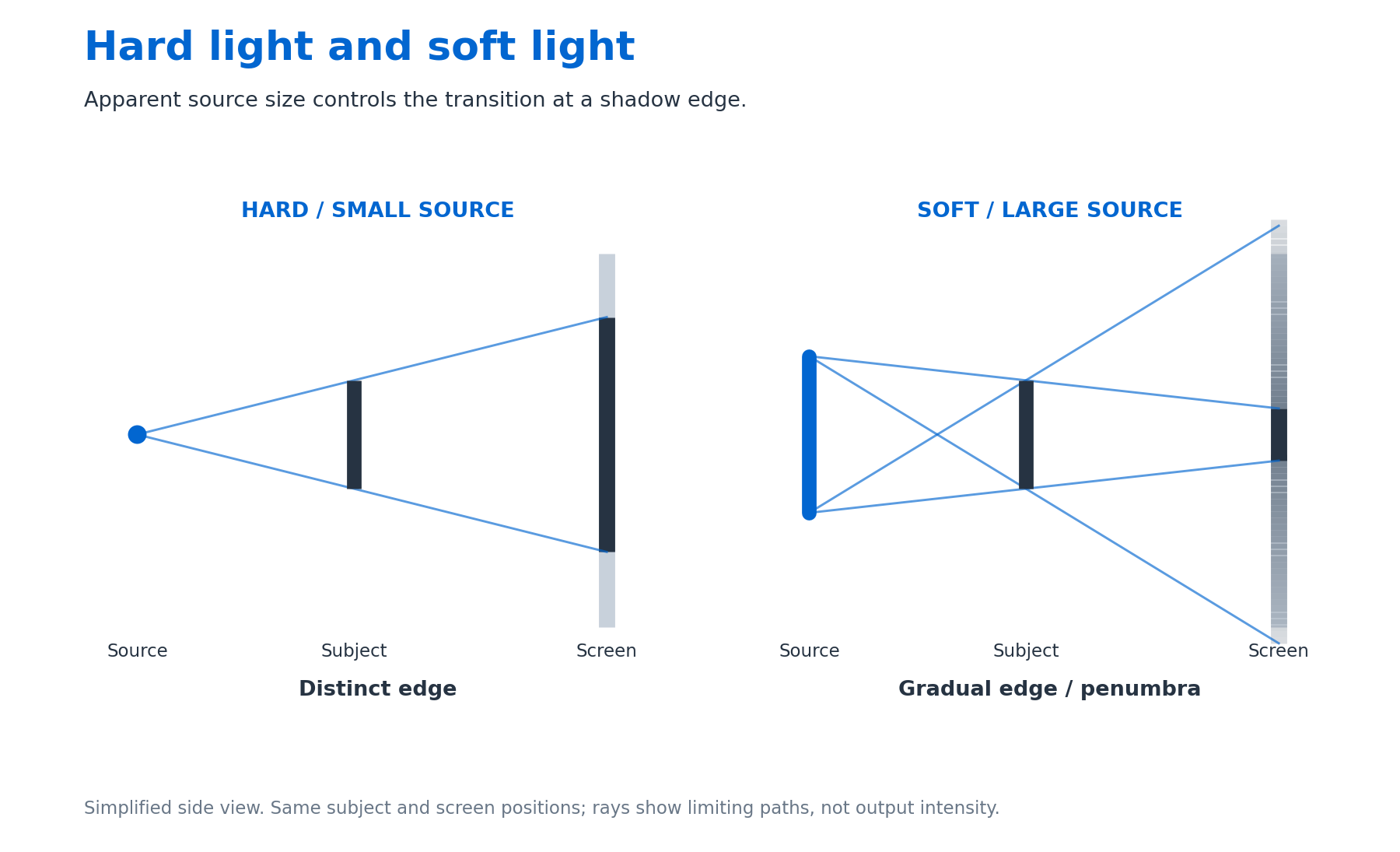
Hard light produces a distinct shadow edge. Its source appears small from the subject’s position; brightness alone does not determine hardness.
On set
Use hard light when you want defined shadows, visible texture or a shaped beam. Direct sunlight and a small, undiffused fixture are common examples.
Practical example
A compact light aimed through blinds can create clear stripes on a wall. Replacing it with a large nearby diffusion source makes those edges less distinct.
Using hard light
To create a defined shaft or shadow pattern, start with a source that appears small from the subject’s position. Moving a flag changes the shadow it casts: a flag close to the subject generally gives a more defined cut than the same flag close to a broad source. Check the result from the camera position. A hard key can still have open shadows if room bounce or a separate fill supplies light to the shadow side.
Related terms
Soft light · Negative fill · Flag