
Negative fill reduces ambient or bounced light reaching a subject by placing a dark, low-reflectance surface where that light would otherwise come from. It is often called neg fill.
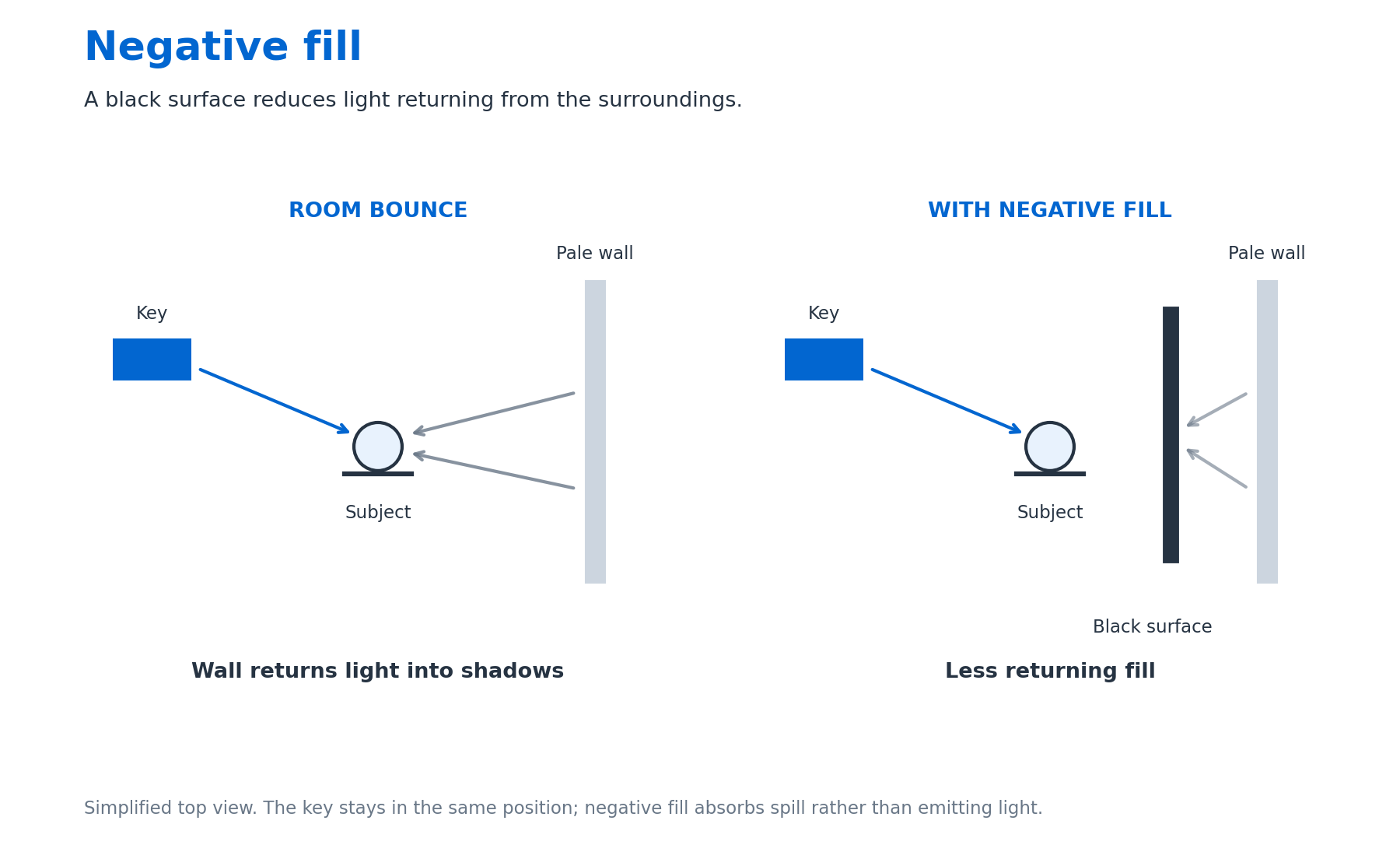
How it works
White walls, floors and other surfaces bounce light back into a scene. A black solid, floppy or piece of duvetyne can intercept part of that light or replace a bright reflecting surface. The result is usually a darker shadow side and more shape.
The size, position and distance of the black surface affect how much of the surrounding light it removes. Judge the change at the subject rather than assuming any black flag will produce the same result.
Practical example
In a white room, a large window may light one side of an actor’s face while the opposite wall fills in the other side. Place a black solid on the wall side, outside frame, to reduce that return and deepen the shadows.
Negative fill and soft light
Negative fill can increase contrast while the key remains soft. Shadow depth and shadow-edge softness describe different aspects of the lighting.
Related terms
Soft light · Hard light · Flag · Lighting Ratio
References
Rosco: the basics of film lighting · Rosco: creating negative fill