
Last Updated 22 hours ago
Overview
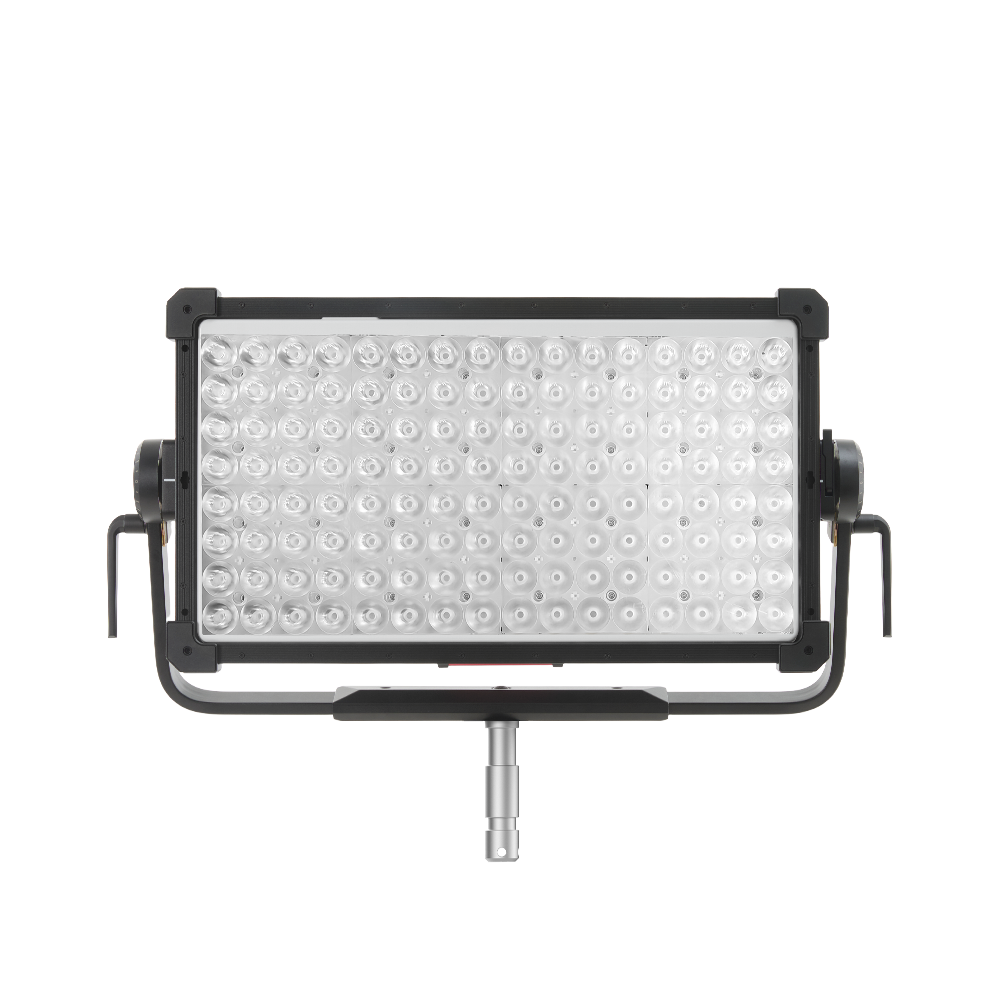
The Aputure NOVA 9° 2×1 is a tunable-white, lensed LED panel designed for long-throw directional light. Its BLAIR engine covers 1,800–20,000K with tint correction, while the native 9° beam concentrates output into a narrow field. It has four pixels, IP65 protection and an 800W maximum electrical input.
The NOVA 9° shares accessory dimensions with the NOVA II 2×1, but serves a different job. Choose it for a distant window source, defined shafts or a controlled bounce; adding diffusion trades away much of its narrow-beam intensity.


Select a photograph to view it at full size.
Key specifications
| Specification | Details |
|---|---|
| Engine / colour | BLAIR; tunable white with tint adjustment |
| White range | 1,800–20,000K |
| Maximum input / LED class | 800W / 650W |
| AC supply | 100–240V, 50/60Hz |
| Native / included flat diffuser | 9° / 80° |
| Pixels | 4 |
| Colour references | CRI/TLCI ≥95; SSI tungsten 89 / D56 86 |
| Bare head / yoke / flat diffuser | 17.25kg / 2.40kg / 2.00kg |
| Size with yoke | 82.9 × 56.6 × 15.4cm |
| Weather / operating temperature | IP65; −20°C to 50°C |
| Console controls | DMX/RDM, internal CRMX, Art-Net/sACN |
Technical reference: Aputure product information and downloads.
Strengths and limitations
Strengths
- Concentrated native beam is useful over distances where a wide panel wastes spill.
- White-light tuning and tint correction reduce the need for correction gels.
- Shares the NOVA 2×1 front accessory system and supports console/network control.
Limitations
- The 9° beam needs careful aiming and adequate distance for coverage.
- It is a tunable-white fixture; do not order it as a replacement for a full-colour NOVA II.
- The head, yoke and diffuser form a heavy package, and quieter operation reduces usable output.
Practical uses
| Setup | Working approach |
|---|---|
| Distant window sunlight | Place the panel back from the window so the beam covers the intended opening, then inspect the shadows from the actual multi-emitter face. |
| Atmospheric shaft | Aim the native beam through an appropriately managed hazed space, keeping the source and unwanted spill out of frame. |
| Selective bounce | Use the narrow beam to hit one bounce surface without lighting the rest of the room. Meter the returned light at the subject. |
| Three-panel array | Use the dedicated multi-light hardware and an engineered support plan. Include the combined power, mounting hardware and cable load. |
Output and colour
The manufacturer publishes long-throw readings at 5m, 10m and 20m. These are more useful than a very close centre reading for judging the intended application. A narrow beam can produce a high number while covering only a small part of a set.
At 5,600K and 5m, the published native reading is 29,730 lux; fitting the flat diffuser changes the published reading to 935 lux. That is a different beam, not an exposure value that can be carried unchanged between the two setups.
| CCT | Distance | Native 9° (lux) | Flat diffuser (lux) |
|---|---|---|---|
| 3,200K | 5m | 28,090 | 879 |
| 3,200K | 10m | 7,660 | — |
| 3,200K | 20m | 2,040 | — |
| 5,600K | 5m | 29,730 | 935 |
| 5,600K | 10m | 8,320 | — |
| 5,600K | 20m | 2,229 | — |
Published photometrics: measurement configurations and full output tables.
Tests and demonstrations
Matthew Allard’s Newsshooter review measures output, colour and fan-mode changes. At 5,600K and 3m he reports 65,600 lux in Medium, 48,000 lux in Low and 5,630 lux in Silent, with Max Output selected. Those are review-unit measurements at 3m, separate from Aputure’s 5m table.
Power and batteries
Use the 800W maximum input for AC planning. The 650W class describes LED power rather than the complete circuit load. An array needs a separate calculation for all three fixtures and any linked-power cables.
There is no standard onboard camera-battery pair. A suitable AC source is the straightforward location option, subject to its continuous output and runtime. Keep the fixture’s AC loop-through limits and the upstream circuit limit in the same plan.
Control, cooling and camera operation
Onboard operation, Sidus Link / Link Pro, DMX/RDM, CRMX and Ethernet Art-Net/sACN support local, app and console control. Four-pixel modes require the correct personality and enough channels.
Choose the white-light standard, output mode and fan mode before metering. The substantial Silent-mode reduction in Allard’s test makes fan selection part of the exposure plan.
Check shutter, frame rate and dimming with the actual camera. A high-output native-beam test does not establish how a low-level effect will behave in a different mode.
Modifiers, rigging and the working package
| Component / accessory | Package considerations |
|---|---|
| Head and yoke | 17.25kg bare head plus 2.40kg yoke; include the 2.00kg flat diffuser if fitted. |
| Dedicated front accessories | NOVA 2×1 dome diffusers, softbox, barn doors and grid; confirm the chosen diffusion density. |
| Three-light yoke | Dedicated array hardware; include total mass and distribution in the rigging plan. |
| Stand and transport | Junior-pin yoke and substantial support; optional loaded rolling-case reference 36.03kg. |
A front diffusion accessory changes more than the centre exposure. Inspect the resulting beam edges, nearby colour shadows and apparent source size before using it as a close key.
Alternatives and related fixtures
| Fixture | When to compare it |
|---|---|
| STORM 700x | A tunable-white point source with a smaller head and Bowens-based optics. |
| STORM 1200x | A larger point source when variable Fresnel spread is more useful than a fixed lensed-panel beam. |
| Nova P600c | A broad full-colour panel when coloured or soft direct light is the main job. |
| Creamsource Vortex8 | A full-colour hard-panel alternative; compare useful beam coverage and modifiers. |
What people are saying
Matthew Allard, Newsshooter, August 2026. His detailed review examines the unusual narrow beam, substantial working weight and large fan-mode output changes. Read the measurements and shooting observations.
On Set with Mikhail Shashko. The NOVA 9° discussion begins at 1:15:26 in the family comparison, followed by a lighting demonstration. Watch the NOVA 9° chapter.
Videos
On Set: NOVA panels compared. NOVA 9° discussion starts at 1:15:26 and its demonstration at 1:25:05.
Daniel Blanco AMC: NOVA lighting class. A Spanish-language production demonstration comparing NOVA configurations.
Rental and used-fixture checks
- Identify the NOVA 9° rather than a similarly sized NOVA II 2×1.
- Check the front lenses, diffuser catches and accessory seating.
- Test beam coverage and shadow character at the intended distance.
- Set and meter the working fan mode before the take.
- Inspect the yoke, junior pin and safety attachment under the complete configured load.
Documentation and specifications
- Aputure product specifications, kit options and firmware downloads
- Product manual (PDF)
- DMX profiles (PDF)
- Manufacturer data sheet (PDF)
- Newsshooter independent output and colour review
Browse Aputure lights · LED panels · all equipment.