
Last Updated 19 hours ago
Overview
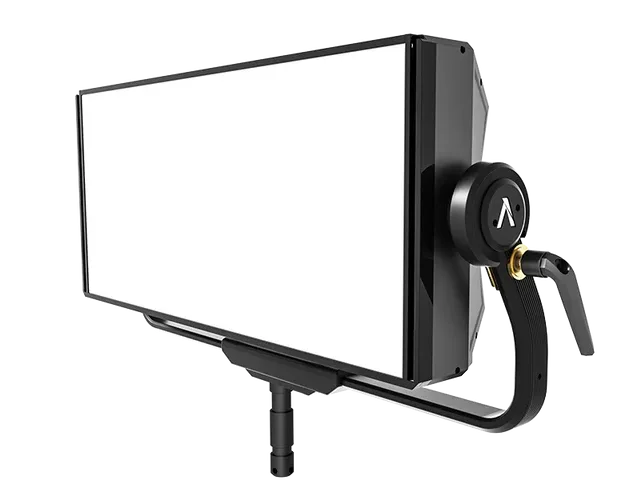
The Aputure Nova P600c is a 600W-class RGBWW soft panel with an integrated power supply and four independently controllable light engines. It is distinct from both the smaller P300c and later Nova models, with its own accessories, control profiles and output figures.
The P600c combines a broad RGBWW soft panel with four separately controllable engines for conventional keys, colour washes and programmed effects. The rig must accommodate its weight and 720W maximum input.
Key specifications
| Specification | Details |
|---|---|
| Type | RGBWW soft panel with four independently controllable light engines |
| CCT | 2000K–10,000K |
| LED output / maximum input | 600W / 720W |
| Beam angle | 120° |
| Lamp head | 13.74kg / 30.29lb, per user manual |
| Remote control box | 0.43kg / 0.95lb |
| Power | Integrated AC supply; 48V/15A DC input |
| Control | Onboard, Sidus Link, wired DMX and built-in LumenRadio CRMX |
| Status | Discontinued; manufacturer support documentation remains available |
Strengths and limitations
Strengths
- Four engines allow spatial effects as well as normal soft-panel lighting.
- Integrated AC power and internal CRMX reduce separate power and receiver hardware.
Limitations
- The head is substantially heavier than the removable control box; the latter is not the whole power system.
- A broad soft beam provides different reach and shaping from a hard panel or Fresnel.
Practical uses
Use it for a large soft key, coloured wash or programmed lighting cue. Allow room for the panel, yoke and diffusion accessories, and check the selected DMX personality when using its separate light engines.
| Setup | How to use this fixture |
|---|---|
| Large soft key | Use the panel close, or add the compatible softbox for a larger source. Choose a grid when wall or background spill matters. |
| Vehicle, screen or fire interaction | Use separate engines for changing light across the subject. Rehearse the motion and colour sequence at the actual exposure, rather than relying on a static white reading. |
| Studio or console-controlled set | Build the cue with the intended whole-panel or multi-engine personality. A profile change can alter channel footprint and the way existing cues address the lamp. |
Output and colour
Four independently controllable RGBWW light engines distinguish the P600c from the original P300c. Its 120° panel can provide a broad white or coloured source, while zone programming can create changing environmental light. Select the console personality that exposes the needed zones; a whole-fixture mode and a multi-zone mode are different control configurations. Diffusion and saturated colour change the available exposure.
Sources: Aputure Nova P600c operating manual; Nova P600c | Aputure.
| CCT, unmodified panel | 1m | 3m | 5m |
|---|---|---|---|
| 3,200K | 15,240 lux | 1,936 lux | 746 lux |
| 5,600K | 17,520 lux | 2,167 lux | 847 lux |
| 6,500K | 18,346 lux | 2,298 lux | 867 lux |
Photometric & exposure calculator
Estimate centre-beam illumination and the corresponding camera aperture from this fixture’s published measurements.
Estimated output
Select a configuration to calculate.
Manufacturer readings are for the stated optic, colour setting and full output, measured at the beam centre. Values between measured distances are interpolated. Point-source values outside those distances are approximate inverse-square estimates; large sources cannot be reliably extrapolated and are limited to their measured range. Exposure uses frame rate, shutter angle, ISO and the selected incident-meter calibration. Only the optics and diffusion explicitly listed in the measurement are included; additional modifiers, bounce, beam edges, ambient light, ND filters and camera exposure-index differences are not accounted for. Confirm critical exposures on set with a meter. Photometric source
Aputure’s 2,298-lux figure at 3m is measured at 6,500K. The 5,600K result is a separate row in the table. Saturated colours, individual-engine effects and added diffusion have different output levels.
Tests and reviews
Graham Sheldon tested the P600c without extra modifiers at 3ft with a Sekonic C-700U for CineD. His unit tracked target CCT closely and produced consistent output across the tested settings. At 3,200K he measured Δuv of −0.0002.
Read Sheldon’s test setup and comparison. Gaffer & Gear’s embedded review adds separate demonstrations of modifiers, power, dimming and DMX behaviour.
Power and batteries
The 600W light engine is distinct from the 720W maximum electrical input. The AC supply is integrated into the lamp. The remote control box weighs approximately 0.43kg and is an interface, while the manual lists the lamp at 13.74kg.
External DC operation uses 48V at 15A on the specified 3-pin XLR input. Include a suitable supply, cabling and sustained output capability in the order. The fact that the controller can be operated remotely does not mean this panel has a lightweight head with a separate ballast.
Control, cooling and camera operation
| Control path | Hardware and operating notes |
|---|---|
| Local interface | Removable controller; direct contact-pin mounting or the supplied 3m extension cable. |
| App | Sidus Link Bluetooth Mesh for supported white, colour and effect controls. |
| Console | Wired 5-pin DMX and internal LumenRadio CRMX; no separate CRMX receiver is needed for the standard lamp. |
| Engine control | Four independent RGBWW engines with a suitable multi-engine personality; whole-panel modes address them differently. |
Use a four-colour test cue to establish engine order and orientation before programming a travelling effect. A lamp rotated in its yoke can reverse the apparent direction of a chase relative to the console layout. Label orientation in the rig notes when multiple panels are used.
For dialogue, run the intended fan setting and brightness before approving sound. For low-level cues, test the fade on the production camera and keep the selected mode with the cue notes. A standard maximum-output white measurement cannot establish quiet-mode exposure or saturated-colour brightness.
Modifiers, rigging and the working package
Order the P600c-specific softbox or grid and account for the long panel, yoke and accessory load when choosing support. Route the remote-control cable so it remains usable at the working height. The manufacturer marks the original P600c discontinued; inspect accessory attachment points, cooling and connector condition on an older package.
| Package item | Why it matters |
|---|---|
| Lamp and curved yoke | 13.74kg manual reference for the lamp; provide clearance for fitted front accessories |
| Control interface | Remote box, Lightning Clamp and 3m cable for access at working height |
| Front light control | P600c-specific softbox, grid, barn doors or compatible intensifier |
| Power | AC lead, or a compatible 48V/15A DC system |
| Transport | Case configuration and its loaded weight, separate from the lamp specification |
Test the full tilt range with the chosen softbox or grid in place. The wider head and added modifier can need more room behind a diffusion frame than a bare-panel photograph suggests. Keep the controller cable, AC/DC connection and accessory latch reachable after the lamp is raised.
Alternatives and related fixtures
| Fixture | When to compare it |
|---|---|
| Aputure Nova P300c | Choose the smaller original Nova for a simpler soft source when four-zone control is unnecessary; budget an external CRMX receiver for it. |
| Creamsource Vortex 8 | Choose a narrow native hard panel when reach matters, then compare output again with equivalent diffusion. |
| ARRI Skypanel S60-C | Compare the S60-C's soft-panel coverage and existing accessory inventory, including PSU and wireless control hardware. |
What people are saying
Graham Sheldon, CineD
Sheldon measures close target-CCT tracking and consistent output across the settings he tests. He considers the P600c competitive with established studio panels. Read article.
Gaffer & Gear
Andrew Lock compares the P600c with a SkyPanel and examines modifiers, DMX behaviour, power draw and dimming. Watch video.
Videos
Gaffer & Gear tests the Nova P600c, including colour, brightness, modifiers and DMX.
Rental and used-fixture checks
- Run a different colour on each zone to verify the selected multi-zone personality.
- Check the remote box and cable, yoke brake and diffusion/grid fit.
- Test full-output and quiet operation after warm-up, then repeat the intended low-level fade.
Documentation and specifications
Browse Aputure lights · LED panels · all equipment.