
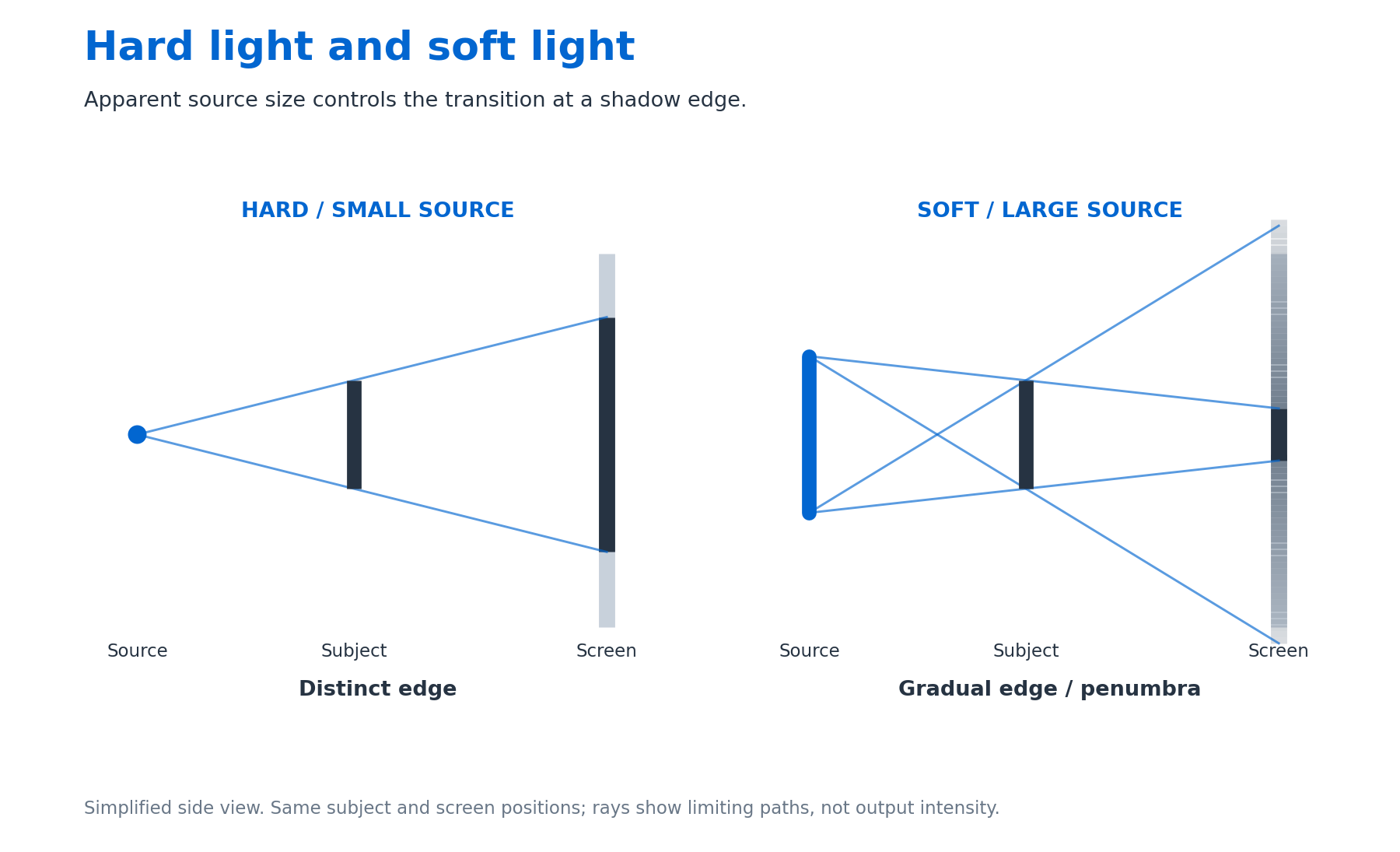
Soft light produces a gradual shadow edge. Its source appears large from the subject’s position. A larger illuminated diffusion surface or bounce can create this effect.
On set
Source size and distance work together. Moving the same softbox farther away makes it appear smaller, which can make its shadows harder.
Practical example
A large diffused key can give a face soft shadow edges. Adding black material on the opposite side can deepen those shadows while keeping the key soft.
Size, distance and contrast
Compare a softbox close to a face with the same softbox farther away. Its apparent size becomes smaller with distance, so the shadow transition can become more defined. When lighting through diffusion, judge the area that is actually illuminated; an unfilled frame does not act like an evenly bright source of its full size. Softness also does not require flat contrast: a large soft key can produce deep shadows when fill and room bounce are controlled.
Related terms
Hard light · Negative fill · Feathering · Book Light