
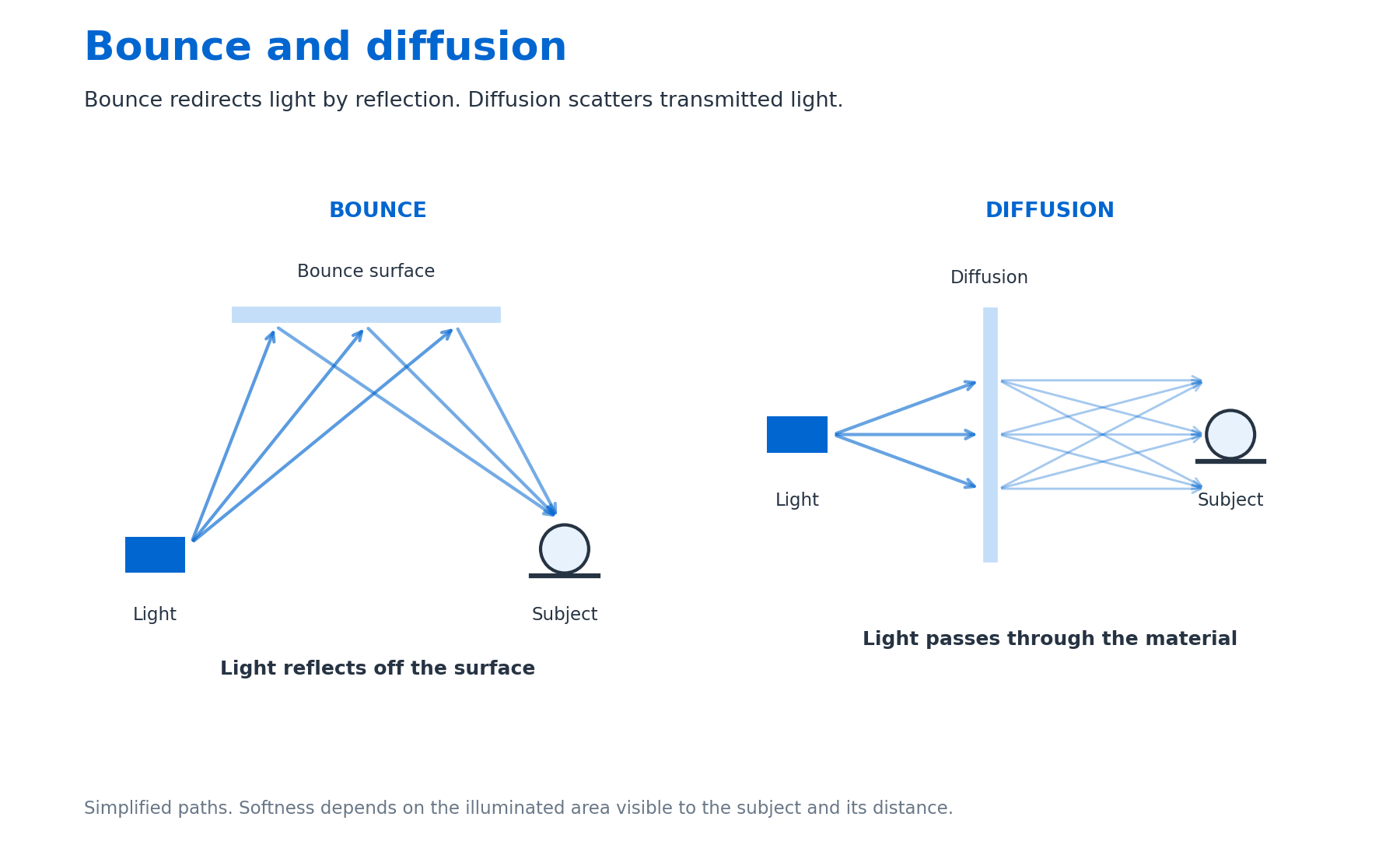
Bounce light reaches the subject after reflecting from a wall, ceiling, board, fabric or other surface. The lit area of that surface becomes the effective source for the reflected light.
Choosing a surface
A broad matte-white surface can provide a soft return. Silver and other more directional surfaces behave differently and may create stronger highlights or a more concentrated reflection. The colour of a surface can also colour the returning light.
Controlling the result
Look at the size of the illuminated patch from the subject’s position, not only the size of the board. A small hotspot on a large board does not use its full area. Bounce also changes the light path and output, so meter the light after it has been reflected.
Practical example
For a soft interview key, aim a fixture into a white bounce outside frame and use the reflected light on the subject. Check for direct spill from the fixture that could create a second, harder shadow. A coloured wall can introduce a cast even when the fixture itself is set to the desired CCT.
Related terms
Soft Light · Fill Light · Negative Fill · Book Light