
Last Updated 4 minutes ago
Cineo Matchbox Overview
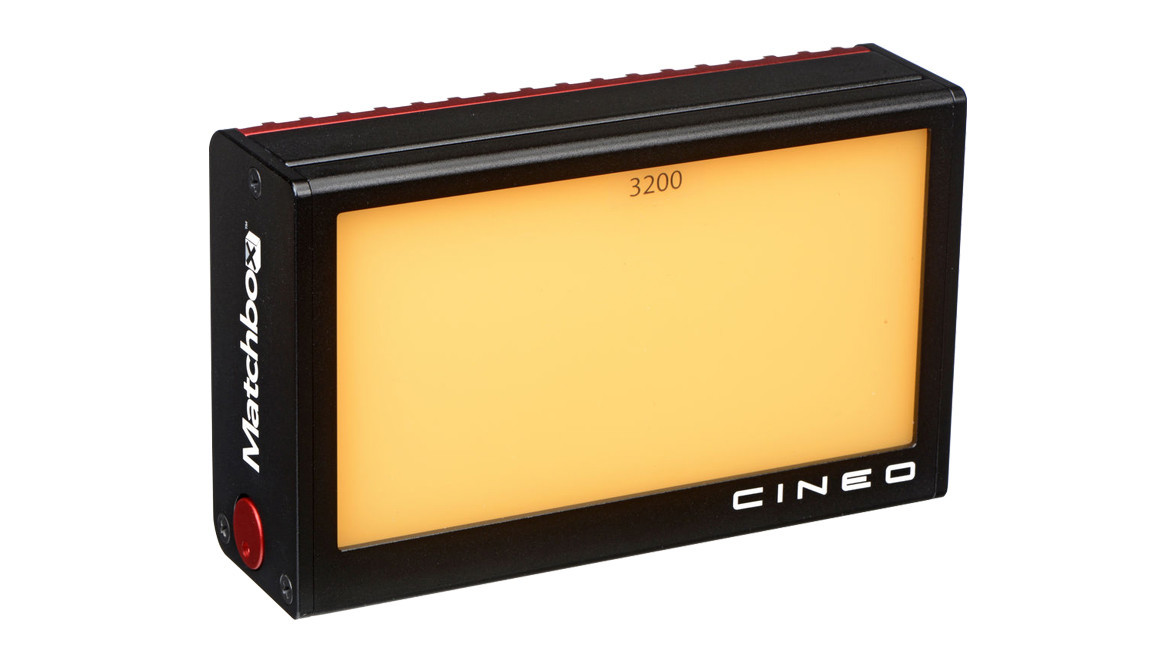
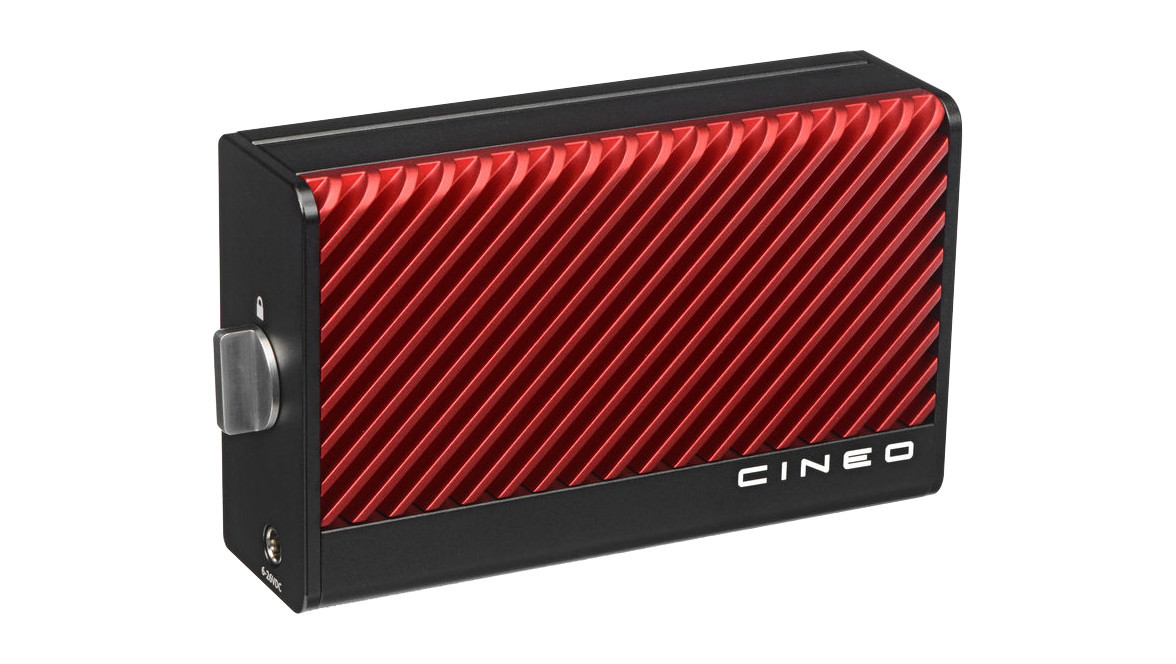
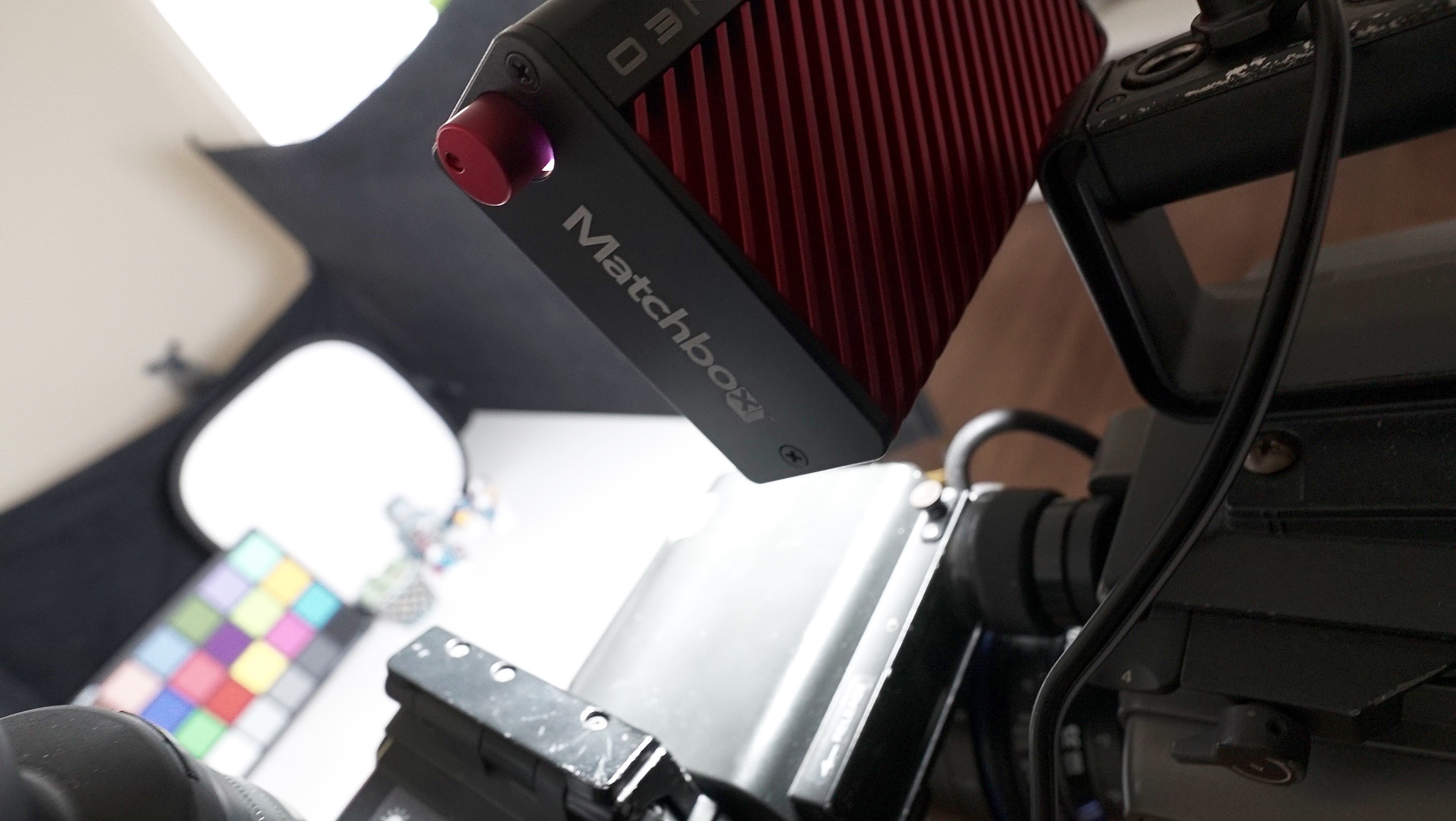
The Matchbox is a small remote-phosphor soft source for places where even a 1×1 panel would dominate the set.
Its wide emission makes it useful tucked into a dash, shelf or practical enclosure.
- Remote-Phosphor LED Interchangeable panels.
- 13 W 6–26 V DC.
- Colour Temperature2,700, 3,200, 4,300 or 5,600 K Change the phosphor panel to change colour temperature.
- Weight425 g head
- Beam Angle160° published spread; not a 50% beam angle
- IP RatingNot specified Cineo describes the fixture as weather-resistant but does not give an IP code. Read the IP Rating.
Cineo Matchbox Specifications
| Specification | Details |
|---|---|
| Manufacturer and model | Cineo Matchbox |
| Source or rated power | 13 W remote-phosphor LED |
| Optics, colour or format | 6 to 26 V DC |
| Head or system detail | 160° emission arc |
Cineo gives one metric reference distance per panel (1 m); the calculator does not estimate other distances.
Output Calculator
Select the published setup and a manufacturer distance, or enter a custom throw where supported. The results describe centre-beam output, not the brightness across the whole beam.
Camera Settings
If the calculator does not load, use the published photometric table or source on this page. JavaScript is required.
F-stop is a planning estimate, not a meter reading. It uses direct, on-axis illuminance and includes only the optics and diffusion named in the selected setup. Meter on set to account for lens transmission, filters, added diffusion, bounce, dimming and ambient light.
How the exposure estimate works
N = √(E × ISO × t / C), where E is illuminance in lux and t = shutter angle ÷ (360 × fps). The default C = 340 is a dome reference; C = 250 is a flat reference. These are calibration constants, not a measured T-stop. A small nonzero digit is tenths of a stop above the displayed full stop.
Distance estimates and comparisons
Published points are used as given. Between published points the calculator fits a curve through the two nearest readings. Outside those points it uses the inverse-square law only when the fixture’s dataset permits it. Distances outside a configuration’s supported range are reported separately. Comparisons use one shared distance and camera setup; equal lux does not imply equal coverage.
View published readings for the selected configuration
Strengths and Limitations
- Small enough to dress into practical scenery with very little depth.
- The broad emission can spill directly into a lens or reflection at close range.
Practical Uses
Hide the head just beyond a dashboard lip for a soft lift on hands. Flag the lens side if the wide source reflects in a windshield.
Output and Colour
Cineo’s February 2015 sheet gives metric illuminance for the 3,200 K and 5,600 K panels at 1 m. The foot-candle values in the table below are calculated from those lux readings, not copied from the sheet’s separate 3 ft measurements.
| Configuration | Distance | Lux | Foot-candles |
|---|---|---|---|
| 3,200 K phosphor panel | 1 m | 315 | 29.3 |
| 5,600 K phosphor panel | 1 m | 362 | 33.6 |
The original manufacturer sheet separately reports 30.5 fc at 3 ft for 3,200 K and 37.5 fc at 3 ft for 5,600 K. Three feet is not one metre; these readings are retained separately rather than merged into the calculator. Although 2,700 K and 4,300 K panels are available, this sheet does not supply their illuminance readings.
Photometric source and test conditions.
Power and Controls
A supplied AC adapter feeds the 6 to 26 V DC input. The intensity knob works locally, while remote DMX requires the external dimming arrangement in the guide.
Control, Cooling and Camera Operation
The push-lock knob controls local output. For remote dimming, the guide describes a compatible upstream DC dimmer or DMX controller and says the local knob sets the maximum. The installed phosphor panel determines the white colour temperature. Cineo Matchbox user guide.
Modifiers, Rigging and the Working Package
The 160° emission reaches beyond a small target. The miniature doors or a close flag can keep light off the lens and surrounding set. The supplied panels are 3,200 K and 5,600 K, with optional 2,700 K and 4,300 K panels. Disconnect power before changing a phosphor panel, as directed by the operating guide.
Alternatives and Related Fixtures
For a larger remote-phosphor head from the same generation, see the Cineo Maverick.
For a similarly small eyelight, see Aladdin EYE-LITE.
What People Are Saying
Field Feedback at a Glance
What worked
- Used as fill for a living-room interview while a Cineo Maverick supplied the key. Ned Soltz, RedShark.
- Allard liked how the 3,200 K phosphor panel rendered colour on a Sony F35 set to the same white balance. Matthew Allard, Newsshooter.
- Chambers used the compact loan unit as a portable light and found that it dimmed smoothly from very low to full output. Lloyd Chambers, Diglloyd.
Drawbacks to plan for
- Allard found the Matchbox noticeably heavier than the Litepanels Luma and Lumos Trip Pro in his on-camera comparison. Matthew Allard, Newsshooter.
- The basic kit included AC power but no battery adapter. The battery kit was sold separately. Matthew Allard, Newsshooter.
- The shootout crew raised camera ISO for the wider Matchbox shot to match the other fixtures in that setup. The same light reached the desired key exposure for the close-up. No Film School’s LED shootout.
Videos
An equipment demonstration of the original Cineo Matchbox. It shows the small remote-phosphor fixture, not the Matchstix system, and is not an independent photometric test.
Rental and Used-Fixture Checks
Before You Book
Match the panel to the desired CCT. Check the barrel connector, dimmer and any external control accessory before dressing the head into the set.