
Last Updated 4 days ago
picklePATT Overview
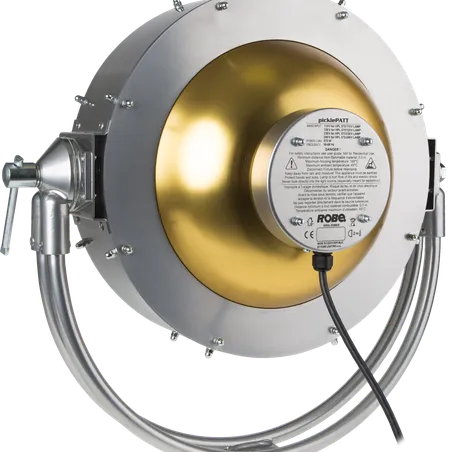
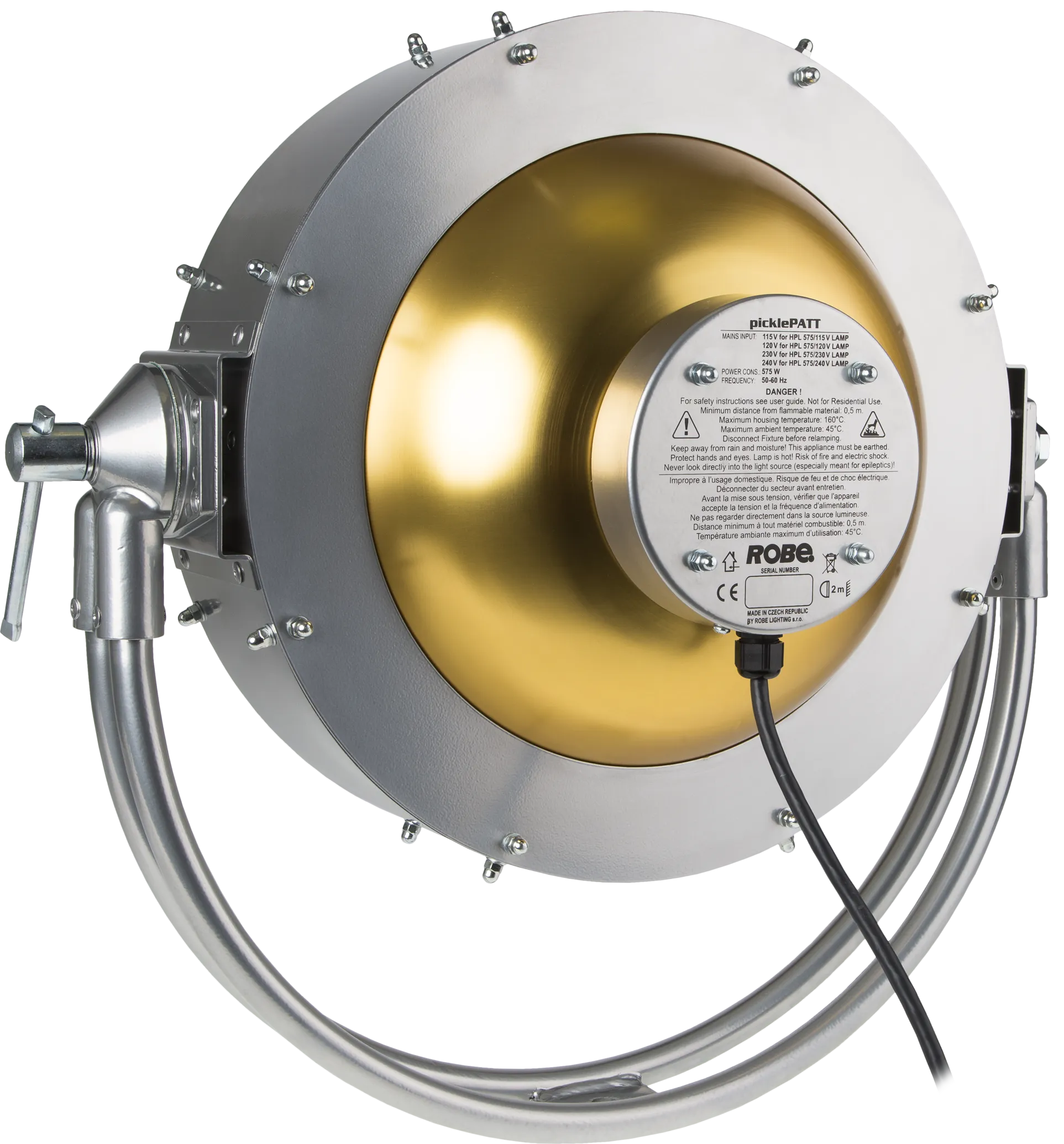
The Robe picklePATT is a 575 W tungsten scenic softlight built around a 392 mm parabolic aluminium reflector. It is designed to appear in frame as a decorative fixture while remaining a functional lamp-based source.
Its smaller bowl reads as a visible practical when the larger PATT 2013 would dominate the frame. The tungsten lamp has a fixed nominal colour temperature; use CTB gel for a cooler match or CTO gel for a warmer one. Dimming the lamp also makes it warmer.
- Fixture Type Tungsten scenic softlight · Robe picklePATT
- Power 575 W maximum, with voltage-matched HPL 575/X.
- Colour Temperature 3,050 K with Robe’s recommended HPL 575/X.
- Weight 5.3 kg / 11.7 lb.
- Beam Angle 392 mm parabolic reflector; no verified numeric beam angle.
- IP Rating IP20 per Robe. Read the IP Rating.
picklePATT Specifications
- 575 W high-performance tungsten lamp
- G9.5 special base with heat sink
- Recommended lamps: HPL 575/120/X for 120 V and HPL 575/240/X for 240 V
- 3050 K, 1,500-hour lamp specification in the product guide
- 392 mm high-reflectivity parabolic reflector
- 120 or 240 V, 50/60 Hz; 575 W maximum consumption
- External dimmer control, no onboard dimmer
- IP20; M12 clamp or spigot mounting; 5.3 kg / 11.7 lb
Output Calculator
Select the published setup and a manufacturer distance, or enter a custom throw where supported. The results describe centre-beam output, not the brightness across the whole beam.
Camera Settings
If the calculator does not load, use the published photometric table or source on this page. JavaScript is required.
F-stop is a planning estimate, not a meter reading. It uses direct, on-axis illuminance and includes only the optics and diffusion named in the selected setup. Meter on set to account for lens transmission, filters, added diffusion, bounce, dimming and ambient light.
How the exposure estimate works
N = √(E × ISO × t / C), where E is illuminance in lux and t = shutter angle ÷ (360 × fps). The default C = 340 is a dome reference; C = 250 is a flat reference. These are calibration constants, not a measured T-stop. A small nonzero digit is tenths of a stop above the displayed full stop.
Distance estimates and comparisons
Published points are used as given. Between published points the calculator fits a curve through the two nearest readings. Outside those points it uses the inverse-square law only when the fixture’s dataset permits it. Distances outside a configuration’s supported range are reported separately. Comparisons use one shared distance and camera setup; equal lux does not imply equal coverage.
View published readings for the selected configuration
Strengths and Limitations
The spun reflector is part of the stage design as well as the light source. A 29° half-peak beam still has a much wider visible falloff. The standard tungsten head is externally dimmed, runs hot and is for indoor use.
Practical Uses
Use a row to break up a dark background or make the reflector dishes part of a camera-facing scenic wall. Keep a separate controlled source for a key or isolated special. Meter the subject and check the visible dish at the level intended for the take.
Output and Colour
Robe’s exact picklePATT photometric diagram gives centre readings for the tungsten fixture. It does not specify the test lamp’s voltage. Its 29° angle is at half peak; the 94° figure is the field at one-tenth peak. Do not treat them as interchangeable or use the onePATT or pixelPATT LED charts.
| Throw | Centre illuminance |
|---|---|
| 2 m | 1,312 lux |
| 4 m | 330 lux |
| 5 m | 210 lux |
| 6 m | 145 lux |
| 8 m | 80 lux |
| 10 m | 52 lux |
| 12 m | 37 lux |
| 14 m | 27 lux |
The calculator uses all eight manufacturer centre readings from 2–14 m and interpolates within that range only. Robe’s US manual specifies 2 m minimum to illuminated objects.
Power and Batteries
At 120 V, 575 W is approximately 4.79 A. At 240 V it is approximately 2.40 A. The lamp voltage must match the supply. Intensity control is through an appropriately rated external dimmer, which also warms the tungsten colour as output is reduced.
Control, Cooling and Camera Operation
External dimming warms the tungsten lamp. Test exposure and colour at the actual cue level on camera. The housing cools by convection; Robe says the surface can reach 160 °C and calls for about 40 minutes of cooling before handling.
Modifiers, Rigging and the Working Package
Use the M12 yoke mount and the retention specified in the Robe US manual. That manual calls for at least 0.5 m between combustible material and any exterior fixture surface. Keep the reflector and enclosure intact and never cover the head in use.
Alternatives and Related Fixtures
Compare the larger tungsten PATT 2013 where the scene needs a bigger visible dish. The onePATT and pixelPATT are different LED fixtures with different power, controls and photometry.
What People Are Saying
Field Feedback at a Glance
These production accounts describe how crews used the fixture. The practical limits below come from the rig descriptions and manufacturer instructions, not an independent lab review.
What worked on stage and on camera
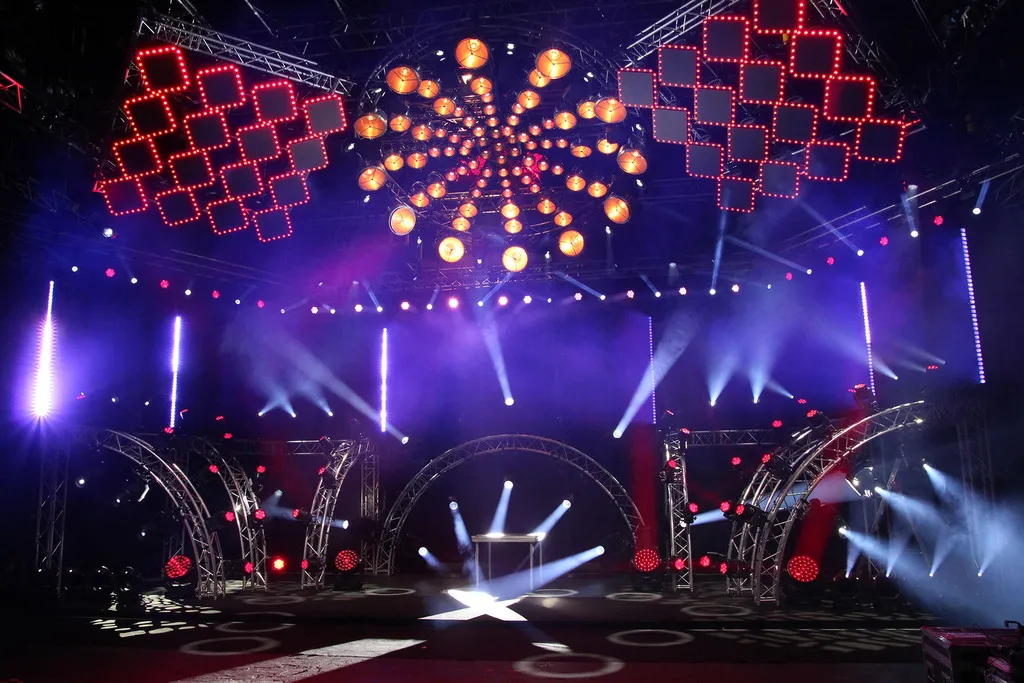
- Scenery as well as a source. On Rasmus Walter’s 2017 tour, lighting designer Martin Holst used 24 picklePATTs in an upstage grid, liking how the smaller metal dishes held their shape as scenery and took colour from other lights. Holst’s account in Robe’s case study.
- Warm light that was visible to the audience. ENLUMEN’s Shawn Kaufman picked picklePATTs alongside PATT 2013s for a gold-toned ZIMMERMANN runway set. He credited the two formats’ warm reflectors and visible shapes with complementing the scenic finish; the cue descriptions apply to the mixed wall rather than the picklePATT alone. Kaufman’s production account.
- A distinct background without another video screen. On Chris Green’s TPi Awards design, eight picklePATTs were placed upstage, in view of the audience and live cameras, to contrast with the screen-heavy look. This is a documented use, not a measured fixture test. Robe’s TPi production report.
Trade-offs to plan for
- Not a replacement for a controllable wash or special. Holst’s touring package kept BMFL Blades for beam and shutter work while the picklePATT grid supplied the visible tungsten background. Rasmus Walter rig account.
- External dimmers and distribution still add up. The standard picklePATT is the 575 W version, with voltage-specific HPL choices and external dimming. Twenty-four heads at the nameplate limit are 13.8 kW of lamp load, before powering the rest of the rig. Robe specifications for the standard model.
- The smaller housing still runs hot and is not weatherproof. Robe lists a maximum surface temperature of 160 °C and IP20. Plan placement and spacing around scenery and fabrics; do not treat the standard head as a weather-rated practical. Robe Product Guide, picklePATT technical specifications.
Videos
Use the Product Video on Robe’s picklePATT product page for the exact tungsten head. The illustrated picklePATT manual shows the yoke, cooling guidance and rated lamp requirements.
Rental and Used-Fixture Checks
Verify standard tungsten picklePATT rather than either LED sibling. Ask for the voltage-matched HPL lamp, the installed yoke and approved retention. Inspect the dish and guard for heat damage and test the dimmer at the actual cue level.