
Last Updated 21 hours ago
ARRI Compact 125 Overview
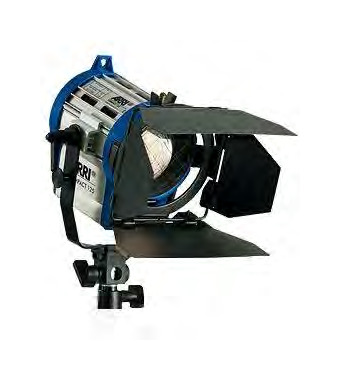
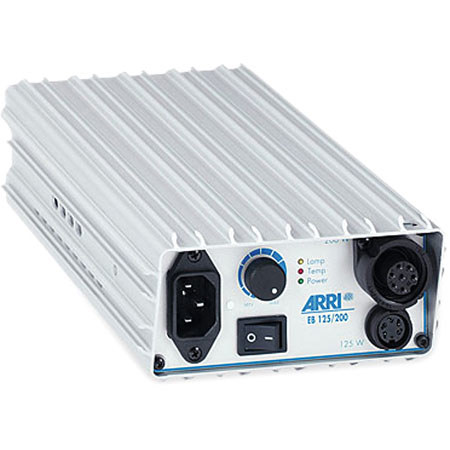
The ARRI Compact 125 is a 125 W daylight HMI Fresnel with an 80 mm lens and a published 10°–45° focus range. It weighs 1.8 kg without ballast or cable.
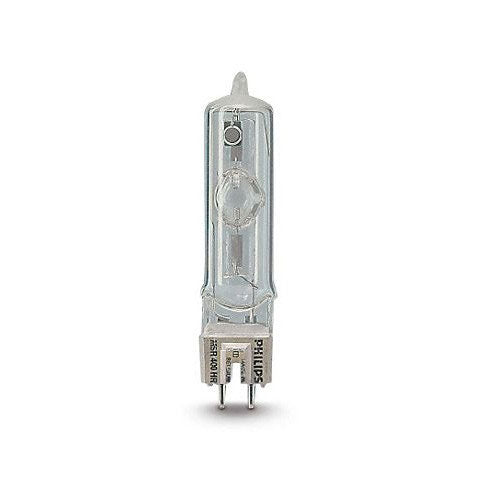
This is the Fresnel, not the Pocket PAR 125. It uses a GZX9.5 single-ended lamp and a compatible external ballast with a connector-matched head cable. The 80 V lamp rating does not describe the mains feed.
- Fixture Type Compact daylight Fresnel
- Power 125 W GZX9.5 HMI + compatible ballast
- Colour Temperature 6,000 K Nominal daylight lamp class; actual CCT depends on the lamp and its condition.
- Weight 1.8 kg head
- Beam Angle 10° to 45° published focus; 80 mm Fresnel
- IP Rating IP23 Check the actual head and complete connected system; not waterproof. Read the IP Rating Guide.
Compact 125 Specifications
| Specification | Details |
|---|---|
| Model / ordering reference | L0.71350.B kit reference |
| Lamp / base | HMI 125 W/SE / GZX9.5 |
| Nominal lamp circuit | 80 V; ballast mains input is separate |
| Nominal colour | 6,000 K daylight class in the period ARRI brochure |
| Optic | 80 mm Fresnel lens |
| Published focus range | 10° to 45° |
| Dimensions (H × W × L) | 209 × 202 × 180 mm |
| Head weight | 1.8 kg |
| Mount | 16 mm baby receiver / regional 17 mm pin version |
| Documented ballast families | EB 125/200 at 115/230 V or EBB 125/200 battery ballast |
| Protection | Class I / IP23 |
| Safety distances / tilt | Use the product label and ballast manual for the surviving head; the 2005 brochure does not print model-specific safety distances. |
| Status | Discontinued |
The Lexicon divides lamp wattage by a convenient supply voltage. That is not the lamp circuit and does not establish ballast input current. Plan distribution from the actual ballast nameplate and manual.
Output Calculator
Select the published setup and a manufacturer distance, or enter a custom throw where supported. The results describe centre-beam output, not the brightness across the whole beam.
Camera Settings
If the calculator does not load, use the published photometric table or source on this page. JavaScript is required.
F-stop is a planning estimate, not a meter reading. It uses direct, on-axis illuminance and includes only the optics and diffusion named in the selected setup. Meter on set to account for lens transmission, filters, added diffusion, bounce, dimming and ambient light.
How the exposure estimate works
N = √(E × ISO × t / C), where E is illuminance in lux and t = shutter angle ÷ (360 × fps). The default C = 340 is a dome reference; C = 250 is a flat reference. These are calibration constants, not a measured T-stop. A small nonzero digit is tenths of a stop above the displayed full stop.
Distance estimates and comparisons
Published points are used as given. Between published points the calculator fits a curve through the two nearest readings. Outside those points it uses the inverse-square law only when the fixture’s dataset permits it. Distances outside a configuration’s supported range are reported separately. Comparisons use one shared distance and camera setup; equal lux does not imply equal coverage.
View published readings for the selected configuration
Strengths and Limitations
| Strengths | Limitations |
|---|---|
| Focusable, even daylight field; complete manufacturer spot, middle and flood data; conventional accessories and serviceable construction. | Separate ballast and high-voltage head cable; hot single-ended discharge lamp; dated connector variants; discontinued head and accessory system. |
Practical Uses
| Setup | Working approach |
|---|---|
| Hard daylight key | Select focus for the required pool, then meter the subject rather than relying on centre output alone. |
| Window or exterior fill | Use spot or middle when throw matters and control spill with the retained barndoor. |
| Bounce or diffusion | Use flood to cover the modifier evenly, then meter after transmission or reflection loss. |
ARRI excludes the 125 W and 200 W models from its front-and-rear focus-knob feature; this does not mean they lack a focus control. Identify the actual focus mechanism and mounting version before rigging.
Output and Colour
The period ARRI Daylight Compact brochure publishes all nine measurements for this exact 125 W head. ARRI states that the data follow ESTA practice and are normalised to nominal lamp lumens.
| Distance | Spot 10° | Middle 30° | Flood 45° |
|---|---|---|---|
| 2 m | 7,425 lux / 0.3 m | 2,475 lux / 1.1 m | 1,553 lux / 1.7 m |
| 3 m | 3,300 lux / 0.5 m | 1,100 lux / 1.6 m | 690 lux / 2.5 m |
| 4 m | 1,856 lux / 0.7 m | 619 lux / 2.1 m | 388 lux / 3.3 m |
The calculator uses the nine published centre readings within the documented 2–4 m range. Intermediate results are estimates; published beam diameters are separate coverage references and do not change the exposure calculation.
Power and Batteries
This head uses EB 125/200 at 115/230 V or EBB 125/200 battery ballast. Confirm lamp wattage, lamp base, ballast setting, head connector and cable as one package. The 80 V figure describes the lamp circuit, not the supply outlet.
The HMI ballast and head-cable reference separates ARRI electronic and magnetic variants. Use the selected ballast input range, rated current, power factor, frequency mode and protective-device instructions for distribution.
Control, Cooling and Camera Operation
The 125 is mechanically focusable; it does not have the larger Compact models’ front-and-rear knob arrangement. In ARRI’s documented EB 125/200 versions, the Compact 125 is on the 125 W Binder 678 five-pole output. Do not substitute the 200 W output. ARRI Compact brochure, p. 3; ARRI EB 125/200 manual.
Any dimming and camera frequency modes belong to the ballast actually supplied. Test the head and ballast at the planned shutter and frame rate after warm-up, and keep the cooling openings clear.
Modifiers, Rigging and the Working Package
| Accessory | ARRI Reference |
|---|---|
| 4-Leaf Barndoor | L2.79170.0 |
| Diffuser Frame | L2.79190.0 |
| Scrim Set | L9.79160.0 |
| Snoot | L2.79180.0 |
| Kit Stand | LS.3 |
Use the product label and ballast manual for the surviving head; the 2005 brochure does not print model-specific safety distances. Operate only with an intact Fresnel, reflector, wire guard or safety glass, lens-door latch and interlock. Keep ventilation open and cables away from the housing.
Support the head, barndoor, filter frame, cable pull and modifier as one load. Use properly rated primary support and secondary retention. A cracked lens, dull reflector, brittle internal lamp lead, heat-damaged connector or unreliable latch removes the head from service.
Alternatives and Related Fixtures
| Fixture | Why compare it |
|---|---|
| ARRI True Blue D5 | A later 575 W daylight Fresnel with current family documentation. |
| ARRI M8 | A lensless 800 W MAX-reflector head for greater throw and a different beam character. |
| ARRI Compact family | Compare the surrounding wattages, lens sizes, support loads and ballast packages. |
What People Are Saying
Field Feedback at a Glance
These are setup considerations from ARRI’s model documentation, not independent owner reviews.
What works
- The 1.8 kg head and 80 mm Fresnel make a compact accent light when only the head needs to fit into the rig. ARRI Compact brochure, p. 3.
- The 10°/30°/45° positions give distinct centre output; at 3 m the chart lists 3,300 lux in spot and 690 lux in flood. ARRI Compact brochure, p. 3.
- ARRI listed the EBB 125/200 battery ballast for the Compact 125, giving a documented battery option without direct battery connection to the head. ARRI EBB 125/200 manual.
Drawbacks to plan for
- The 80 V lamp specification is not mains voltage. The documented 125 W output and its cable must match; do not treat the dual-rated ballast as having identical outputs. ARRI EB 125/200 manual.
- The 2–4 m brochure table establishes photometric distances, not operating clearance. Check the exact head’s safety markings and operating instructions. ARRI Compact brochure, p. 3.
- The head rating does not include the ballast, cable or accessories, and the brochure excludes this model from the larger heads’ dual focus-knob feature. ARRI Compact brochure, p. 3.
Videos and Operating Reference
The ARRI Compact brochure, p. 3 identifies the 125 W head, kit accessories and ballast part numbers. Use the ARRI EB 125/200 manual and ARRI EBB 125/200 manual for the actual power package; their 125 W output sections distinguish this fixture from the 200 W variant.
Rental and Used-Fixture Checks
Read the nameplate before accepting the package. Record the exact head variant, lamp, ballast model, connector and cable. Inspect lamp contacts, lens, reflector, focus travel, interlock, yoke, mount and accessory retention, then test cold start, stable output, hot restrike and the intended camera mode.
Documentation and Specifications
Official ARRI Compact archive · ARRI Daylight Compact brochure · ARRI Compact certification.
Product photograph: ARRI product photograph reproduced in the Lexicon Carbone source document for model identification.
Browse ARRI lights · HMI lights · all equipment.