
Last Updated 5 days ago
Cinepar 2500W Overview
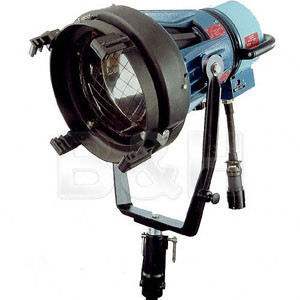
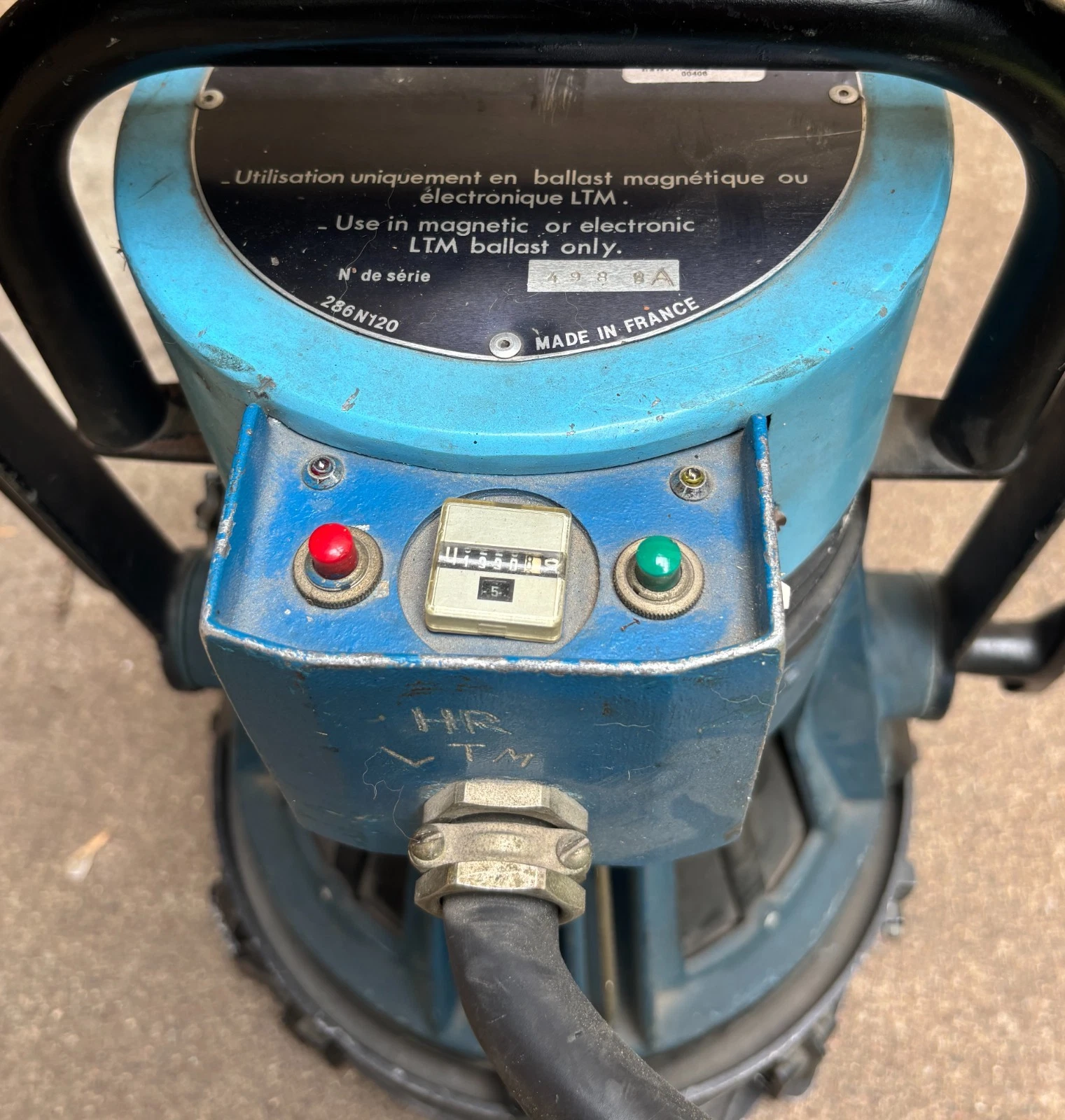
The LTM Cinepar 2500 is a 2.5 kW single-ended daylight HMI PAR built for a concentrated beam and longer throws. Interchangeable lenses let the head move from a tight spot to broader coverage for window light, background accents and bounce lighting.
The HH286N is the single-power 2500 W model, not the HH286PN 2500/4000 W combination head. Support and transport planning must include the head, lamp, ballast, cable and accessory package.
- TypeSingle-ended HMI PAR · Cinepar HH286N
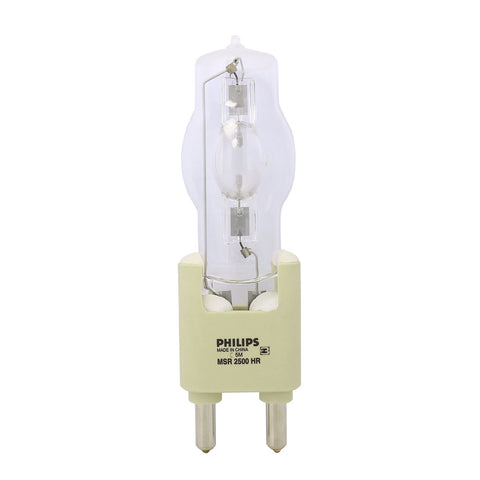
- Power2,500 W lamp; separate compatible magnetic or electronic ballast
- Colour Temperature5,600 K nominal
- WeightNot specified in recovered manufacturer text
- Beam245 mm spread lenses; beam depends on optic
- IP RatingNo exact numerical IP rating confirmed. IP rating guide.
Cinepar 2500W Specifications
| Model | Cinepar 2500 W S/E · HH286N |
|---|---|
| Light Source | 2500 W single-ended, hot-restrike HMI lamp |
| Nominal Color Temperature | 5600 K with the specified daylight lamp |
| Fixture Weight | Not specified in the recovered manufacturer text |
| Fixture Dimensions | Not specified in the recovered manufacturer text |
| Accessory Size | 330 mm front accessory format (LTM) |
| Power System | Separate compatible magnetic or electronic ballast |
Optics and Beam Control
The Cinepar 2500W Lens Set guide compares the medium-flood, wide-flood, super-wide-flood and frosted-Fresnel options, their part numbers and required rings. LTM specifies three 245 mm lenses (A 675 01, A 674 01 and A 673 01) with ring 286N456, plus the 300 mm frosted Fresnel A 732 06 and its ring A 878 01. The lens carrying case is A 727 2. The narrow beam is useful for a concentrated throw, while wider lenses trade intensity for coverage. Use the correct lens ring and accessories for this 2500 W head rather than assuming parts from another Cinepar size will fit.
Output Calculator
Select the published setup and a manufacturer distance, or enter a custom throw where supported. The results describe centre-beam output, not the brightness across the whole beam.
Camera Settings
If the calculator does not load, use the published photometric table or source on this page. JavaScript is required.
F-stop is a planning estimate, not a meter reading. It uses direct, on-axis illuminance and includes only the optics and diffusion named in the selected setup. Meter on set to account for lens transmission, filters, added diffusion, bounce, dimming and ambient light.
How the exposure estimate works
N = √(E × ISO × t / C), where E is illuminance in lux and t = shutter angle ÷ (360 × fps). The default C = 340 is a dome reference; C = 250 is a flat reference. These are calibration constants, not a measured T-stop. A small nonzero digit is tenths of a stop above the displayed full stop.
Distance estimates and comparisons
Published points are used as given. Between published points the calculator fits a curve through the two nearest readings. Outside those points it uses the inverse-square law only when the fixture’s dataset permits it. Distances outside a configuration’s supported range are reported separately. Comparisons use one shared distance and camera setup; equal lux does not imply equal coverage.
View published readings for the selected configuration
Strengths and Limitations
This is a focused HMI PAR kit for jobs where lenses determine coverage. It is more work to move between looks than a Fresnel with a built-in focus knob.
Practical Uses
| Setup | Working Approach |
|---|---|
| Window Light | Use the tighter beam to project daylight through an opening, with diffusion selected for the desired softness. |
| Distant Background | Place the head for a longer throw and choose the lens for the area that needs illumination. |
| Bounce Fill | Aim into a suitable bounce surface, then meter the returned light at the subject. |
Output and Colour
LTM’s archived French 286N page lists the following measurements at 15 m. These are fixture-and-lens readings, not independent transmission ratings of the glass. The source labels its beam configurations Spot, Medium, Large and Extra Large; it does not provide a frosted-Fresnel reading.
| LTM Configuration | Beam at 15 m | Illuminance |
|---|---|---|
| Spot | 1.50 m | 27,100 lux |
| Medium | 6.6 × 2.8 m | 4,860 lux |
| Large | 14.0 × 4.5 m | 1,760 lux |
| Extra Large | 9.4 m | 700 lux |
Source: LTM’s French manufacturer page, archived 2 May 2008. The English archive gives a different set of distances, beam shapes and readings; the tables are not equivalent unit conversions. Do not combine these manufacturer tables with each other or with the separately tabulated B&H chart used by the calculator. Lamp age, ballast setting and the beam-boundary measurement threshold are not stated. Meter the actual kit.
The B&H catalogue (p. 522) lists its 2500 W medium-flood configuration at 20 ft as 279 fc with a 19 ft beam diameter. LTM’s English 286N archive lists Medium at the same 20 ft distance as 2,140 fc with a 9.5 × 4 ft beam. The distance and illuminance units match, but the reported beam shapes and sizes do not. Neither table identifies enough lamp, ballast and beam-measurement conditions to establish an equivalent test. Treat these as separate published configurations, not proof that either number is wrong; do not interchange their exposure or coverage values.
The calculator uses only the B&H Professional Lighting SourceBook, p. 522 data for the single-ended HH286N. Its range is 20–50 ft (6.10–15.24 m). Values between published throws are estimates; the distributor does not identify which points were separately metered. Lux is converted from foot-candles, rather than copied from the misprinted 50 ft Spot lux entry. The chart’s f-stop examples are not calculator inputs.
| Configuration | 20 ft | 30 ft | 40 ft | 50 ft |
|---|---|---|---|---|
| Spot Lens | 3,162 | 1,405 | 791 | 506 |
| Medium Flood Lens | 279 | 124 | 70 | 45 |
Power and Batteries
The original LTM 286N Cinepar 2500 page links directly to these factory ballast references: 598007, A320. Match the exact ballast, lamp setting, head feeder and connectors; similarly numbered dealer products are not established equivalents. The linked magnetic A320 is a 230 V, 50 Hz model, not the separate 120 V A323. The 286N remains a 2500 W head; a 2500/4000 W ballast does not make it a combination head.
Lamp wattage is not mains input power. Confirm the installed ballast’s supply voltage, frequency and current rating, the approved head cable and connector pinout. Do not connect the lamphead directly to the mains or infer compatibility from connector appearance.
Control, Cooling and Camera Operation
The head is powered and struck from its matching ballast. The factory references for this model include a 2500/4000 W electronic ballast with PFC and a 2500 W magnetic ballast. Confirm what the installed ballast actually supports before planning any dimming, hot restrike or high-speed work; the two ballast types are not equivalent.
Keep air clear around the head and ballast, and allow the front assembly to cool before changing lenses. For critical or off-speed takes, run the exact lamp, head and ballast to operating temperature and inspect a recording at the intended frame rate and shutter.
Modifiers, Rigging and the Working Package
| Reference | Documented Detail |
|---|---|
| Lamp Reference | Philips MSR 2500 HR, G38, 2500 W |
| Chimera Speed Ring | 324 mm; Quartz/Daylite 9265 |
| Matthews Wire Scrim | 13 in; listed for HMI 2.5K Cinepar S/E |
The Philips lamp-guide reference needs matching to the exact head and ballast; its voltage column is not a universal mains-input rating. Speed-ring dimensions, wire-scrim sizes and shutter apertures refer to different accessory interfaces; they are not interchangeable lens diameters. Match the actual holder and head version before selecting parts.
Plan support for the full assembled head, lamp, yoke, modifier and cable load. Verify the support fitting and accessory retention on the actual unit. Keep protective glass, lens retention and interlocks intact; have damaged legacy equipment inspected before use.
Alternatives and Related Fixtures
Related LTM head: Compare the LTM Cinepar 1200W HMI PAR, the 1.2 kW model with its own lamp, ballast and optic charts.
For continuous spot-to-flood adjustment without lens changes, compare a correctly rated HMI Fresnel. For a smaller PAR package, compare a 1,200 W fixture and meter the required throw. If a kit is advertised as a 2.5/4 kW Cinepar, verify the nameplate: that listing is not interchangeable with the single-ended 2500 W HH286N on this page.
What People Are Saying
Apple Box’s 2.5 kW Cinepar rental entry documents the kit or the fixture’s working characteristics. The points below are practical takeaways from the named equipment sources, not unattributed customer quotes.
Field Feedback at a Glance
- Liked: Lens swaps can turn one head from a narrow window beam into a wider wash.
- Liked: The separate ballast can stay away from the head, provided the package includes the matching header.
- Liked: Rental listings show the head still in practical use as a complete PAR kit, not just a bare head.
- Watch for: A 2500W HH286N and a dual-wattage HH286PN are not interchangeable configurations; read the model plate.
- Watch for: Do not assume the frosted Fresnel or its different ring comes with the three-lens rental kit.
- Watch for: Archived readings give unlike beam shapes and sizes, so even the same nominal lens label cannot safely be used to predict output.
Videos
A model-specific operating video has not been verified. Use LTM’s archived factory page for the HH286N as a written reference for the head, lenses and matched ballast options; it is not a video or a substitute for the kit’s operating instructions.
Rental and Used-Fixture Checks
| Check | What to Confirm |
|---|---|
| Identity | Match the head model and version, lamp type and selected wattage. Do not substitute a similarly named Luxarc, Cinepar or Prolight. |
| Package | Confirm the correct ballast, head cable, mains cable, barndoors, scrims and any spread lenses or modifier adapters. |
| Condition | Inspect the reflector, protective glass, lens, lamp holder, cable insulation, connectors, yoke and accessory retainers. |
| Camera Test | With qualified crew, test the complete warmed-up system at the intended frame rate and shutter setting. Meter the actual beam and modifiers. |
Documentation and Specifications
LTM CINEPAR 2500W · Original Manufacturer Page (English Archive) · LTM Cinépar 2500W · Original Manufacturer Page (French Archive)
Philips Lamp Replacement Guide, p. 42 · Chimera 2013–14 Catalog, pp. 42–43 · Matthews 2016 Catalog, printed p. 138
Browse LTM Equipment · HMI Lights · All Equipment.