
Last Updated 22 hours ago
Pocket PAR 200 Overview
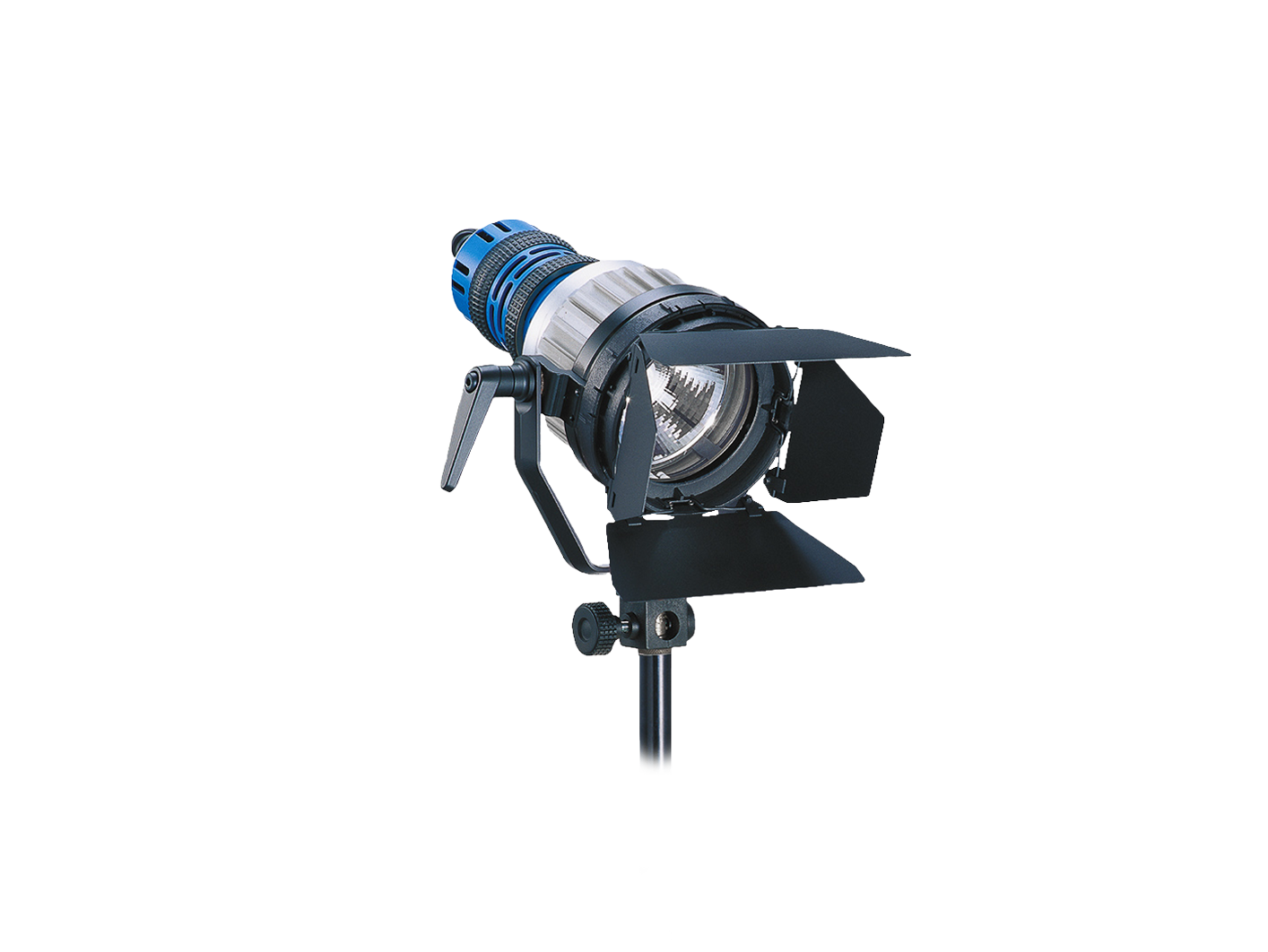
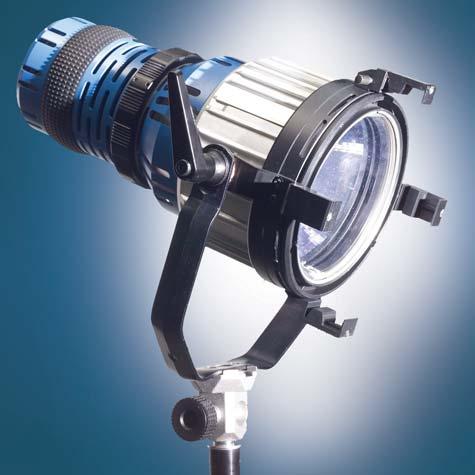

The Pocket PAR 200 uses a faceted reflector and interchangeable lenses. The similarly named Pocket Lite 200 has a different reflector and its own output figures.
Check that the rental head is the ARRILUX Pocket PAR 200 rather than the ARRISUN 2. ARRI documents different optical hardware even though both are 200 W daylight PARs.
- Type Compact HMI PAR
- Power 200 W GZY9.5 lamp; separate ballast
- Colour Temperature Daylight HMI; depends on installed lamp and operating condition.
- Weight 2.1 kg head; 2.3 kg specified ballast, separately
- Beam Control Faceted dichroic reflector, 6°–61° with listed optics at maximum focus
- IP Rating No numeric rating confirmed from the manufacturer source used here. Read the IP rating guide.
Pocket PAR 200 Specifications
| Specification | Details |
|---|---|
| Manufacturer and model | ARRI ARRILUX Pocket PAR 200 |
| Source or rated power | 200 W HMI Pocket PAR |
| Optics, colour or format | Faceted dichroic reflector |
| Head or system detail | GZY9.5 lampholder |
| Wire scrim diameter | 130 mm, full single L2.79160.A |
| Four-leaf barn doors | L2.79170.0 |
Output Calculator
Select the published setup and a manufacturer distance, or enter a custom throw where supported. The results describe centre-beam output, not the brightness across the whole beam.
Camera Settings
If the calculator does not load, use the published photometric table or source on this page. JavaScript is required.
F-stop is a planning estimate, not a meter reading. It uses direct, on-axis illuminance and includes only the optics and diffusion named in the selected setup. Meter on set to account for lens transmission, filters, added diffusion, bounce, dimming and ambient light.
How the exposure estimate works
N = √(E × ISO × t / C), where E is illuminance in lux and t = shutter angle ÷ (360 × fps). The default C = 340 is a dome reference; C = 250 is a flat reference. These are calibration constants, not a measured T-stop. A small nonzero digit is tenths of a stop above the displayed full stop.
Distance estimates and comparisons
Published points are used as given. Between published points the calculator fits a curve through the two nearest readings. Outside those points it uses the inverse-square law only when the fixture’s dataset permits it. Distances outside a configuration’s supported range are reported separately. Comparisons use one shared distance and camera setup; equal lux does not imply equal coverage.
View published readings for the selected configuration
Strengths and Limitations
- A small, bright source is easy to hide close to a tabletop.
- The profile of a spread lens can show in a polished product or a nearby wall.
Practical Uses
Use a narrow setting to make a hard edge on a product, or rotate a spread lens across a small tabletop. Keep the reflector version on the camera test notes.
Output and Colour
| PAR Optic / Focus | 10 ft | 15 ft | 20 ft | 25 ft |
|---|---|---|---|---|
| Super Spot 6° | 4,698 | 2,088 | 1,175 | 752 |
| Spot 10° | 2,025 | 900 | 506 | 324 |
| Spot — Max Focus 24.5° | 459 | 204 | 115 | 73 |
| Wide 20° | 678 | 301 | 169 | 108 |
| Wide — Max Focus 41.5° | 194 | 86 | 49 | 31 |
| Super Wide 44.5° | 179 | 80 | 45 | 29 |
| Super Wide — Max Focus 61° | 102 | 45 | 25 | 16 |
| Frosted Super Wide 37° | 143 | 64 | 36 | 23 |
| Frosted Super Wide — Max Focus 59° | 76 | 34 | 19 | 12 |
Photometric source and test conditions.
The calculator now includes every listed Pocket PAR focus configuration and is limited to the original 10–25 ft distances (3.048–7.62 m). Values between published points are estimates, not extra factory measurements. The brochure’s rounded metric headings are not used as exact distance conversions.
Power and Batteries
The US kit pairs the 200 W head with the 125/200 W AC ballast (502806) and 25 ft head cable (502201). The matching DC ballast is 502808. In ARRI’s international catalogue the 7 m Amphenol cable is L2.73372.0.
Control, Cooling and Camera Operation
ARRI’s US brochure gives the head and ballast as separate weights. Specify Pocket PAR 200, not Pocket Lite 200, before ordering optics or comparing output.
Modifiers, Rigging and the Working Package
The lens changes both beam size and intensity. The 10° spot and 44.5° super wide are settings on ARRI’s Pocket PAR chart.
Alternatives and Related Fixtures
For another compact daylight PAR, see K5600 Joker-Bug 400 (Original).
What People Are Saying
The model-specific points below come from ARRI’s documents, with handling or rental examples identified separately. They are not a survey of owner reviews.
Field Feedback at a Glance
What worked
- Choose one of four PAR lenses. ARRI’s 200 Pocket PAR kit lists a four-lens set and a faceted reflector. These are the optics for changing coverage; the 200 Pocket Lite has a different front. ARRI Pocket PAR 200 documentation.
- An AC/DC rental package is documented. ARRI’s original kit lists a 125/200 W AC ballast with the option of a separate DC ballast. Illumination Dynamics identifies the exact 200 W PAR as a rental model. ARRI Pocket PAR 200 documentation.
- Small hard light can be given a softer working front. The Pocket PAR 200 Lighthouse AC kit lists a lantern adapter and compact softbox hardware. Confirm the required kit rather than assuming the standard lens kit includes these. ARRI Pocket PAR 200 documentation.
Drawbacks to plan for
- The rating plate can distinguish IP20 and IP23. ARRI’s certificate lists the L1.7079x.P Pocket PAR as IP20 and L1.7079x.0 as IP23. Don’t assume all Pocket PAR 200 rentals have the higher rating. ARRI range certificate.
- 70 V/3.0 A is the head rating. That figure is not a wall draw or a specification for battery selection. Use the matching AC or DC ballast package. ARRI range certificate.
- Match the 200 W lamp and larger front. It uses the documented GZY9.5 lamp interface and 130 mm front accessories, not the 125 W model’s GZX9.5 and 78 mm parts. ARRI Pocket PAR 200 documentation.
Videos
Watch Kevin James Barry’s 200 W Pocket PAR demonstration. It shows the optional Lighthouse shutter assembly, not the standard PAR lens front. Use the ARRI 200/400 system brochure and select the 200 W Pocket PAR column for the standard four-lens kit, ballast and head cable.
Rental and Used-Fixture Checks
The kit list includes a 125/200 W ballast. Confirm the chosen power option and check the reflector and front accessories are the PAR set.