
Last Updated 5 days ago
ARRISUN 60 Overview
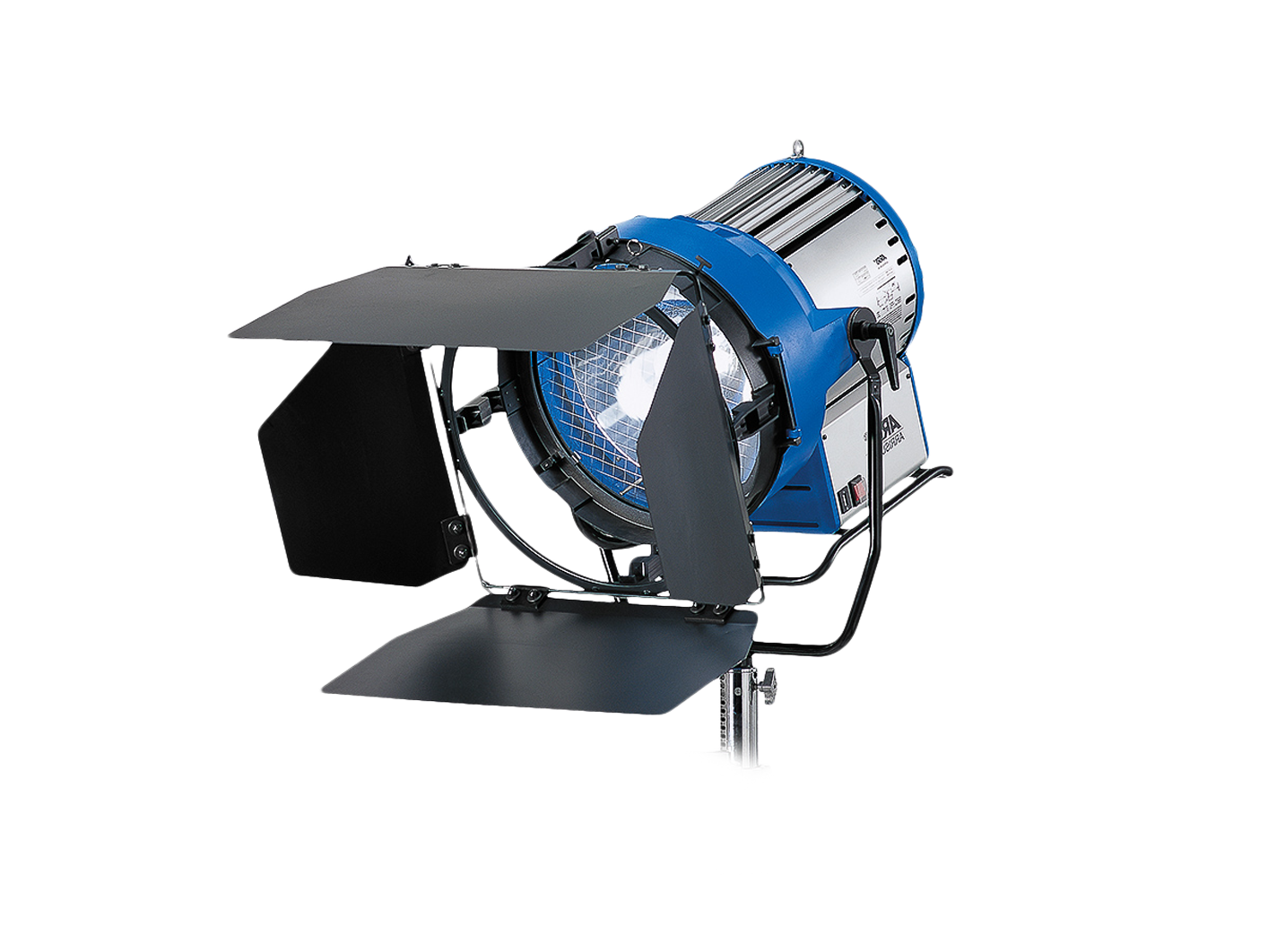
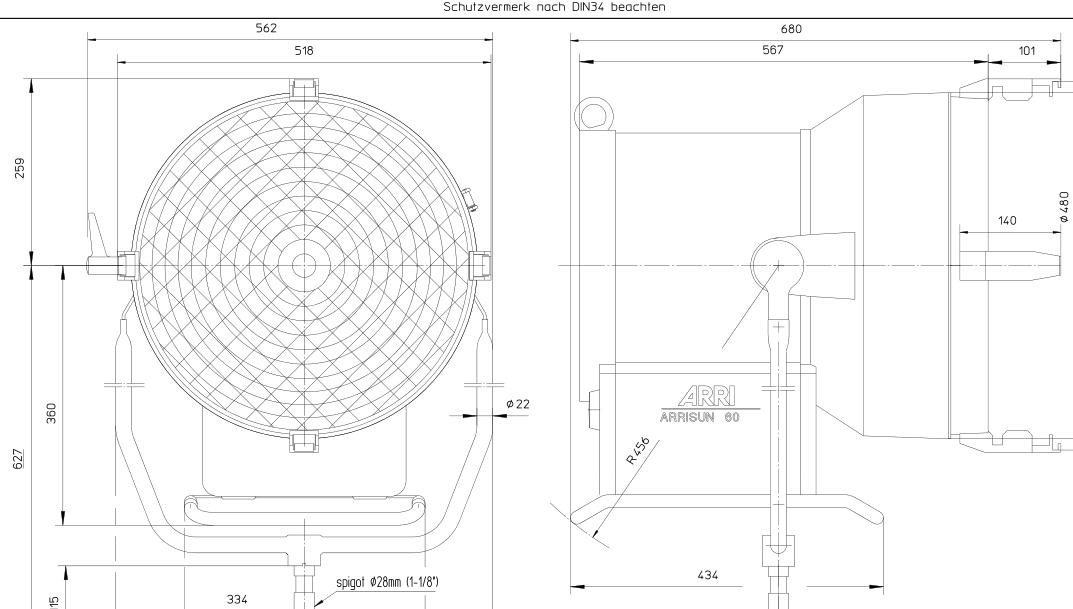
The ARRISUN 60 is a 6 kW daylight PAR for longer throws. From across a street or outside a stage window, changing lenses gives much finer control of the illuminated area than moving the entire rig.
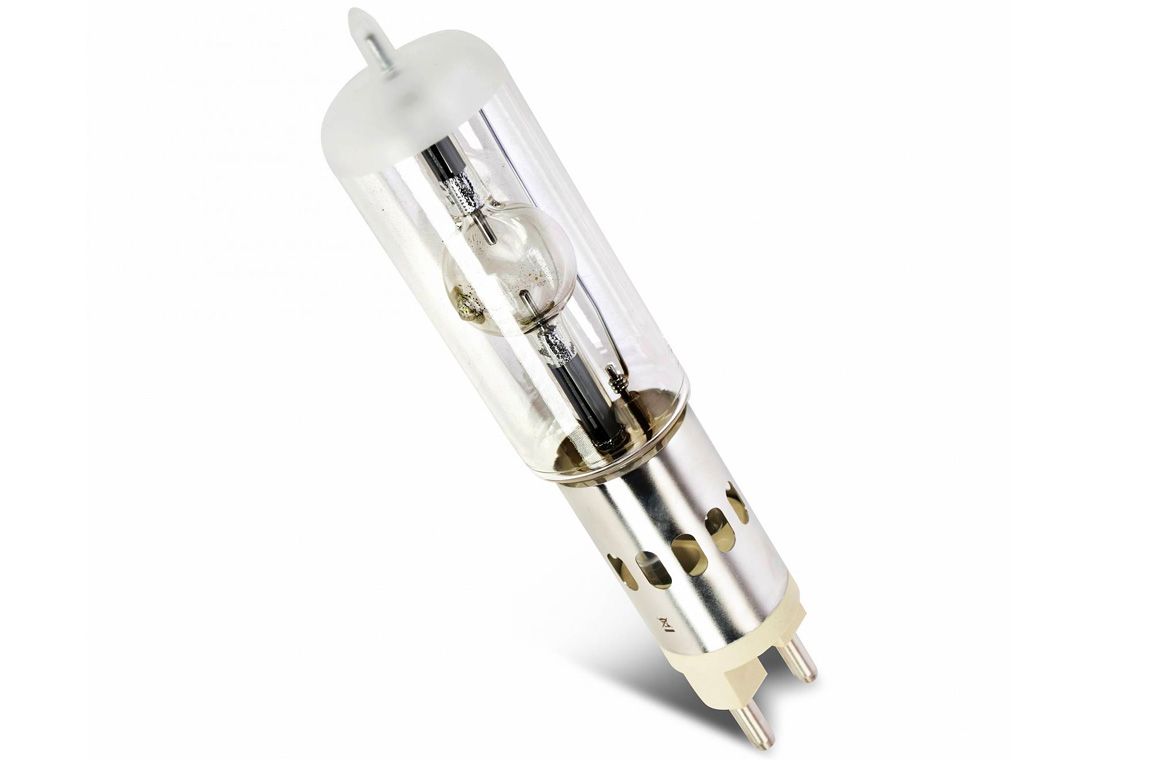
Before placing an order, check for the correct GX38 single-ended lamp, matching 6 kW ballast and head cable, spread lenses, doors and a rated stand with a 28 mm receiver.
- Type Single-ended HMI PAR
- Power 6 kW lamp; separate matched ballast
- Colour Temperature Daylight HMI; depends on installed lamp and operating condition.
- Weight Approximately 27 kg net head
- Beam Control 420 mm optics; 7° SuperSpot to 42° SuperFlood in period chart
- IP Rating IP23 lamphead only; verify the complete package. Read the IP rating guide.
ARRISUN 60 Specifications
| Specification | Details |
|---|---|
| Manufacturer and model | ARRI ARRISUN 60 |
| Source or rated power | 6,000 W single-ended HMI PAR |
| Optics, colour or format | Interchangeable spread lenses |
| Head or system detail | 28 mm spigot |
| Lamp base and rating | GX38, 6,000 W single-ended HMI |
| Wire scrim diameter | 495 mm, full single L2.82160.A |
| Four-leaf barn doors | 510 mm, L2.82150.0 |
Output Calculator
Select the published setup and a manufacturer distance, or enter a custom throw where supported. The results describe centre-beam output, not the brightness across the whole beam.
Camera Settings
If the calculator does not load, use the published photometric table or source on this page. JavaScript is required.
F-stop is a planning estimate, not a meter reading. It uses direct, on-axis illuminance and includes only the optics and diffusion named in the selected setup. Meter on set to account for lens transmission, filters, added diffusion, bounce, dimming and ambient light.
How the exposure estimate works
N = √(E × ISO × t / C), where E is illuminance in lux and t = shutter angle ÷ (360 × fps). The default C = 340 is a dome reference; C = 250 is a flat reference. These are calibration constants, not a measured T-stop. A small nonzero digit is tenths of a stop above the displayed full stop.
Distance estimates and comparisons
Published points are used as given. Between published points the calculator fits a curve through the two nearest readings. Outside those points it uses the inverse-square law only when the fixture’s dataset permits it. Distances outside a configuration’s supported range are reported separately. Comparisons use one shared distance and camera setup; equal lux does not imply equal coverage.
View published readings for the selected configuration
Strengths and Limitations
- Several beam shapes can be produced from one distant head position.
- A tight beam can meter strongly at centre while leaving the ends of a window bank dark.
Practical Uses
Use the beam dimensions alongside the lux value. An oval flood can cover several windows horizontally while keeping light off the floor above.
Output and Colour
ARRI’s chart fixes the centre reading at 1,000 lux and gives the throw for each lens. The April 2000 ARRI metric chart specifies 1,000 lux at optimum focus. Its separate imperial chart specifies 100 fc (about 1,076 lux), not an equivalent unit conversion. Each lens has one published metric anchor; other calculator distances are inverse-square estimates rather than additional factory readings. Refocusing and modifiers change the result.
| Configuration | Distance | Lux | Foot-Candles |
|---|---|---|---|
| SuperSpot 7° · 1,000 Lux Chart | 122 m | 1,000 | 92.9 |
| Spot 10° · 1,000 Lux Chart | 85 m | 1,000 | 92.9 |
| Flood 20° × 38° · 1,000 Lux Chart | 35 m | 1,000 | 92.9 |
| SuperFlood 42° · 1,000 Lux Chart | 26 m | 1,000 | 92.9 |
| Narrow Flood 11° × 20° · 1,000 Lux Chart | 60 m | 1,000 | 92.9 |
| Frosted Fresnel 37° · 1,000 Lux Chart | 18 m | 1,000 | 92.9 |
Photometric source and test conditions.
Power and Batteries
ARRI lists the EB MAX 6/9 for the 6 kW ARRISUN. The VEAM head cable is L2.77940.0 at 7 m or L2.77940.A at 15 m. Use the ballast input rating when planning the supply.
Control, Cooling and Camera Operation
ARRI’s dimensional drawing reports 27 kg net and 32.5 kg packed. When comparing setups, match the installed spread lens and focus position to the chart.
Modifiers, Rigging and the Working Package
A superspot reaches far but lights a small area. The 20° × 38° flood is useful when the target is wider in one axis.
Alternatives and Related Fixtures
For a 6 kW Fresnel alternative, see ARRI Compact 6000 Plus.
What People Are Saying
Field Feedback at a Glance
In Film and Digital Times, p. 17, Chris Menges, ASC, BSC, names the ARRISUN 60 as a key light on Waiting for the Barbarians. A lens and filter helped him carry on shooting a daylight scene when the natural light fell. He notes the daylight matches did not always work. This is firsthand production experience, not a test.
What worked
- Menges used the 6 kW ARRISUN 60 to extend a daylight scene after losing natural light. Source.
- Fitted spread lenses let the crew set beam width before metering. Source.
- The separate doors allow spill control after the lens is selected. Source.
Drawbacks to plan for
- A daylight match depends on colour and direction, not just centre intensity; Menges notes that not every match worked. Source.
- Check the 6 kW ballast configuration, not the 12 kW arrangement for the ARRISUN 120. Source.
- The 495 mm scrims and 510 mm doors are for the 60; allow for the lens case, feeder and separate ballast. Source.
Videos
Use ARRI’s 6/12 ballast manual for this exact head as the practical reference for matching the package. No exact-model video is included.
Rental and Used-Fixture Checks
Allow room for the lens case, head cable and separate ballast. Check that the supplied lenses actually fit the 60.
Documentation and Specifications
- AbelCine’s ARRI HMI and LED comparison shows how reflector and lens choices affect a daylight setup.