
Last Updated 22 hours ago
X Ceramic 250 Overview
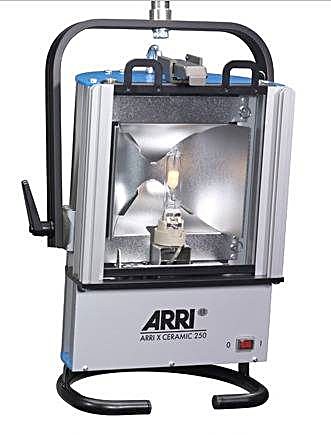
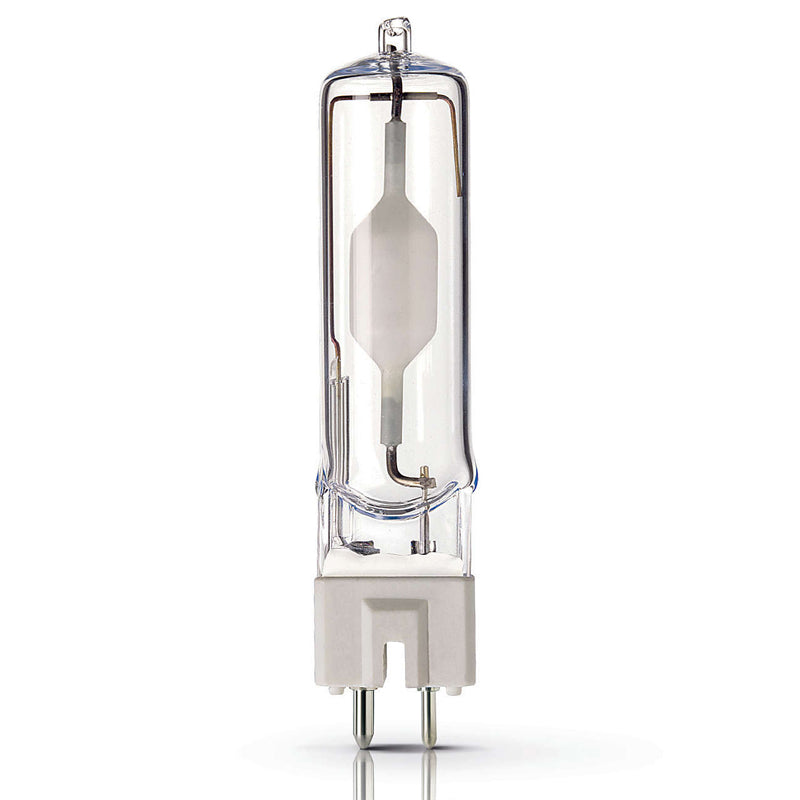
The ARRI X Ceramic 250 is a compact, open-face broad floodlight with an integrated electronic ballast. It accepts the Ceramic ST 250 HR for tungsten balance or the MSR 250 HR for daylight balance. ARRI lists the daylight setup at 5,600 K in its fixture sheet, while Philips rates its MSR 250 HR lamp at 6,000 K. Meter the fitted lamp before matching other sources.
This is the open-face floodlight, not the Studio Ceramic 250 Fresnel. Use the X Ceramic photometric table to compare the two lamps at your planned throw.
- Fixture Type Open-face ceramic-lamp floodlight
- Power 250 W lamp; integrated electronic ballast and igniter
- Colour Temperature 3,200 K Ceramic ST; 5,600 K MSR in ARRI’s test
- Weight Approx. 8.1–8.2 kg by document edition
- Beam Angle 125° Ceramic / 111° MSR with frosted glass in product sheet; US Ceramic test 112°
- IP Rating IP20 Check the exact head and connected package. Read the IP Rating Guide.
X Ceramic 250 Specifications
| Stand model | 539400; hanging and black-finish versions were also listed |
|---|---|
| Lamps | Philips Ceramic ST 250 HR, 3,200K, GZY9.5, 4,000h, 21,200lm; or MSR 250 HR, 5,600K, 500h, 20,000lm |
| Input | 90–265VAC, 50/60Hz; direct mains connection |
| Ballast | Integrated electronic ballast and igniter; flicker-free 90Hz square-wave operation; hot restrike |
| Current | Less than 3A at 120V; less than 1.5A at 230V |
| Optic | Open-face broad flood with interchangeable frosted or clear safety glass and optional intensifier |
| Beam | Product information lists 125° HPA with frosted glass for the Ceramic lamp and 111° HPA for the MSR lamp; the US catalogue lists 112° for its standard frosted-glass Ceramic test |
| Weight | About 8.1–8.2kg / 18lb, depending on document edition |
| Mount | US catalogue stand model 539400: 16 mm (5/8 in.) mount. European product-information edition: 28 mm DIN 15560/T24ZA spigot. Confirm the actual fixture fitting. |
| Protection | IP20; 45°C maximum ambient; ±90° tilt. Product-information sheet: 80°C maximum surface temperature; operating instructions: 90°C. These are different document editions; follow the instructions applicable to the actual fixture. |
Output Calculator
Select the published setup and a manufacturer distance, or enter a custom throw where supported. The results describe centre-beam output, not the brightness across the whole beam.
Camera Settings
If the calculator does not load, use the published photometric table or source on this page. JavaScript is required.
F-stop is a planning estimate, not a meter reading. It uses direct, on-axis illuminance and includes only the optics and diffusion named in the selected setup. Meter on set to account for lens transmission, filters, added diffusion, bounce, dimming and ambient light.
How the exposure estimate works
N = √(E × ISO × t / C), where E is illuminance in lux and t = shutter angle ÷ (360 × fps). The default C = 340 is a dome reference; C = 250 is a flat reference. These are calibration constants, not a measured T-stop. A small nonzero digit is tenths of a stop above the displayed full stop.
Distance estimates and comparisons
Published points are used as given. Between published points the calculator fits a curve through the two nearest readings. Outside those points it uses the inverse-square law only when the fixture’s dataset permits it. Distances outside a configuration’s supported range are reported separately. Comparisons use one shared distance and camera setup; equal lux does not imply equal coverage.
View published readings for the selected configuration
Strengths and Limitations
The X has broad open-face coverage from an integrated-ballast head. It is not a substitute for a mechanically focusable Fresnel when a narrow pool is needed.
Practical Uses
Start with frosted glass for a broad fill or background wash. Compare the factory intensifier and diffusion results if you need a tighter pool or softer field.
Output and Colour
Optics and operation
The head is designed for broad, even coverage rather than a hard, focusable Fresnel beam. ARRI offered an intensifier, 1/2 and 1/4 diffusion, a 50° honeycomb, scrims and barn doors. The original documents report Ra above 90 for both supported lamps.
Factory Photometrics
The product-information sheet provides three-distance rows for frosted glass with each lamp. The calculator uses those metric headings (3, 5 and 10 m), rather than their approximate feet labels (10, 15 and 30 ft), and is limited to 3–10 m. Intermediate readings are estimates, not additional factory measurements. Accessory results from the separate US catalogue appear below as a reference table.
| Lamp and optic | 3m | 5m | 10m |
|---|---|---|---|
| 3,200K CST 250 HR, frosted glass, product-info edition | 430lx / 40fc | 155lx / 14fc | 39lx / 4fc |
| 5,600K MSR 250 HR, frosted glass, product-info edition | 545lx / 51fc | 196lx / 18fc | 49lx / 5fc |
US Catalogue Accessory Readings
The April 2005 ARRI US catalogue, page 3 labels the test distance “10 ft / 3 m” for the 3,200 K Ceramic lamp. These are nominal equivalents, not identical distances. Both published illuminance units are reproduced as printed; their rounding is not recalculated. This single-distance accessory comparison is kept separate from the calculator’s multi-distance product-information dataset.
| Glass and Accessories | Illuminance (fc) | Illuminance (lux) | Published Beam Angle |
|---|---|---|---|
| Frosted glass, standard | 45 | 485 | 112° |
| Frosted glass + intensifier | 168 | 1,795 | 47° |
| Frosted glass + intensifier + 1/2 diffusion | 41 | 440 | 69° |
| Frosted glass + intensifier + 1/4 diffusion | 67 | 715 | 60° |
| Frosted glass + intensifier + 1/4 diffusion + 50° fabric grid | 58 | 625 | 41° |
| Clear glass, standard | 42 | 450 | 122° |
| Clear glass + intensifier + 1/2 diffusion | 50 | 531 | 66° |
| Clear glass + intensifier + 1/4 diffusion | 79 | 850 | 59° |
| Clear glass + intensifier + 1/4 diffusion + 50° fabric grid | 72 | 772 | 40° |
Power and Batteries
The integrated ballast takes the documented AC mains supply; the fixture has no documented native camera-battery connection. ARRI’s exact-model operating instructions.
Control, Cooling and Camera Operation
ARRI specifies 90 Hz square-wave operation. Test the actual camera, shutter and light combination before relying on it for a high-speed shot.
Modifiers, Rigging and the Working Package
Choose the correct safety glass first, then the matching intensifier, diffusion or grid when needed. Use the factory tables for the complete front configuration.
Alternatives and Related Fixtures
Related fixture: The ARRI Studio Ceramic 250 is the focusing Fresnel. Use its own measurements for spot-to-flood work rather than the open-face values on this page.
Consider the ARRI Studio Ceramic 250 for mechanical spot/flood control.
What People Are Saying
Field Feedback at a Glance
These are model-specific operating notes from ARRI’s X Ceramic product sheet and the identified catalogues, not an independent crew test.
What worked
- The open-face X is a broad flood. ARRI’s product sheet lists 125° with its 3200 K Ceramic lamp and frosted glass, useful for a spread rather than a sharply focused pool.
- ARRI’s April 2005 US Ceramic catalogue shows how the specular intensifier changes the frosted 3200 K beam: 112° and 485 lux without it, 47° and 1,795 lux with it, in that catalogue’s nominal 10 ft / 3 m test.
- ARRI’s April 2005 US Ceramic catalogue documents the clear and frosted safety glass options and the diffusion and grid combinations. You can prep the optics for the intended spread rather than relying on one factory configuration.
Drawbacks to plan for
- The X does not have the Studio Ceramic’s focusable Fresnel. An intensifier changes spread, but does not turn the X into the Studio head.
- ARRI’s 5600 K MSR test label and the 6000 K nominal figure in Philips’s later lamp catalogue describe different specifications. Keep the original test label and meter the actual approved lamp for a colour match.
- IP20 and the required safety glass still apply when changing optics. Use the correct intact screen and do not operate the head as a bare discharge lamp.
Rental use and warm-up
PROFilmaře’s exact X Ceramic 250 listing identifies a working unit previously operated in Noon Filmtechnik’s lighting-rental inventory. It does not identify a production or report a performance test. Separately, ARRI’s exact-model operating instructions say to allow about five minutes for stable intensity and colour before matching other sources.
Videos
For an exact-model reference, use ARRI’s exact-model operating instructions. No exact-model video is included.
Rental and Used-Fixture Checks
Confirm the model plate, fitted lamp and connector. Check the actual support, intact safety glass and front accessories against the matching manual.
Documentation and Specifications
- ARRI ARRILITE / ARRISUN / ARRI X brochure
- Original ARRI X Ceramic 250 product-information sheet
- Original ARRI Ceramic catalogue with accessory photometrics
- Original ARRI X Ceramic operating instructions
Product photograph: Art TV Studios rental inventory. Browse ARRI equipment · HMI lighting · all equipment · photometric calculator.