
Last Updated 5 hours ago
fos/4 Fresnel 5 Overview
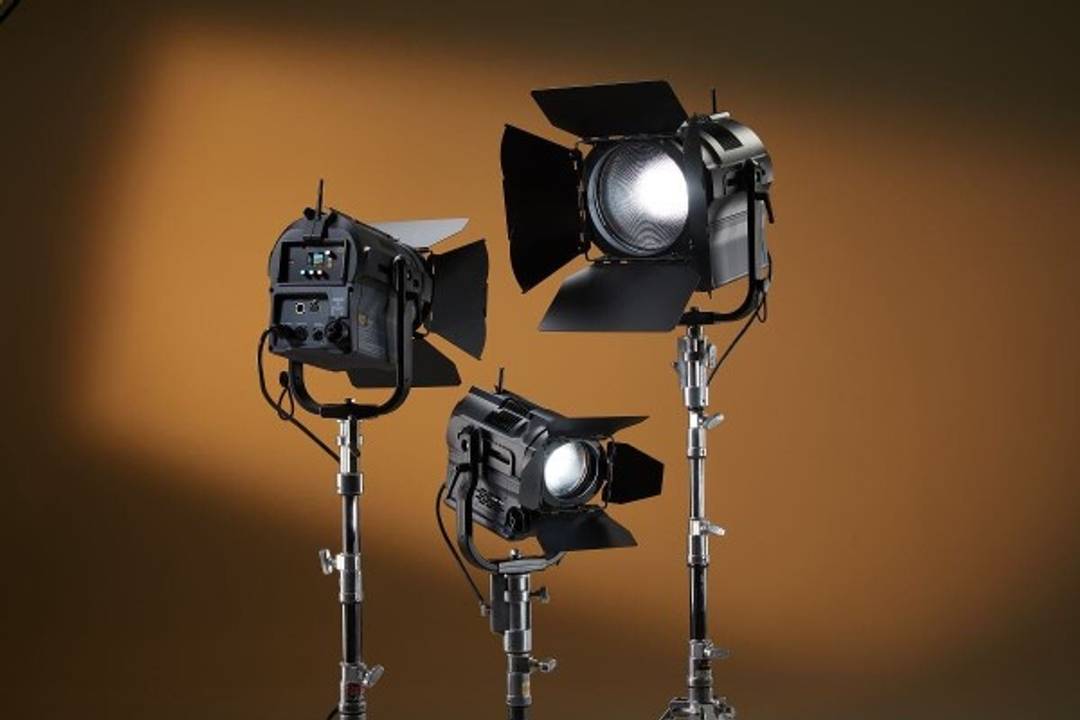
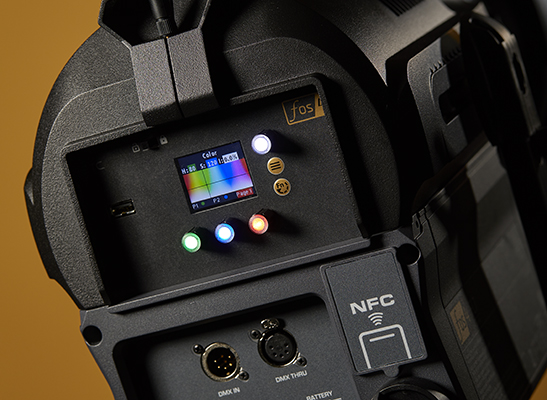
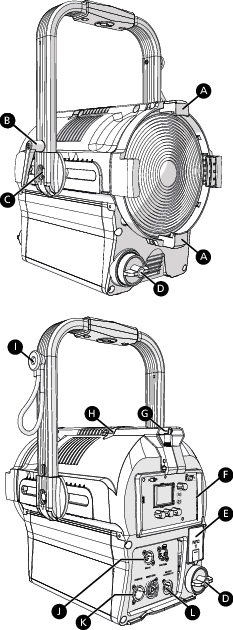
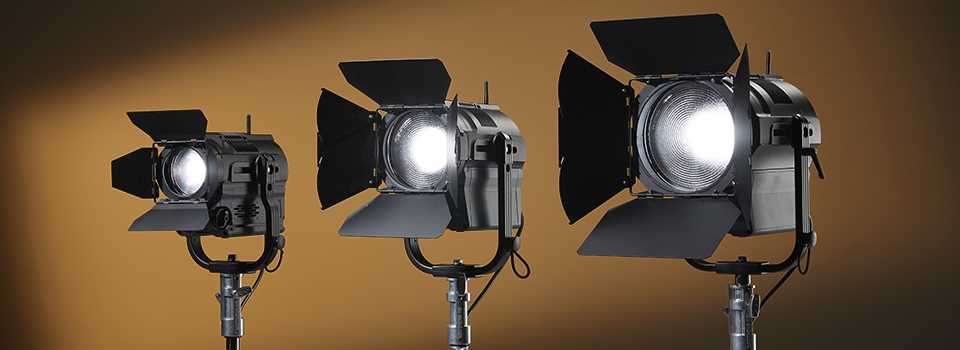
The ETC fos/4 Fresnel 5 is a 5-inch LED Fresnel for controlled studio and location lighting. Its mechanically adjustable beam suits keys, backlights and motivated sources that need more direction than a soft panel. Lustr X8 and Daylight HDR versions provide full-colour and tunable-white alternatives respectively.
- LED Fresnel Lustr X8 or Daylight HDR
- Power 173.9 W Lustr X8; 183 W Daylight HDR, at 120 V AC
- Colour Temperature 1,900–10,450 K
- Weight 7.8 kg
- Beam Angle 15–51°
- IP Rating IP20 · indoor dry locations. IP ratings guide.
fos/4 Fresnel 5 Specifications
| Specification | Details |
|---|---|
| Light engine | Lustr X8 full colour or Daylight HDR tunable white |
| White-light range | 1,900–10,450K |
| Optical system | 5 inch glass Fresnel lens |
| Beam coverage | 15–51° |
| Typical input at 120V | 173.9 W Lustr X8; 183 W Daylight HDR (Direct at Full) |
| Published weight | 7.8kg; see working-package notes |
| DC operation | 24–36V DC; maximum output may be reduced |
| Protection | IP20; indoor dry-location equipment |
| Control | 5-pin DMX/RDM; Multiverse on equipped models; NFC configuration |
| Model codes | fos4FL5 (Lustr X8); fos4FD5 (Daylight HDR) |
| Flicker settings | 5kHz / 25kHz |
fos/4 Fresnel 5 Output Calculator
Estimate centre-beam output or compare two settings at the same throw. The calculator uses candela from the ETC fos/4 Fresnel 5 IES photometry package. Spot, mid and flood use the 0° axis of each engine’s Full On IES file. ETC does not specify a Kelvin value for those tests; this tool does not estimate output for other modes or assign a colour temperature to Full On.
Camera Settings
At 5 m (16.4 ft) in spot, Lustr X8 · Full On gives about 1,852 lx at beam centre; Daylight HDR · Full On gives about 2,056 lx. The reference table works without JavaScript.
Published intensity data and calculation method
Lux = candela ÷ distance in metres squared. Foot-candles = lux ÷ 10.7639. The camera estimate uses f-number = √(lux × ISO × shutter time ÷ meter reference). The small digit is tenths of a stop, not a T-stop.
The 3.048 m (10 ft) floor is a conservative calculator limit, not a tested accuracy threshold. Beyond that, these are inverse-square estimates at beam centre, not measurements or coverage predictions. Only ETC’s published focus and output settings are included; diffusion, accessories and dimming are not modelled. Meter the working setup.
| Focus | Lustr X8 · Full On | Daylight HDR · Full On |
|---|---|---|
| Spot | 46,301.39 | 51,403.96 |
| Mid | 30,162.38 | 37,128.09 |
| Flood | 8,935.88 | 10,521.94 |
Strengths and Limitations
| Aspect | Working implication |
|---|---|
| Strength | Adjustable coverage without replacing the whole head. |
| Strength | NFC setup and a console control path for repeatable programming. |
| Limitation | Wash optics cannot project sharp gobos or shutter cuts. |
| Limitation | Active cooling and IP20 protection require attention to sound and location conditions. |
Practical Uses
- A compact accent or close interview backlight where the smaller lens and housing ease placement.
- Spot into a bounce for a contained patch of soft light, then meter the bounce rather than relying on a bare-head reading.
- For a motivated window source, set the lens position first, adjust position for coverage and use barn doors or external flags for spill.
The lens is a true Fresnel with a soft-edged adjustable beam. Focus can be adjusted from the front or rear. Barn doors shape spill, but they do not give the sharply imaged cuts or projected patterns of a Source Four profile.
Output and Colour
| Manufacturer reference | Published value |
|---|---|
| Lustr X8 published maximum flux | 5,591 lumens |
| Daylight HDR published maximum flux | 6,584 lumens |
| Beam adjustment | 15–51° |
Lumen ratings describe total flux, while lux describes light arriving at a surface. Do not read the flux table as a lux measurement at a particular distance. Use ETC’s linked photometry for the exact array, lens, focus and diffusion configuration. Meter the working setup after adding colour, diffusion or other modifiers.
Lustr X8 combines deep red, red, amber, lime, green, cyan, blue and indigo for full-colour mixing. Daylight HDR uses a different six-colour array for tunable white. The identical Kelvin range does not mean that the two versions have the same gamut or output. Record array, colour settings and spectral/output preference when matching units.
Power and Batteries
The 5-inch Lustr X8 draws 173.9W typically at 120V; the Daylight HDR version is listed at 183W. These are typical measured inputs, not interchangeable maximum ratings. Battery operation requires the specified 24–36V DC connection and a supply capable of the required current.
Check the supply lead, grounding, connector rating and total circuit load. Published fixture-per-circuit counts assume a particular breaker and supply condition; they are not a universal instruction for every outlet or distribution system. Account for startup current as well as steady running draw.
Control, Cooling and Camera Operation
| Control path | Operation |
|---|---|
| Wired control | 5-pin DMX and RDM. Match operating mode and DMX footprint to the console profile. |
| Wireless control | City Theatrical Multiverse on equipped versions. It is a different system from CRMX; confirm the transmitter and receiving hardware. |
| NFC | ETC Set Light configures supported fixture properties at close range. NFC setup is separate from continuous wireless DMX control. |
| Cooling and PWM | Active fan cooling; use the specified frequency choices and test the actual fan setting, dimming level, shutter and frame rate. |
Test low-level fades as well as full output. A high PWM frequency alone does not prove flicker-free results at every frame rate and shutter combination. Listen to the fan at the microphone position after the fixture has reached working temperature. Save cooling, colour and operating-mode settings with the lighting notes.
Modifiers, Rigging and the Working Package
The 5-inch lens needs its own compatible colour frame and barn doors. The nominal lens diameter is not the accessory-frame size. Include the yoke, junior pin, power lead and fitted modifiers in the working load.
IP20 describes an indoor fixture, so plan a suitable dry environment. Keep vents unobstructed and follow the regional manual’s mounting and clearance instructions. For overhead work, use the designated mounting and secondary attachment points with hardware rated for the complete assembly.
Alternatives and Related Fixtures
Other sizes in the fos/4 Fresnel family: ETC fos/4 Fresnel 7 · ETC fos/4 Fresnel 10.
| Compare | When it helps |
|---|---|
| ETC Source Four tungsten | A tungsten profile when shutter cuts and pattern projection matter; it needs an appropriate lamp and external dimming. |
| ETC lighting hub | Compare ETC’s panel, Fresnel and profile formats by the beam needed for the job. |
| All equipment | Compare other manufacturers with the same source size, working distance and modifier. |
What People Are Saying
ETC featured Levi Whitney’s UpHill Cinema production work with the fos/4 family in 2021. At the time ETC offered the 7-inch head; that account shows family controls and applications rather than testing the 5-inch head.
These practical notes use ETC’s Rev. G datasheet, its software release notes and its media-frame sizing chart.
What Works
- Two arrays for different shots: The FL5 Lustr X8 provides saturated colours; the FD5 Daylight HDR is tuned for whites. ETC lists 5,591 and 6,584 maximum lumens respectively for the 5-inch heads.
- Zoom from either side: The 15–51° range gives a tight accent or a broad wash without changing lenses. Front and rear control is useful when access to the yoke is limited.
- DC input as an alternative to AC: The 5-inch studio head accepts 24–36 V DC through three-pin XLR as well as mains. That is a useful option where cable routing makes AC difficult.
What to Watch For
- Battery output may be lower: ETC warns that maximum output can be reduced on battery. Confirm the actual pack and head at the intended dimmer level rather than planning from AC figures.
- Accessory and weight checks: The head is 7.8 kg and uses a 6.25-inch colour frame. Account for the mount and modifiers, and do not assume the larger Fresnel’s accessories fit.
- Flicker options depend on firmware: ETC added 11 kHz with v1.4.0 alongside 5 and 25 kHz. Check the rental’s version and test the frame rate and shutter requested for the shot.
Videos
ETC’s walkthrough covers the shared controls, NFC setup and zoom across the three fos/4 Fresnel sizes. It is not a 5-inch output or colour test. Use ETC’s FL5 and FD5 documentation for 5-inch setup and photometry.
Rental and Used-Fixture Checks
- Confirm the model label, array and regional power rating; housing appearance alone may not identify the light engine.
- Inspect the Fresnel lens, focus travel, barn-door retention and yoke lock.
- Test every colour channel, low-level fades, fan operation and the intended wired or wireless control mode.
- Check firmware against the manufacturer’s support notes and run the required camera test before rigging.
Documentation and Specifications
ETC colour-calibration modes · ETC fixture directory and photometry downloads
Photographs: ETC. Family photographs and shared housing details are identified in their captions.
Browse ETC lighting · all equipment.