
Last Updated 19 hours ago
Fiilex Matrix II RGBW Overview
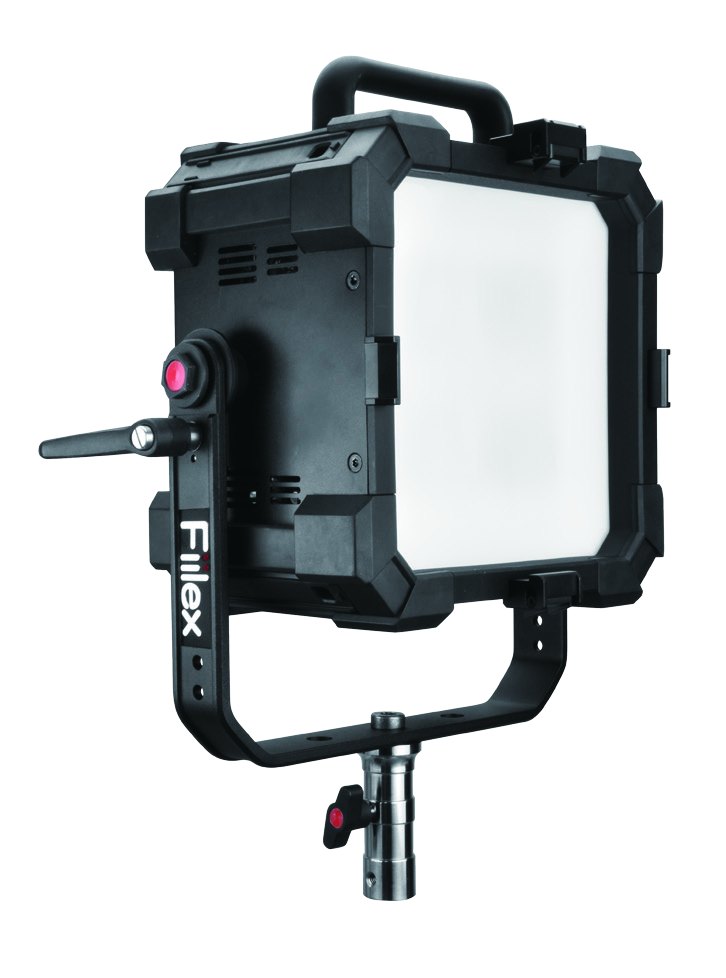
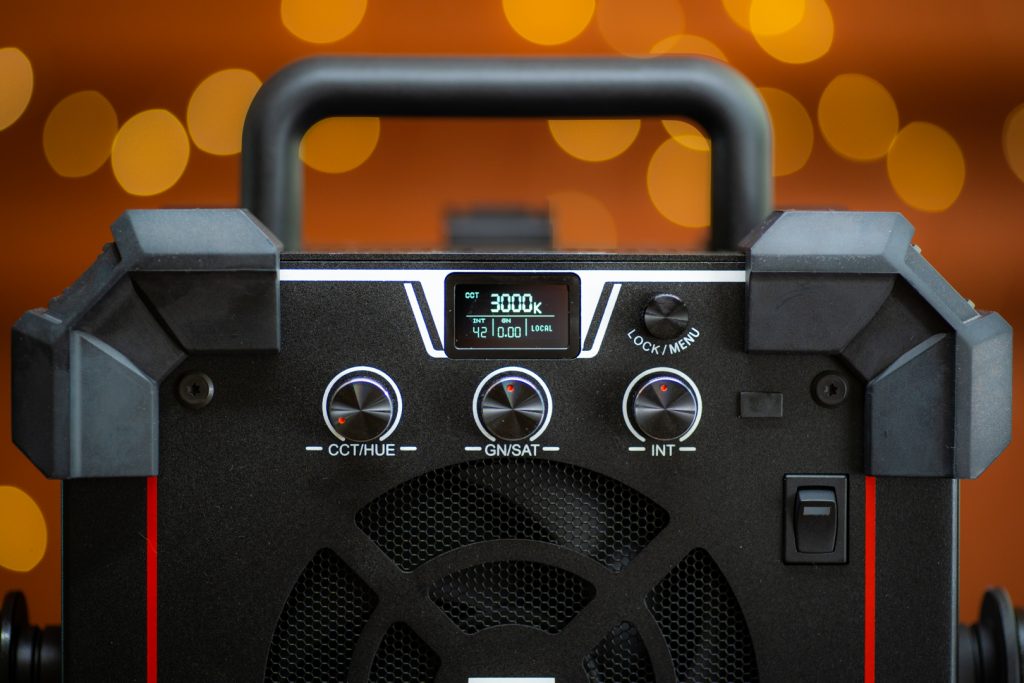
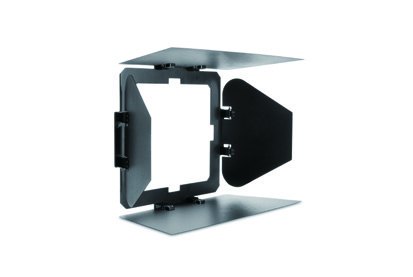
The Matrix II RGBW uses four emitters behind a compact square face. The optional Quad Fresnel concentrates all four for a brighter patch. A diffusion frame blends their shadows for close subjects.
Use the open beam for broad bounce or diffusion. The Quad Fresnel concentrates the beam when you cannot bring the head closer.
- RGBW LED Four Dense Matrix LED sources. Learn about RGBW.
- 340 W max AC 300 W max DC.
- Colour Temperature2,800–10,000 K
- Weight 4.4 kg with yoke; external supply adds 2.6 kg.
- Beam Angle 99° bare or 31° with the optional Quad Fresnel.
- IP RatingIP24 Listed in Fiilex’s manual. Splash protection, not a water-jet or immersion rating. Read the IP Rating.
Fiilex Matrix II RGBW Specifications
| Specification | Details |
|---|---|
| Manufacturer and model | Fiilex Matrix II RGBW |
| Source or rated power | 340 W maximum AC, 300 W DC |
| Optics, colour or format | Four LED sources, 2,800 to 10,000 K |
| Head or system detail | 4.4 kg with yoke; 2.6 kg external supply |
| Beam angle | 99° bare; 31° with optional Quad Fresnel |
| Ingress protection | IP24 as listed in the operating manual; do not assume separate accessories or power connections share the rating |
| Power connections | 100–240 V AC, 50/60 Hz per the manual; 48 V DC at the head via 3-pin XLR power |
| Wired control | 5-pin XLR DMX in/out; manual also documents RDM addressing |
| Yoke mount | 5/8 in (16 mm) baby receiver or 1-1/8 in (28 mm) junior pin |
Output Calculator
Select the published setup and a manufacturer distance, or enter a custom throw where supported. The results describe centre-beam output, not the brightness across the whole beam.
Camera Settings
If the calculator does not load, use the published photometric table or source on this page. JavaScript is required.
F-stop is a planning estimate, not a meter reading. It uses direct, on-axis illuminance and includes only the optics and diffusion named in the selected setup. Meter on set to account for lens transmission, filters, added diffusion, bounce, dimming and ambient light.
How the exposure estimate works
N = √(E × ISO × t / C), where E is illuminance in lux and t = shutter angle ÷ (360 × fps). The default C = 340 is a dome reference; C = 250 is a flat reference. These are calibration constants, not a measured T-stop. A small nonzero digit is tenths of a stop above the displayed full stop.
Distance estimates and comparisons
Published points are used as given. Between published points the calculator fits a curve through the two nearest readings. Outside those points it uses the inverse-square law only when the fixture’s dataset permits it. Distances outside a configuration’s supported range are reported separately. Comparisons use one shared distance and camera setup; equal lux does not imply equal coverage.
View published readings for the selected configuration
Strengths and Limitations
- Four emitters pack a broad field into a compact square fixture.
- At close range, multiple shadow edges can show without diffusion.
Practical Uses
Try the open 99° field into a book light, or fit the 31° Quad Fresnel for a more distant bounce. Test a hand in the beam if multiple shadow edges would be visible.
Output and Colour
| Configuration | Distance | Lux | Foot-candles |
|---|---|---|---|
| 5,600 K · Bare 99° | 1 m | 6,235 | 579 |
| 5,600 K · Bare 99° | 3 m | 693 | 64.4 |
| 5,600 K · Bare 99° | 5 m | 249 | 23.1 |
| 5,600 K · Quad Fresnel 31° | 1 m | 14,966 | 1,390 |
| 5,600 K · Quad Fresnel 31° | 3 m | 1,663 | 154.5 |
| 5,600 K · Quad Fresnel 31° | 5 m | 599 | 55.6 |
| 3,200 K · Bare 99° | 1 m | 5,974 | 555.0 |
| 3,200 K · Bare 99° | 3 m | 664 | 61.7 |
| 3,200 K · Bare 99° | 5 m | 239 | 22.2 |
| 3,200 K · Quad Fresnel 31° | 1 m | 14,340 | 1,332.2 |
| 3,200 K · Quad Fresnel 31° | 3 m | 1,593 | 148.0 |
| 3,200 K · Quad Fresnel 31° | 5 m | 574 | 53.3 |
Photometric source and test conditions.
The manufacturer’s chart provides separate 3,200 K and 5,600 K readings for the named optical configurations at 1, 3 and 5 m. Lux values are transcribed from that chart; foot-candles are converted from lux. The calculator is bounded to 1–5 m, with intermediate values labeled as estimates rather than additional factory measurements. These readings do not establish output at other colour temperatures or with different accessories. The chart does not separately identify AC versus DC operation for the photometric test.
On-set check
Photometric comparisons only make sense with the same optic and distance. Use the calculator to compare the documented open head and Quad Fresnel, then test the intended diffusion; its transmission and the usable size of the lit patch are not in the chart.
Power and Controls
The external supply feeds 48 V DC to the head. For remote power, Fiilex specifies a 48 V source capable of 300 W and a 3-pin XLR power cable, not a microphone cable. Use CCT with green–magenta trim for matching white and HSI for a colour cue. Confirm the available direct RGBW controls and channel map on your rental unit before patching. The published maximum is 340 W on AC or 300 W on DC. Fiilex battery guidance.
Control, Cooling and Camera Operation
Fiilex’s manual says the fixture takes DMX automatically when it detects a signal and disengages the local knobs. Check the OLED for the address before assuming a local control is faulty.
Modifiers, Rigging and the Working Package
The optional Quad Fresnel narrows all four beams. A softbox or additional diffusion is useful where the separate emitters show in a reflection. The yoke fits a baby pin or a junior receiver; allow for the weight of the 2.6 kg supply if it is supported on the same stand.
Fit and setup
Put a hand near the subject and look at its shadow and any hard reflection before committing to the setup. If the four sources remain visible, move the diffusion far enough from the head to blend them or use a different modifier.
Alternatives and Related Fixtures
For a weather-resistant hard LED panel, see Creamsource Vortex 4.
Also compare the Fiilex Q5 COLOR.
What People Are Saying
Field Feedback at a Glance
What worked
- Naso didn’t hear the fan ramp up during an extended run. Erik Naso, Newsshooter.
- Fstoppers bounced one Matrix II RGBW off the ceiling as the key in its small studio. Fstoppers, studio build.
- Rhodes could cut the light and bring it back without losing his brightness setting. Phil Rhodes, RedShark.
Drawbacks to plan for
- Rhodes saw a shift toward green-yellow below 1% at cooler settings. Phil Rhodes, RedShark.
- The front diffuser reduced overlapping shadows but didn’t eliminate them in his test. Phil Rhodes, RedShark.
- Naso’s small Chimera leaked from the rear and couldn’t rotate when fitted in the built-in slots without a speed ring. Erik Naso, Newsshooter.
Erik Naso, Newsshooter
Naso used the bare panel for a wide background colour wash and wanted more output through 4 × 4 diffusion. At 1 m in the centre of the bare beam, his meter read 6,040 lux at 3,200 K and 6,210 lux at 5,600 K. He did not have the optional Fiilex Fresnel or Fiilex softbox to test; the Chimera mentioned above was his own.
Videos
Fiilex Matrix II RGBW hands-on review
Rental and Used-Fixture Checks
Check all four emitters in white and saturated colour. Allow for the separate 48 V supply and the depth of the Quad Fresnel or softbox.
Before You Book
Ask for the separate supply and exact Quad Fresnel or speed-ring parts needed. Run all four emitters in white and a saturated cue during checkout, and allow for the extra front depth before choosing a mount or case.