
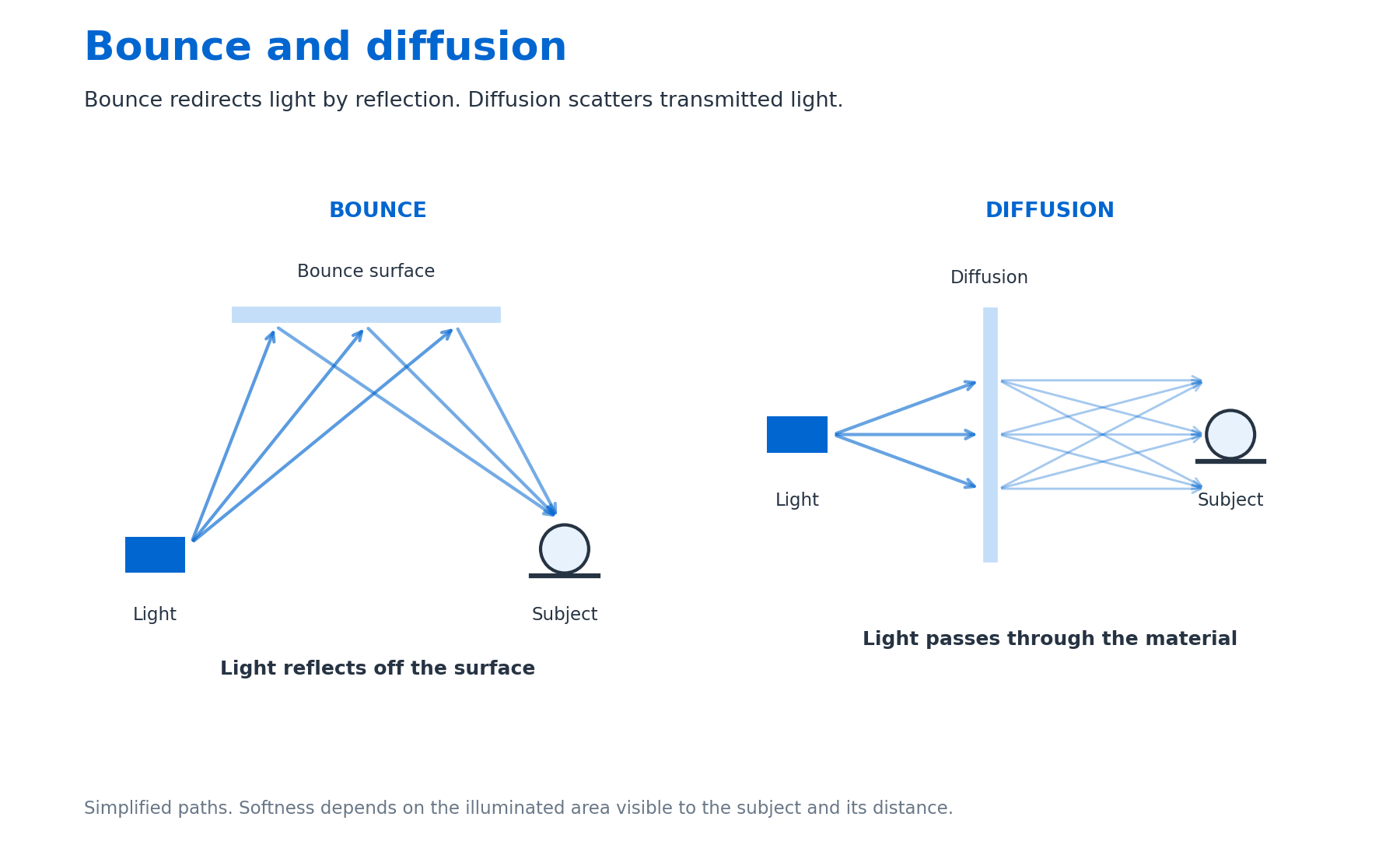
Diffusion scatters transmitted light. In film lighting, diffusion gels, fabrics and panels are used to change beam distribution and the apparent size of the source seen by the subject.
What makes the result soft
The illuminated material becomes an effective source. A large, well-filled diffusion frame close to the subject can create a broader shadow transition than a small piece placed directly on a fixture. The material’s name alone does not specify the final softness.
Output and coverage
Diffusion can reduce the measured light level and send light beyond the original beam. Loss varies with material and setup; do not assign every diffusion a fixed stop loss. Check how evenly the light fills the frame and whether an undiffused hotspot remains visible.
Practical example
When softening a key through a frame, compare the subject’s shadow edge as you change the source-to-frame and frame-to-subject distances. Keep the frame filled, control spill where necessary and recheck exposure. Use the fixture and material manufacturers’ clearance and heat guidance.
Related terms
Soft Light · Hard Light · Beam Angle · Book Light · Grid