
Last Updated 5 days ago
Litepanels Gemini 2×1 Hard Overview
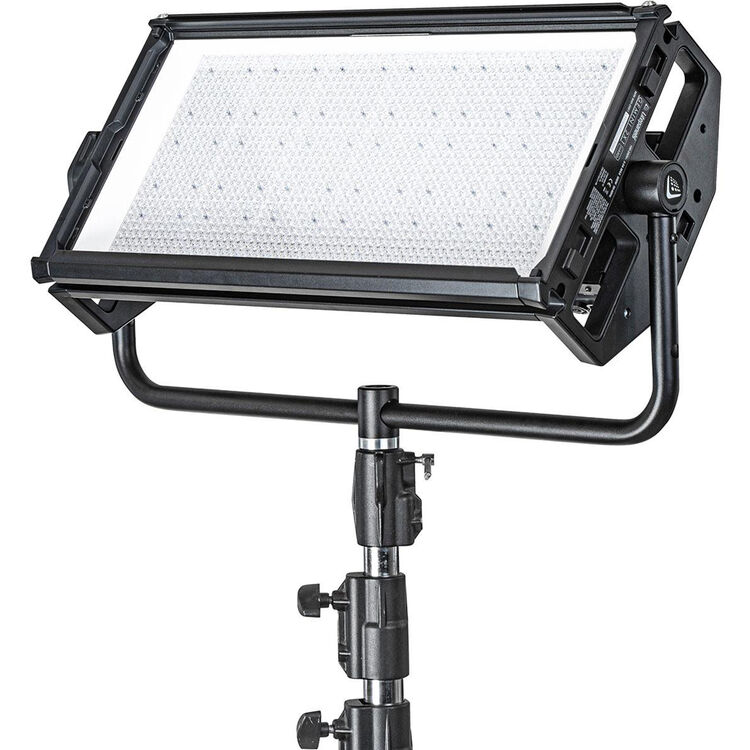
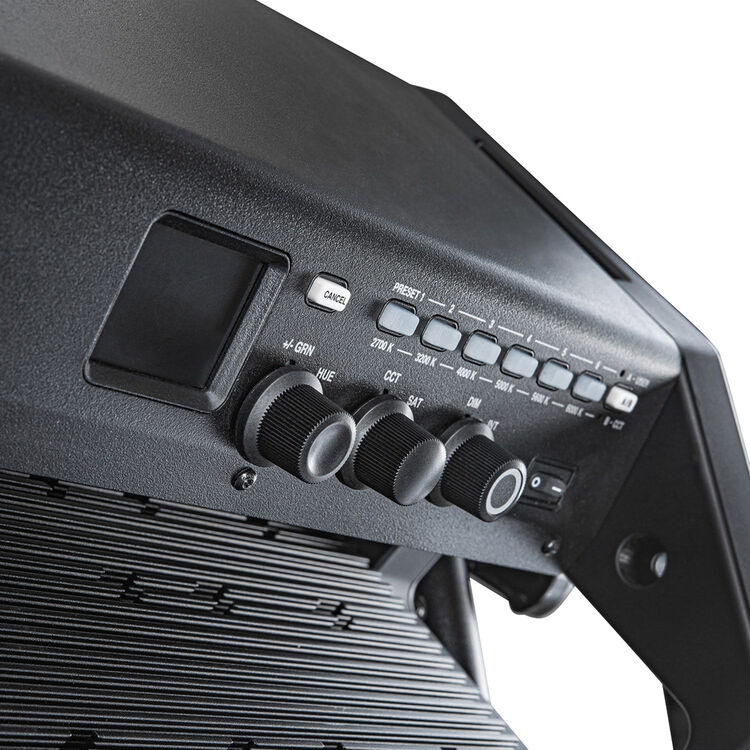
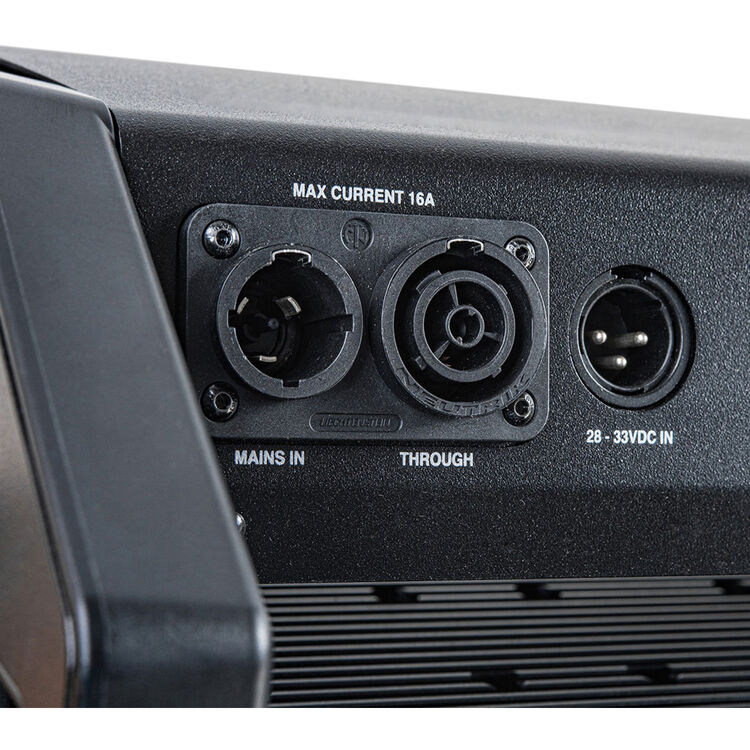
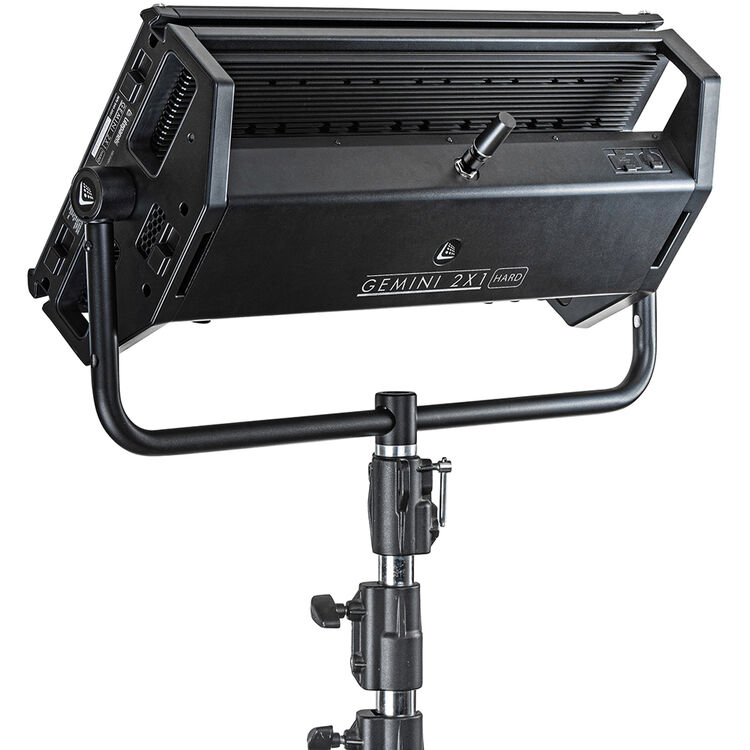
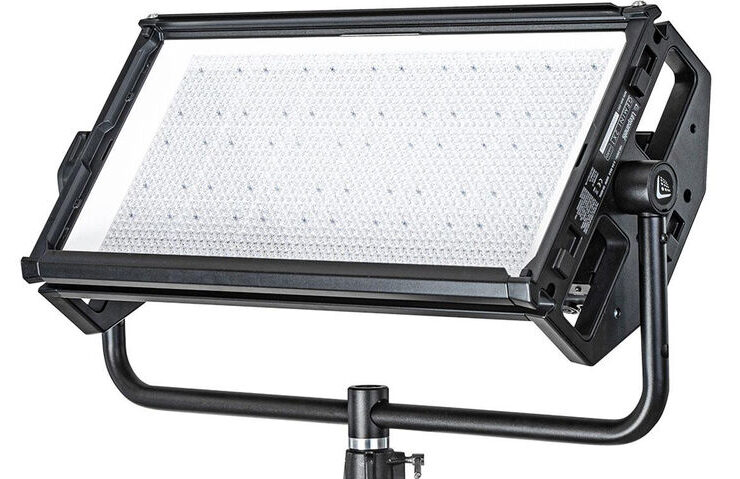
The Litepanels Gemini 2×1 Hard is an RGBWW panel with narrow native optics and removable diffusion. It is distinct from the broad-beam 2×1 Soft, with its own power draw, accessories and working output.
Gemini 2×1 Hard is a concentrated 20° source that can be transformed with supplied diffusion. Its built-in CRMX, 26–33V battery requirements and large bare-versus-dome output difference distinguish it from the Soft and 1×1 models.
- Type
RGBWW hard LED panel - Power
500 W nominal; integrated 100–240 V AC supply; 26–33 V DC per current FAQ - Colour Temperature2700–10000 K
- Weight 11.5 kg standard / 14.5 kg pole-operated; removable junior pin
- Beam Control
20° native; included Ultra Light diffusion and dome; over 100° with dome - IP RatingIP20Per the manufacturer specification. Read the IP rating guide.
Litepanels Gemini 2×1 Hard Specifications
| Specification | Manufacturer reference |
|---|---|
| Engine / CCT | RGBWW; 2,700–10,000K with green–magenta adjustment |
| Beam | 20° native; >100° with dome |
| Electrical draw | 500W nominal |
| AC supply | 100–240V, 50/60Hz; internal |
| DC input | 26–33V in current manufacturer FAQ; recommended batteries limited to 85% output |
| Dimming | 0–100% continuous; selected fan/battery mode may limit maximum |
| CRI / TLCI, manufacturer average | 95 / 97 |
| Control | Onboard, wired DMX/RDM, integrated CRMX; optional Bluetooth dongle |
| Diffusion | Ultra Light and Domed included |
| Fan Off limit | 50% maximum intensity, per Litepanels help centre |
| Weight | 11.5kg manual; 14.5kg pole-operated |
| Mount | Removable Junior pin |
| Housing rating | IP20 |
| Operating temperature | −20°C to 45°C |
Output Calculator
Select the published setup and a manufacturer distance, or enter a custom throw where supported. The results describe centre-beam output, not the brightness across the whole beam.
Camera Settings
If the calculator does not load, use the published photometric table or source on this page. JavaScript is required.
F-stop is a planning estimate, not a meter reading. It uses direct, on-axis illuminance and includes only the optics and diffusion named in the selected setup. Meter on set to account for lens transmission, filters, added diffusion, bounce, dimming and ambient light.
How the exposure estimate works
N = √(E × ISO × t / C), where E is illuminance in lux and t = shutter angle ÷ (360 × fps). The default C = 340 is a dome reference; C = 250 is a flat reference. These are calibration constants, not a measured T-stop. A small nonzero digit is tenths of a stop above the displayed full stop.
Distance estimates and comparisons
Published points are used as given. Between published points the calculator fits a curve through the two nearest readings. Outside those points it uses the inverse-square law only when the fixture’s dataset permits it. Distances outside a configuration’s supported range are reported separately. Comparisons use one shared distance and camera setup; equal lux does not imply equal coverage.
View published readings for the selected configuration
Strengths and Limitations
Strengths
- A native hard beam plus supplied diffusion can cover several directional and soft-source jobs.
- The supply and CRMX receiver are internal.
Limitations
- The 20° native beam and broad dome configuration have substantially different output levels.
- Battery recommendations are output-limited, and the quiet Fan Off configuration is also intensity-limited.
Practical Uses
The native beam suits directional light, bounce and large diffusion frames. The dome creates a wider source with lower centre intensity. Wireless-control hardware varies by kit.
| Setup | How to use this fixture |
|---|---|
| Longer-throw directional source | Use the native 20° optics for the required pool or bounce. Check coverage across the target, since the peak is a narrow-beam result. |
| Broad soft key | Fit the appropriate Ultra Light/dome combination as instructed, then meter the changed source. The dome result is far below the bare centre figure. |
| Battery production | Specify the recommended 26V/block-battery arrangement and plan for its documented output limit. Do not copy the Soft model’s lower-voltage system. |
Output and Colour
The 2×1 Hard's native 20° TIR beam is much narrower than the Soft's. At 3m/5,600K Litepanels lists 23,000 lux bare and 2,800 lux with the dome; at 3,200K the pair is 20,000 and 2,300. This makes diffuser choice central to any output comparison. The Ultra Light diffuser widens coverage, while the separate dome creates a broader, more homogenised source.
| Configuration | 3,200K at 3m | 5,600K at 3m |
|---|---|---|
| Bare, 20° | 20,000 lux | 23,000 lux |
| Domed diffuser, >100° | 2,300 lux | 2,800 lux |
Sources: Gemini 2×1 Hard: The Brightest & The Lightest LED Panel | Litepanels; Gemini fan behaviour and Fan Off intensity limit.
At 3m/5,600K, Litepanels lists 23,000 lux bare and 2,800 lux with the dome, an approximately 8.2-fold difference. The dome spreads the light over a wider field.
The two supplied diffusers have different roles and fitting positions. Choose the actual configuration for the shot and label it in the exposure notes; the word “Hard” does not mean every setup should be compared bare.
Power and Batteries
Nominal draw is 500W with an internal 100–240V AC supply. The current manufacturer FAQ specifies 26–33V DC, with recommended VCLX block or dual 26V/240Wh arrangements operating at up to 85% output.
Fan Off limits maximum intensity to 50%. Battery and quiet operation are separate constraints; test the actual combined configuration before planning exposure through a dome or large soft modifier.
| Manufacturer battery example | Stated output/runtime reference |
|---|---|
| Anton/Bauer VCLX block | Up to 85% for over one hour |
| Two 26V 240Wh packs with specified dual plate | Up to 85% for over 30 minutes |
Control, Cooling and Camera Operation
| Control path | Hardware and operating notes |
|---|---|
| Local / wired | Onboard and DMX/RDM. |
| Wireless console | Integrated CRMX on this model. |
| Bluetooth | Optional compatible dongle required. |
| Fan profile | Use a personality exposing fan control if the console must select Auto/Off/Delayed/Max. |
Distinguish Fan Delayed from Fan Off: delayed operation can still start the fans during a long take, while Off imposes the documented intensity limit. Establish sound and output together at working temperature.
Assess beam uniformity and colour through the fitted diffusion at the working distance.
Modifiers, Rigging and the Working Package
Compatible accessory profiles · Litepanels Gemini 2×1 60° Honeycomb Grid
The manual-yoke version is 11.5kg and pole-operated version 14.5kg before additional modifiers or battery gear. The supplied Ultra Light and Domed diffusers use different fitting positions and can be combined as instructed. Order the correct Hard diffuser/softbox, removable Junior pin and support arrangement, and check accessory retention before raising it. The housing is IP20.
| Part or version | Published/package detail |
|---|---|
| Manual fixture | 11.5kg |
| Pole-operated fixture | 14.5kg |
| Support | Correct removable Junior pin and mounting hardware |
| Front system | Hard-specific Ultra Light/dome and required softbox/grid |
| Portable power | Correct 26–33V package and battery plate/cable |
Check both front fitting positions and accessory retention before raising the head. The manual/pole weights precede extra batteries and modifiers. IP20 remains the housing rating.
Alternatives and Related Fixtures
| Fixture | When to compare it |
|---|---|
| Litepanels Gemini 2×1 Soft RGB LED Light Panel | Choose the Soft for broad native coverage and a different battery system; compare equally diffused configurations. |
| Litepanels Gemini 1×1 Hard RGB LED Light Panel | Choose the smaller Hard when its 46° beam and lower input meet the exposure. |
| Creamsource Vortex 8 | Compare a weather-rated eight-zone hard panel when exterior exposure or spatial effects matter. |
What People Are Saying
Field Feedback at a Glance
These points concern the Gemini 2×1 Hard, not the 2×1 Soft or 1×1 Hard. The tests identify their modifiers; fan and battery restrictions are from Litepanels.
What worked
- Andrew Lock’s exact-model test demonstrates the native hard beam and shows the change with Ultra Light and dome diffusion. You can alter spread without changing heads.
- B&H eXplora’s hands-on setup softens the 2×1 Hard as one source while retaining a harder cool source from a different light. The example shows the 2×1’s role in a mixed setup, not that the two panels have identical beams.
- Litepanels’ 2×1 Hard documentation specifies onboard control, wired DMX/RDM and integrated CRMX. The native wireless connection does not require the optional Bluetooth accessory.
Drawbacks to plan for
- The native beam is 20°; the dome spreads it beyond 100°. Do not use the bare-beam lux figure to budget a diffused key.
- Litepanels’ fan-mode guide caps Fan Off at 50% on the 2×1 Hard. Set fan mode before metering a dialogue setup.
- Litepanels’ 2×1 Hard documentation lists a 26–33 V DC input range and 85% maximum output with its recommended batteries. Battery operation is not a like-for-like substitute for mains at full output.
Gaffer & Gear
Andrew Lock’s review separates the native beam, Ultra Light Diffusion and dome configurations, then examines DMX, power and colour. That approach shows why a single hard-panel lux figure does not describe all the ways this light will be used. Watch video.
Reddit, r/Filmmakers
A prospective buyer asks about hotspotting, beam-edge colour and build quality when considering a discounted unit. The thread contains purchase questions and second-hand concerns, rather than a report of faults found in that buyer’s own tests. View discussion.
Videos
Gaffer & Gear tests the Gemini 2×1 Hard with no modifier, flat diffusion and dome diffusion.
Rental and Used-Fixture Checks
- Inspect both diffusers and their separate retention positions.
- Confirm manual/pole yoke, Junior pin, battery voltage and the approved DC cable.
- Test internal CRMX, fan mode, low-level fades and the intended camera shutter.
Documentation and Specifications
- Gemini fan behaviour and Fan Off intensity limit
- Gemini 2×1 Hard: The Brightest & The Lightest LED Panel | Litepanels
Browse Litepanels lights · LED panels · all equipment.