
Last Updated 1 day ago
Astera NYX Bulb Overview
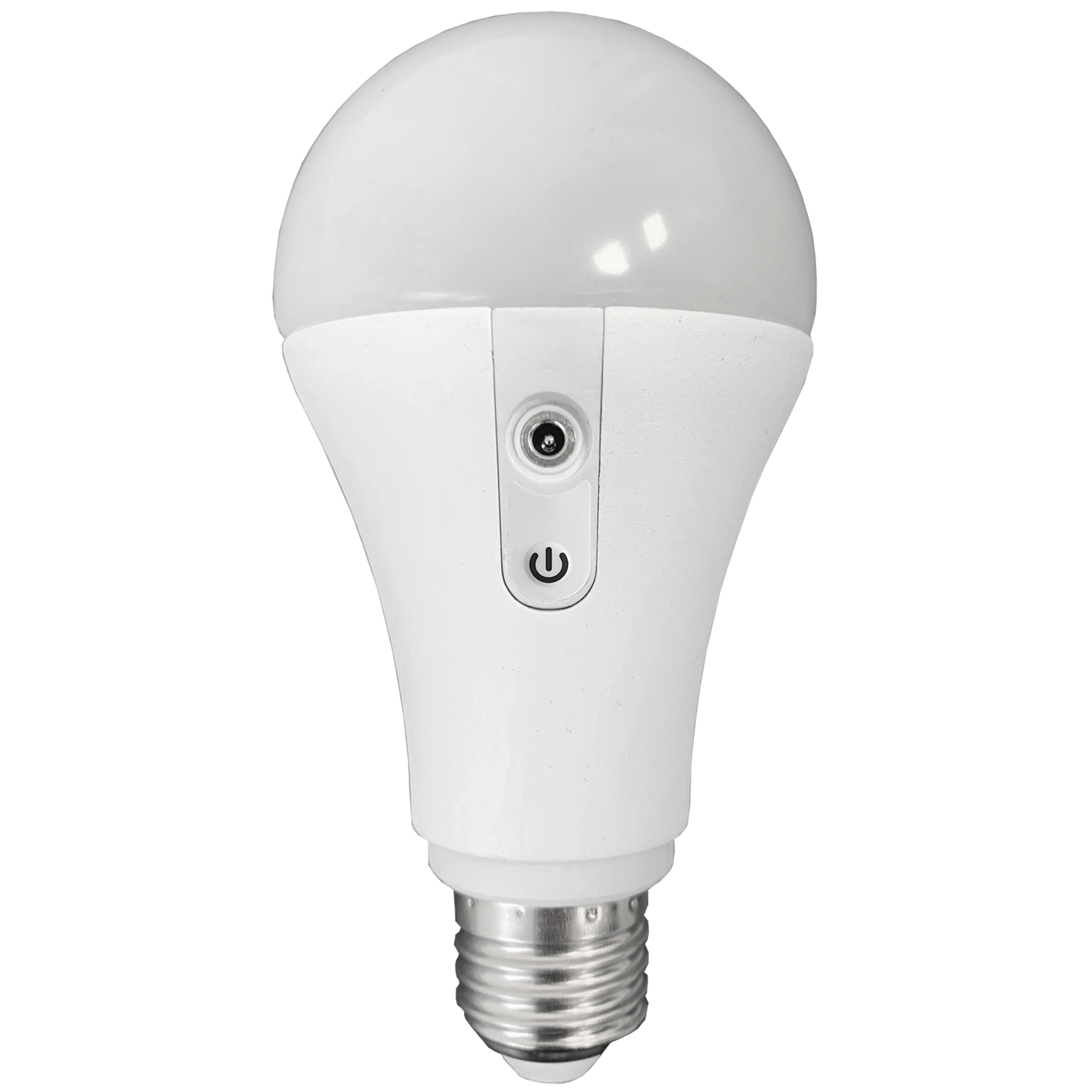


The Astera NYX Bulb is a colour-tunable practical bulb built around Astera’s Titan RGBMintAmber engine. It puts film-oriented wireless control into a lamp-socket format for table lamps, pendants, set dressing and visible installations.
The essential distinction is power: NYX has no internal battery. It uses the correct regional AC lamp socket or an external DC source. Astera’s optional PowerStation can power and configure it, but that accessory is separate from the bulb.
- Titan RGBMintAmber Bulb One pixel; CRMX, AsteraApp and compatible Bluetooth bridge. No wired DMX.
- 10 W LED draw Verify the base and supply: E26 100–120 V; E27/B22 100–240 V. AC or supported external DC.
- Colour TemperatureAdjustable white Factory examples at 3,200 K and 5,500 K, not the full range.
- Weight 240 g bulb
- Beam Control 155° beam / 205° field.
- IP Rating IP44 in the specified AC setup with the DC port capped; IP20 when using DC. No internal battery. Read the IP rating guide.
Astera NYX Bulb Specifications
| Specification | Details |
|---|---|
| Model family | FP5; E26, E27 and B22 versions |
| LED engine | Titan RGBMintAmber |
| Published LED power draw | 10W |
| Luminous flux | 618lm at 3,200K; 750lm at 4,000K; 683lm at 5,500K |
| CRI / TLCI | 96 or above over the specified 3,200–6,500K test range |
| Beam / field angle | 155° / 205° |
| Pixels | One |
| E26 AC input | 100–120V |
| E27 / listed BC AC input | 100–240V |
| DC input | 5–18V, 2.1A; 3.5 × 1.35mm connection |
| Control | CRMX, AsteraApp/UHF, BluetoothBridge, infrared; no wired DMX |
| Weather rating | IP44 only in the specified AC/capped-DC arrangement; IP20 on DC |
| Operating temperature | 0–40°C |
| Weight / dimensions | 240g; Ø70 × 130mm |
Output Calculator
Select the published setup and a manufacturer distance, or enter a custom throw where supported. The results describe centre-beam output, not the brightness across the whole beam.
Camera Settings
If the calculator does not load, use the published photometric table or source on this page. JavaScript is required.
F-stop is a planning estimate, not a meter reading. It uses direct, on-axis illuminance and includes only the optics and diffusion named in the selected setup. Meter on set to account for lens transmission, filters, added diffusion, bounce, dimming and ambient light.
How the exposure estimate works
N = √(E × ISO × t / C), where E is illuminance in lux and t = shutter angle ÷ (360 × fps). The default C = 340 is a dome reference; C = 250 is a flat reference. These are calibration constants, not a measured T-stop. A small nonzero digit is tenths of a stop above the displayed full stop.
Distance estimates and comparisons
Published points are used as given. Between published points the calculator fits a curve through the two nearest readings. Outside those points it uses the inverse-square law only when the fixture’s dataset permits it. Distances outside a configuration’s supported range are reported separately. Comparisons use one shared distance and camera setup; equal lux does not imply equal coverage.
View published readings for the selected configuration
Strengths and Limitations
Strengths
- Socket-format colour and dimming integrate into visible practicals.
- Astera wireless control supports remote colour and level changes.
Limitations
- There is no internal battery; regional socket and voltage must match.
- Confirm hardware revision, runtime setting and the required power/data accessories.
Practical Uses
NYX is useful for remotely balancing a practical against the camera exposure, changing the colour of a lamp without a gel change, or programming a motivated flicker. Keep the practical’s direction believable; a convincing lamp in frame may still need a separate hidden source to light the performer.
Compare the Aputure Accent B7c when selecting a bulb ecosystem, but compare battery architecture and control as well as output. For a visible long source or larger nearby fill, a tube is a different lighting tool. NYX is most useful when the socket format is itself the solution.
| Setup | Working approach |
|---|---|
| Visible practical | Set brightness and colour through the camera so the fixture retains the intended detail in frame. |
| Accent or reflection | Position the source for its beam and emitting shape, then control spill with the correct accessory. |
Output and Colour
Astera lists 114 lux at 1m at 3,200K and 124 lux at 1m at 5,500K. Its 750lm figure is measured at 4,000K. Lumens and lux answer different questions: lumens describe total luminous flux, while lux describes illumination at a surface under the specified geometry.
A practical can be deliberately bright in the frame while contributing only a modest amount of light to a performer. Decide whether NYX needs to appear in the shot, light a nearby face, illuminate a shade, or do all three. Those jobs can call for different brightness and placement.
The RGBMintAmber engine allows white-light and colour choices. A gel preset or colour value remains an electronic approximation of a target source. Test it through the lamp shade and the production camera: fabric colour and diffusion can change both tint and exposure.
NYX’s dome distribution is different from a traditional filament source. The optional CupBouncer redirects light toward the base, which can help illuminate some lamp shades more evenly. Evaluate the fixture from the camera angle; an exposed dome, a glowing shade and a hidden bulb can produce very different results.
Power and Batteries
Choose the correct base and input-voltage version. The E26 specification is 100–120V; the E27 and listed bayonet version have a broader input range. Similar-looking screw bases do not justify ignoring the unit’s actual label.
Use the bulb in a suitable luminaire with adequate physical clearance and ventilation. Do not assume an ordinary household wall dimmer is an approved control method for its electronics. Keep the lamp’s supply stable and use the supported digital dimming system unless Astera explicitly approves another arrangement.
The side DC socket accepts the documented 5–18V source. The supplied USB-to-DC arrangement, a supported power bank, the Astera PowerStation or an appropriate battery cable can provide portable power. Confirm voltage, current and polarity for the actual combination.
PowerStation is both an external battery accessory and a configuration/display interface. It can set values the bulb remembers after disconnection. That is useful when a lamp will become difficult to reach, but removing the PowerStation does not leave the bulb with a hidden rechargeable battery.
For multiple bulbs on a shared battery arrangement, account for the complete demand and the supported splitter. The runtime belongs to that external power system, not to NYX as a standalone battery product.
Control, Cooling and Camera Operation
The bulb includes CRMX reception and a BluetoothBridge function. The manufacturer data sheet distinguishes the short Bluetooth connection from the longer UHF/CRMX link. A phone’s position during setup and the radio path during the take are different considerations.
There is no wired DMX socket. For a console workflow, prepare the compatible wireless transmitter, address and profile before placing the lamp in set dressing. Check signal-loss behaviour so that a radio interruption does not create an unexpected look.
Modifiers, Rigging and the Working Package
The IP44 claim applies when the bulb is powered through AC and the DC socket carries the specified FP5-SP protection cover. The data sheet gives IP20 when using the DC socket. Calling the bulb simply “IP44” without that condition loses an important operating limit.
The surrounding lamp, socket, external power source and cables also have their own ratings. A weather-resistant bulb does not make an ordinary interior table lamp safe for rain. Follow the NYX manual for the complete arrangement.
Alternatives and Related Fixtures
| Fixture | Choose it for |
|---|---|
| Astera HydraPanel | A different source shape within the Astera system. |
| Aputure Accent B7c | A separate power, mounting and control ecosystem. |
What People Are Saying
Field Feedback at a Glance
What worked
- The two bulbs in Astera’s demo kit matched each other on camera when Sheldon used the kit on a TV pilot. Graham Sheldon, CineD.
- Sheldon saw no flicker at 24, 30, 60 or 120 fps in his camera tests. He did not test higher frame rates. Graham Sheldon, CineD.
- At a 5,600 K setting, Allard measured only a 29 K change in colour temperature as he dimmed the bulb from full to half output. Matthew Allard, Newsshooter.
Drawbacks to plan for
- The colour temperature on the dial did not always match the meter. Allard measured 5,237 K at a 5,600 K setting and 7,692 K at 10,000 K. Meter or camera-match before mixing with another source. Matthew Allard, Newsshooter.
- Sheldon needed practice to cue effects quickly in the AsteraApp and found Sidus Link easier to learn. Rehearse the cues before the first take. Graham Sheldon, CineD.
- Unlike the B7c in Sheldon’s comparison, the NYX has no built-in battery. A practical without a live socket needs a concealed external supply and lead. Graham Sheldon, CineD.
Matthew Allard: Useful Control Inside Practical Lamps
Allard values being able to change the brightness and colour temperature of an in-frame practical without changing the lamp. He praises the build, colour accuracy and ease of control, particularly for interview backgrounds and productions that regularly use practicals. Read or watch the full account.
Videos
NYX Bulb: Product Walkthrough
A model-specific walkthrough or review.
Rental and Used-Fixture Checks
Verify the exact model, power components and control profile. Inspect mounts, optics or diffusion, connector locks and cables. Test a slow fade, colour matching and the complete intended remote-control path before rigging.
Documentation and Specifications
Official product overview · Technical specifications · Manuals, data sheets and DMX profiles.
Product photograph: Astera.
Browse Astera lights · bulb lights · all equipment.