
Last Updated 14 minutes ago
ARRI Compact 1200 Overview
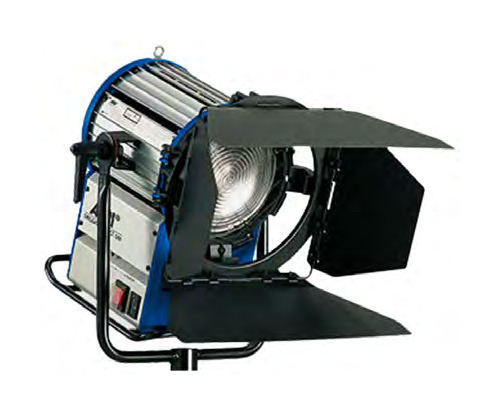


ARRI Compact 1200 is a discontinued 1,200 W single-ended HMI daylight Fresnel from ARRI’s Compact range. Its short-focus lens provides a controllable spot-to-flood field for location or studio use. The head requires the exact lamp, an approved external ballast and a connector-matched head cable; it is not a direct-mains fixture.
The later ARRI True Blue D12 is also a 1,200 W HMI Fresnel, but these readings are specific to the Compact 1200.
- Daylight HMI Fresnel 175 mm Fresnel; HMI 1200 W/SE lamp with G38 base.
- 1,200 W + External Ballast Use a documented ballast and matching cable; lamp circuit voltage is not the mains input.
- Colour Temperature 6,000 K Nominal daylight class in ARRI’s brochure.
- Weight 9.0 kg / 19.8 lb in the 2013 instructions; 10 kg in the 2005 brochure. 28 mm junior spigot.
- Beam Angle 5° spot, 30° middle and 51° flood in the historical chart.
- IP Rating IP23 Lamphead only; not a waterproof rating for the ballast and cable. Read the IP Rating.
ARRI Compact 1200 Specifications
| Specification | Details |
|---|---|
| Model / ordering reference | L0.73725.B / L0.73726.B / L0.73730.B manual versions |
| Lamp / base | HMI 1200 W/SE / G38 |
| Nominal lamp circuit | 100 V; ballast mains input is separate |
| Nominal colour | 6,000 K daylight class in the period ARRI brochure |
| Optic | 175 mm Fresnel lens |
| Published focus range | 5° to 51° |
| Dimensions (H × W × L) | 385 × 330 × 326 mm |
| Head weight | 10 kg in the 2005 brochure; 9.0 kg in the 2013 instructions |
| Mount | 28 mm junior spigot |
| Documented ballast families | EB 575/1200, EBB 575/1200 battery, or compatible period 1200 W choke ballast |
| Protection | Class I / IP23 |
| Safety distances / tilt | 1 m to flammable objects, 6 m to illuminated surfaces and ±90° tilt in the 2013 instructions. |
| Status | Discontinued |
Output Calculator
Select the published setup and a manufacturer distance, or enter a custom throw where supported. The results describe centre-beam output, not the brightness across the whole beam.
Camera Settings
If the calculator does not load, use the published photometric table or source on this page. JavaScript is required.
F-stop is a planning estimate, not a meter reading. It uses direct, on-axis illuminance and includes only the optics and diffusion named in the selected setup. Meter on set to account for lens transmission, filters, added diffusion, bounce, dimming and ambient light.
How the exposure estimate works
N = √(E × ISO × t / C), where E is illuminance in lux and t = shutter angle ÷ (360 × fps). The default C = 340 is a dome reference; C = 250 is a flat reference. These are calibration constants, not a measured T-stop. A small nonzero digit is tenths of a stop above the displayed full stop.
Distance estimates and comparisons
Published points are used as given. Between published points the calculator fits a curve through the two nearest readings. Outside those points it uses the inverse-square law only when the fixture’s dataset permits it. Distances outside a configuration’s supported range are reported separately. Comparisons use one shared distance and camera setup; equal lux does not imply equal coverage.
View published readings for the selected configuration
The November 2013 instructions set a minimum of 6 m to illuminated surfaces. The calculator covers the brochure’s 6–10 m range. ARRI normalized its published values to nominal lamp lumens; values between listed distances are estimates. Follow the instructions and nameplate for the exact head.
The Lexicon divides lamp wattage by a convenient supply voltage. That is not the lamp circuit and does not establish ballast input current. Plan distribution from the actual ballast nameplate and manual.
How the Compact 1200 Fits into the ARRI Compact Range
The 1200 sits between the Compact 575 and 2500. ARRI’s period brochure lists a 175 mm Fresnel on the 1200, versus 130 mm on the 575 and 250 mm on the 2500. The Compact 1200 is not the later True Blue D12 or the ARRISUN 12 Plus PAR. Use the exact nameplate to match the lamp, accessories and head cable. ARRI Compact archive · Period range brochure · True Blue D12 product data.
Choose a Compact 1200 Focus Setting
| Focus position | At 8 m | When to use it |
|---|---|---|
| Spot · 5° | 14,258 lux · 0.7 m beam | A tight accent or a shaft through a window. |
| Middle · 30° | 2,156 lux · 4.3 m beam | A broader pool when flood gives up too much centre output. |
| Flood · 51° | 1,086 lux · 7.6 m beam | A wider coverage starting point for bounce or diffusion. |
Strengths and Limitations
| Strengths | Limitations |
|---|---|
| Focusable, even daylight field; complete manufacturer spot, middle and flood data; conventional accessories and serviceable construction. | Separate ballast and high-voltage head cable; hot single-ended discharge lamp; dated connector variants; discontinued head and accessory system. |
Practical Uses
| Setup | Working approach |
|---|---|
| Hard daylight key | Select focus for the required pool, then meter the subject rather than relying on centre output alone. |
| Window or exterior fill | Use spot or middle when throw matters and control spill with the retained barndoor. |
| Bounce or diffusion | Use flood to cover the modifier evenly, then meter after transmission or reflection loss. |
The front and rear focus controls move the source through the Fresnel system. Do not use the lens door, accessory latch or cable as a handling point.
Output and Colour
The period ARRI Daylight Compact brochure publishes all nine measurements for this exact 1,200 W head. ARRI states that the data follow ESTA practice and are normalised to nominal lamp lumens.
| Distance | Spot 5° | Middle 30° | Flood 51° |
|---|---|---|---|
| 6 m | 25,347 lux / 0.5 m | 3,833 lux / 3.2 m | 1,931 lux / 5.7 m |
| 8 m | 14,258 lux / 0.7 m | 2,156 lux / 4.3 m | 1,086 lux / 7.6 m |
| 10 m | 9,125 lux / 0.9 m | 1,380 lux / 5.4 m | 695 lux / 9.5 m |
Distance Limits: ARRI’s November 2013 Compact operating instructions specifies 6 m minimum to illuminated surfaces. The calculator is limited to the published range, 6–10 m; values between those distances are interpolations, not additional manufacturer measurements. No output is extrapolated outside that interval. Follow the instructions and nameplate for the exact head in use.
The historical table retains all nine documented centre readings; the calculator uses only the readings within the distance limits above. Beam diameter is shown for coverage planning and does not change the exposure calculation.
Independent Measurements
In TOYO Rental’s hands-on comparison, the 1.2 kW sample measured 5,580 K. TOYO compared a 6.5° spot and a 60.5° flood, not the same beam settings listed in ARRI’s historical photometric chart. Neither number changes the calculator’s factory data.
For exposure planning, ARRI’s chart is the reference for this head. The centre reading cannot tell you how much light reaches the edge of the pool or how much a frame of diffusion will absorb. Meter across the actual working area once the lamp is stable. For a separate, independent comparison with an LED fixture, see the Compact 1200 and Forza 500 comparison.
Power and Ballast Requirements
This head uses EB 575/1200, EBB 575/1200 battery, or compatible period 1200 W choke ballast. Confirm lamp wattage, lamp base, ballast setting, head connector and cable as one package. The 100 V figure describes the lamp circuit, not the supply outlet.
The HMI ballast and head-cable guide distinguishes ARRI electronic and magnetic variants. Confirm the selected ballast’s input range, rated current, power factor, frequency mode and protective-device instructions for distribution.
Control, Cooling and Camera Operation
The head’s front and rear knobs set beam focus. Lamp power, dimming and frequency modes depend on the external ballast. In the ARRI EB 575/1200 Universal manual, the ballast can reduce nominal lamp power to 50% after warm-up. Its 50/60 Hz low-noise settings are not flicker-free. Test the actual head, lamp and ballast at the intended frame rate and shutter before a take, especially for high-speed work.
The Compact operating instructions call for unobstructed ventilation and keeping cables away from the hot head. Accessory fit and head tilt are separate from ballast ventilation and working clearances.
Size and Connections
The brochure dimensions are 385 × 330 × 326 mm. When laying out the stand and ballast, allow for head-cable routing, use the head’s 28 mm junior spigot, and check that the cable connectors match both the head and the ballast. The body dimensions do not include the footprint of the working package.
Modifiers, Rigging and Safety
ARRI documents 1 m to flammable objects, 6 m to illuminated surfaces and ±90° tilt in the 2013 instructions. Operate only with an intact Fresnel, reflector, wire guard or safety glass, lens-door latch and interlock. Keep ventilation open and cables away from the housing.
Support the head, barndoor, filter frame, cable pull and modifier as one load. Use properly rated primary support and secondary retention. A cracked lens, dull reflector, brittle internal lamp lead, heat-damaged connector or unreliable latch removes the head from service.
Working Package
The period ARRI brochure lists the L2.79870.0 barndoor, L2.79890.0 diffuser frame and L9.79860.0 scrim set. Confirm what is in the kit, and match the fitted front accessory holder rather than assuming a same-wattage head uses the same parts.
Alternatives and Related Fixtures
For a 1.2 kW daylight PAR with interchangeable lenses instead of a focusing Fresnel, compare the LTM Cinepar 1200W HMI PAR.
| Fixture | Why compare it |
|---|---|
| ARRI True Blue D12 | A later 1,200 W daylight Fresnel with its own optics and photometric data. |
| ARRI True Blue D5 | A later 575 W daylight Fresnel with current family documentation. |
| ARRI M8 | A lensless 800 W MAX-reflector head for greater throw and a different beam character. |
| ARRI Compact family | Compare the surrounding wattages, lens sizes, support loads and ballast packages. |
What People Are Saying
Field Feedback at a Glance
What worked
- In TOYO’s window setup, the 6.5° spot reproduced a narrow shaft of daylight. TOYO Rental, window-light test.
- The 60.5° flood covered the scene more broadly and looked natural without the spot’s sharp highlights. TOYO Rental, window-light test.
- TOYO’s sample measured 5,580 K, close to the daylight balance used for the test. TOYO Rental, window-light test.
Drawbacks to plan for
- The spot produced shiny highlights on skin in the window setup. Check the beam on the face before using it undiffused. TOYO Rental, window-light test.
- The same lamp measured on the magenta side. A near-daylight Kelvin reading did not mean neutral tint. TOYO Rental, window-light test.
- The Compact 1200 sample took about four minutes after ignition for color temperature and tint to settle. Color and Imaging Conference, Fig. 10.
TOYO Rental, 1.2 kW Compact hands-on
The rental team tested the Compact from outside a window, about 3 m from the subject. Flood produced much broader coverage and softer-looking contrast than the tight spot in that setup. The demonstration is separate from the fixture’s published photometric table.
Videos
Watch Movero Store / Dragan Gajic’s independent comparison. This is a side-by-side field reference, not the source of the calculator readings.
Rental and Used-Fixture Checks
Read the nameplate before accepting the package. Record the exact head variant, lamp, ballast model, connector and cable. Inspect lamp contacts, lens, reflector, focus travel, interlock, yoke, mount and accessory retention, then test cold start, stable output, hot restrike and the intended camera mode.
Before You Book
- Ask for the exact head, G38 lamp, ballast and cable as a matched kit.
- Confirm the accessory holder, barndoor, scrims and junior stand.
- Ask the rental house to demonstrate cold strike and warm operation with the intended ballast, then camera-test the planned frame rate and shutter.
Documentation and Specifications
Official ARRI Compact archive · ARRI Daylight Compact brochure · ARRI operating instructions · ARRI Compact certification.
Product photograph: ARRI product photograph reproduced in the Lexicon Carbone source document for model identification.
Browse ARRI lights · HMI lights · all equipment.