
Last Updated 14 minutes ago
K5600 Joker-Bug 1600 Overview
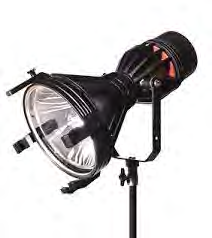
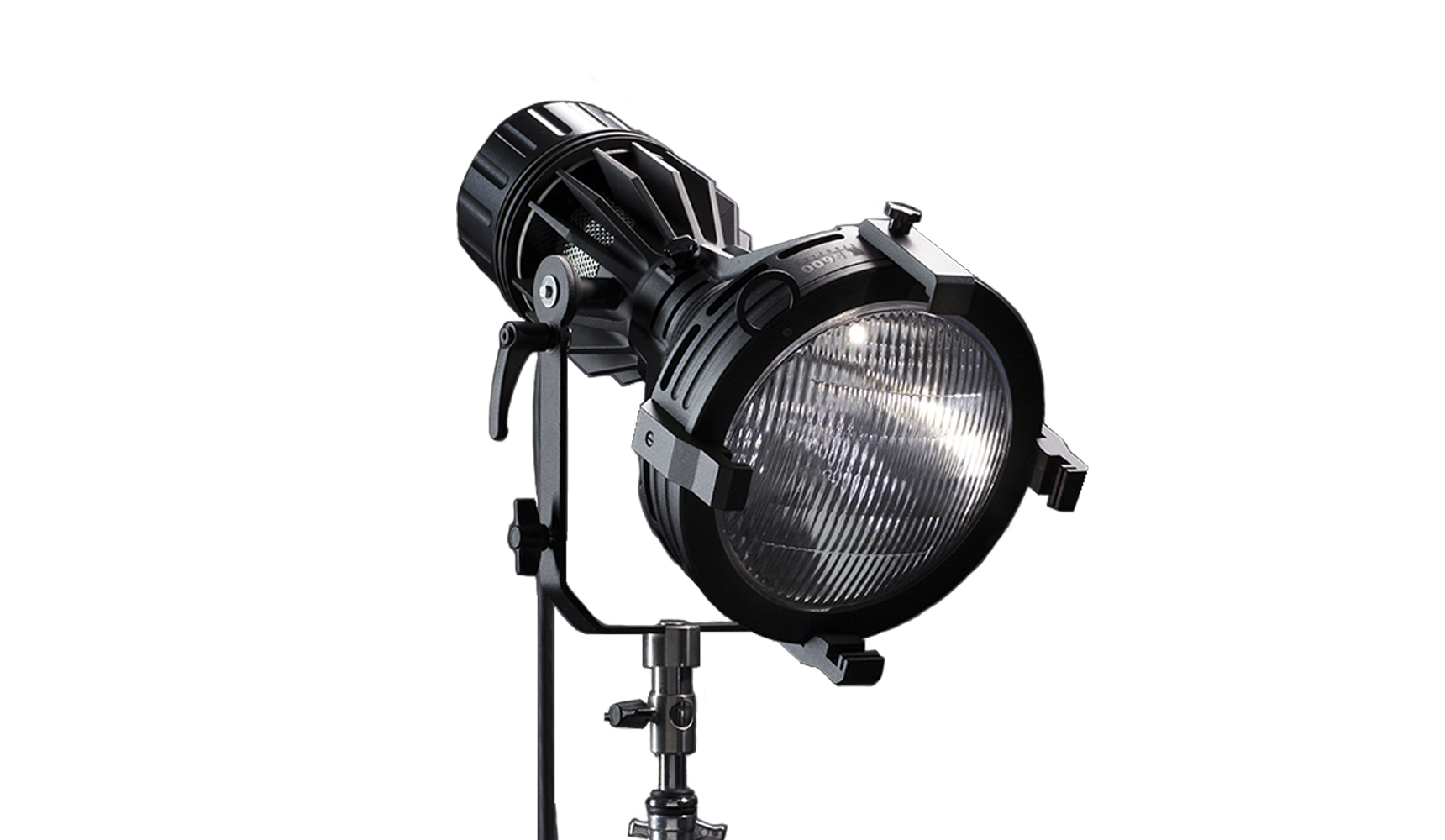

The original K5600 Joker-Bug 1600 is a 1,600 W daylight HMI system.
It operates as a bare-bulb Bug-Lite for lightbanks and lanterns, or as a PAR with a specular Beamer and four PAR64 lenses. K5600 also offered a separate lensless Zoom Beamer, which is not the same photometric configuration.
- HMI PAR / Bug-Lite with single-ended HMI lamp. Check K5600 ballast and head-cable compatibility.
- 1,600 W + External Ballast Single-ended lamp; catalogue ballast: 7.4 A at 230 V or 16 A at 110 V. Check the supplied ballast.
- Colour Temperature 5,600 K nominal with specified HMI lamp.
- Weight 7.2 kg / 15.9 lb with Beamer; 31.6 kg / 69.7 lb catalogue kit.
- Beam Angle 5°–45° with the Classic PAR Beamer; see the separate Zoom range below
- IP Rating Not specified in the published documentation. Read the IP Rating Guide.
K5600 Joker-Bug 1600 Specifications
| Specification | Details |
|---|---|
| Head | Original Joker-Bug 1600, 1,600 W HMI |
| Lamp | 1,600 W CSR/SE single-ended HMI, 5,600 K |
| Optic | PAR64 Beamer with medium, wide, super-wide and frosted Fresnel lenses |
| PAR beam range | Approximately 5° to 45° |
| Zoom option | Separate lensless Zoom Beamer: approximately 15° to 60° in the K5600 catalogue; 15° to 65° in the original Joker 1600 brochure |
| Head with Beamer | 47 × 36 × 36 cm; 7.2 kg |
| Accessory diameter | 230 mm in the K5600 catalogue; Classic Beamer: 9 in scrims; Zoom Beamer: 12 in scrims in the original Joker 1600 brochure |
| Ballast draw | 7.4 A at 230 V or 16 A at 110 V, auto-select, in the factory catalogue |
| Kit | 59 × 47 × 37 cm; 31.6 kg |
| Status | Legacy/discontinued configuration |
Lamphead and lamp-circuit ratings are not ballast mains-input ratings. Confirm the exact ballast nameplate, input range, connector and head cable before planning distribution.
Strengths and Limitations
| Strengths | Limitations |
|---|---|
| Compact daylight HMI system; model-specific K5600 optical design; multiple documented operating configurations. | External electronic ballast and head cable; hot-restrike discharge lamp; legacy parts and lamp variants; no calculator without a complete exact-model factory measurement table. |
Practical Uses
| Setup | Working approach |
|---|---|
| Hard daylight source | Choose the documented optic and meter the centre and edges at the actual working distance. |
| Bounce or diffusion | Open the field enough to cover the modifier evenly and meter after the loss. |
| Location package | Record the exact head, lamp, ballast, head cable and front optic before prep. |
Do not transfer readings between Joker PAR, Alpha Fresnel, open-eye and Jo-Leko configurations. Their optical systems produce materially different fields.
Output and Colour
The exact model, lamp family and optical system are documented, but a complete primary measurement table for this configuration was not recovered.
| Evidence | Result |
|---|---|
| Exact configuration | K5600 Joker-Bug 1600 (Original) |
| Photometric control | Held until every manufacturer distance and optic condition can be checked |
The Classic PAR Beamer and the optional Zoom Beamer shape the beam differently. Meter the setup you’re renting, not a different Beamer or Joker generation. The original K5600 brochures cited here do not provide a complete centre-illuminance table.
No output curve was inferred from wattage, a related K5600 head or a different optical accessory.
Power and Ballast Requirements
Use the lamphead only with the documented lamp family, compatible K5600 electronic ballast and connector-matched head cable. The lamphead is not connected directly to mains.
The HMI ballast reference separates verified K5600 ballast input data from source rows that actually describe LED power supplies.
Control, Cooling and Camera Operation
Set the beam at the head with the fitted Classic or Zoom Beamer; power and any operating modes are at the ballast. Test the actual lamp and ballast through the production camera at the intended frame rate and shutter angle. Do not assume the settings of a Joker² ballast apply to this original version.
Modifiers, Rigging and Safety
The original K5600 Joker 1600 brochure specifies different front accessories for the two Beamers: the Classic Beamer uses an 8 in specular reflector, 9 in scrims and Chimera circular speedring 9180; the Zoom Beamer uses 12 in scrims and circular speedring 9245. Select accessories for the fitted Beamer, not the lamp wattage alone.
Keep the safety glass or beaker, retention hardware, front accessory lock and ventilation path complete. Disconnect the ballast before opening the lamp compartment.
Inspect the yoke, stand interface, socket, cable, connector and every removable optic before use. Include cable pull and front accessories in the support load.
Alternatives and Related Fixtures
| Fixture | Why compare it |
|---|---|
| K5600 Joker-Bug 400 | Original compact Joker PAR/Bug-Lite system. |
| K5600 Joker-Bug 800 | Higher-output original Joker PAR/Bug-Lite system. |
| All equipment | Compare exact lamp, optic, ballast and mount data. |
What People Are Saying
Field Feedback at a Glance
In TV Tech, Chuck Gloman tested the original Joker 1600 with the optional Zoom Beamer on four shoots. Brian Young used the original 1600 with a medium Chimera on a three-camera interview. Their optical observations apply to the setups described, not to all Joker accessories.
What worked
- Gloman had enough output to project a strong moonlight effect through window glass and blinds where the smaller HMIs he tried fell short. Chuck Gloman’s TV Tech road test.
- With the Zoom Beamer fitted, Gloman could change beam width without swapping front lenses and use the ballast dimmer to trim intensity. Chuck Gloman’s TV Tech road test.
- Young’s Chimera setup gave him enough soft output to keep the head out of the slider shot against large hotel windows. It ran on its own 15 A circuit in that room. Brian Young in TV Tech.
Drawbacks to plan for
- The replaceable HMI lamp was a substantial running cost in Gloman’s test. Check lamp availability and what a spare costs before buying an older kit. Chuck Gloman’s TV Tech road test.
- The head was too hot to handle promptly after an indoor setup; it was the last piece of equipment the crew could clear from the location. Chuck Gloman’s TV Tech road test.
- The head is mobile on its own, but Gloman’s complete Zoom Beamer kit packed into a roughly 60 lb case. Budget for the case and ballast as well as the head when planning a carry-in. Chuck Gloman’s TV Tech road test.
Videos
K5600 demonstrates the original Joker 1600 at NAB 2012. Watch for the two beamers: one takes a set of PAR lenses, and the other focuses without changing lenses. The Alpha 1600 also appears; it is a different fixture.
Rental and Used-Fixture Checks
Before You Book
Verify the exact K5600 model and generation, then record the lamp, ballast model, head cable and front optic. Inspect the beaker or safety glass, socket, retention, ventilation, yoke and connector. Test cold start, stable output and hot restrike.
Documentation and Specifications
K5600 catalogue · Original K5600 Joker 1600 brochure (Classic and Zoom Beamer) · K5600 HMI range · K5600 lamp directory.
Product photograph: K5600 product photograph reproduced in the Lexicon Carbone source document for model identification.
Browse K5600 equipment · HMI lights · all equipment.