
Last Updated 2 days ago
Overview
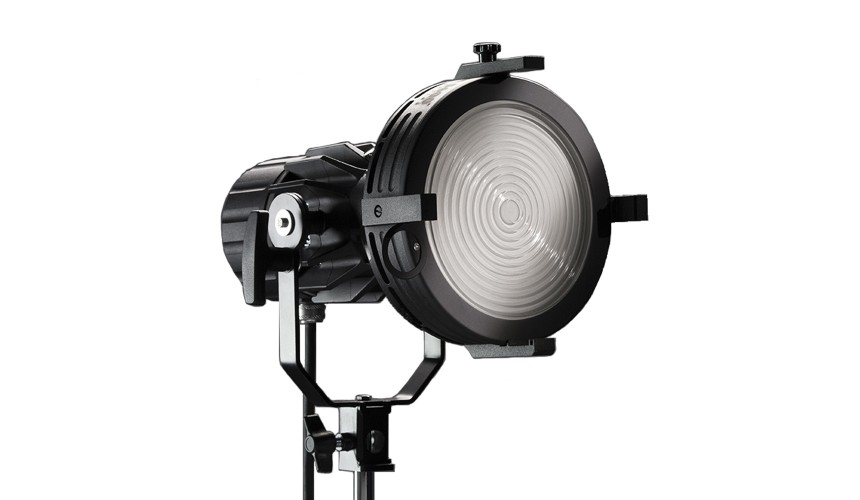
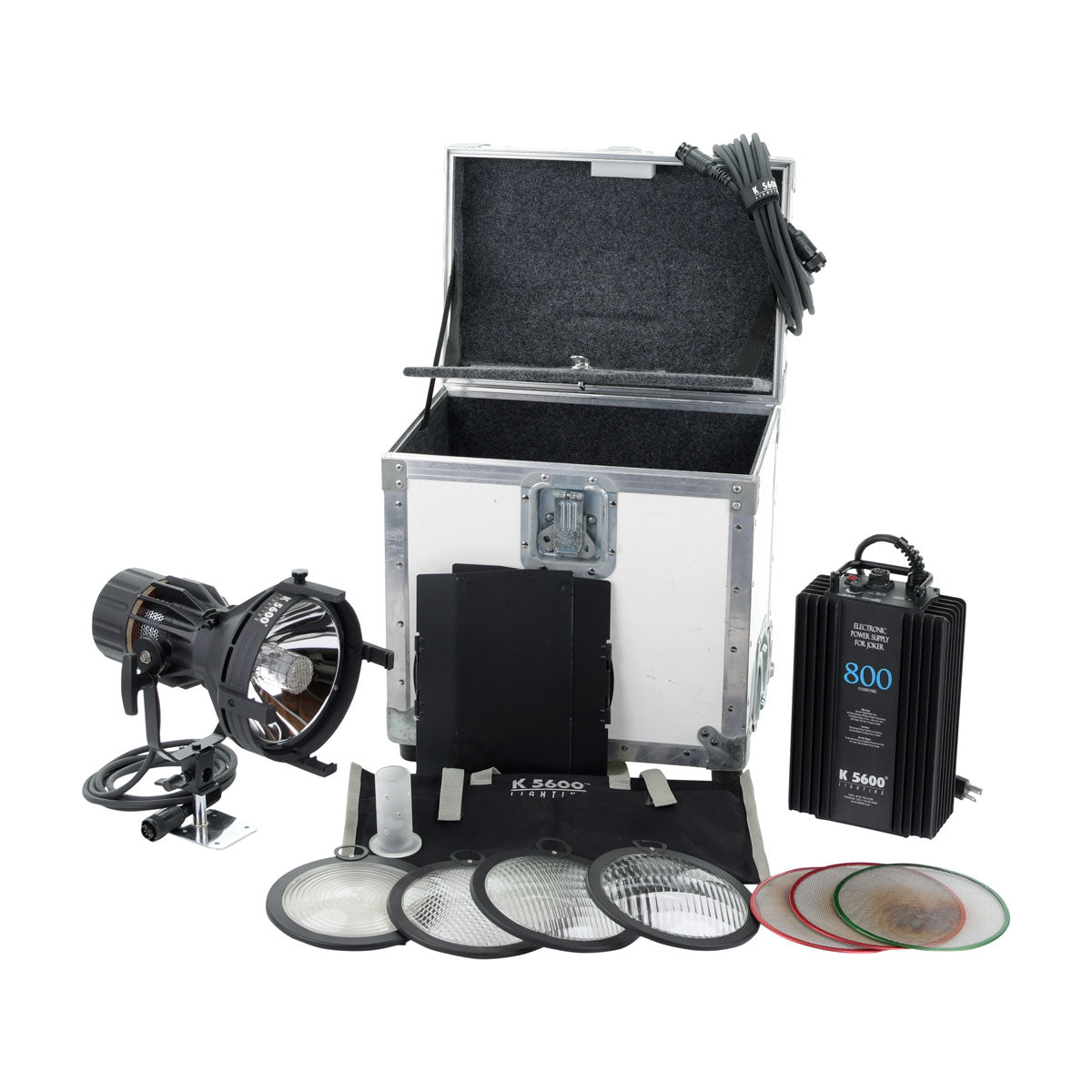

The K5600 Joker-Bug 800 is an 800 W single-ended daylight discharge system with a removable PAR Beamer. It can provide a concentrated hard source or feed compatible Bug-Lite lightbanks and modifiers. The small head and separate electronic ballast make it useful for daylight work in practical locations, provided the complete power and optical package is correctly specified.
This guide covers the original Joker-Bug 800 documented in K5600’s archived brochure and family owner’s manual. It does not assign the controls or high-speed features of a Joker² ballast to an older supply. The 400 and 800 also have different lamp sockets, reflector diameters and front accessories, despite their shared family name.
- Fixture TypeOriginal daylight discharge PAR / Bug-Lite
- Power800W MSR/SE lamp; matched external ballast, input draw is higher
- Colour TemperatureDaylight MSR/SE lamp; verify actual lamp CCT and condition
- Weight and Mount2.72kg archived head; 5/8-inch baby mount; 3.63kg original ballast separate
- Beam ControlInterchangeable PAR lenses; approved Bug-Lite modifiers; retain safety beaker
- IP RatingNo numerical rating stated in checked original documents; keep dry · IP Ratings Guide
Key Specifications
| Specification | Details |
|---|---|
| Specified lamp | 800 W MSR/SE single-ended daylight discharge; original sheet specifies a UV-Stop envelope |
| Lamp socket | G22; different from the original 400’s GZZ 9.5 |
| Beamer reflector | 7-inch specular parabolic reflector |
| Front accessory size | 7¾ inches; not the 400’s 6⅝-inch size |
| Mount | 5/8-inch baby hardware |
| Safety glass | Correct retained borosilicate beaker, clear or frosted according to configuration |
| Original head weight | 6 lb / 2.72 kg in the archived specifications |
| Original ballast weight | 8 lb / 3.63 kg; separate from the head and complete kit |
| Original connectors / cable | VEAM quarter-turn locks; 9 ft attached cable and listed 25 ft shielded extension |
| Original ballast input ranges | 90–132 V or selector-switched 180–265 V, 50/60 Hz |
| Ballast design described | Electronic square wave; convection cooled |
| Historical lamp-life figure | 600 h maximum in the original sheet; follow the actual approved lamp’s limits |
| Soft-light arrangement | Beamer removed for approved Bug-Lite speed ring; safety beaker retained |
| Control / high-speed capability | Identify the actual ballast; original head wattage does not establish DMX, dimming range or operating frequency |
| 25 ft head extension | K5600 C0900U, the shared 25 ft head extension for the Joker 200, 400 and 800. Use the ballast specified for the particular head and lamp. |
Output Calculator
Select the published setup and a manufacturer distance, or enter a custom throw where supported. The results describe centre-beam output, not the brightness across the whole beam.
Camera Settings
If the calculator does not load, use the published photometric table or source on this page. JavaScript is required.
F-stop is a planning estimate, not a meter reading. It uses direct, on-axis illuminance and includes only the optics and diffusion named in the selected setup. Meter on set to account for lens transmission, filters, added diffusion, bounce, dimming and ambient light.
How the exposure estimate works
N = √(E × ISO × t / C), where E is illuminance in lux and t = shutter angle ÷ (360 × fps). The default C = 340 is a dome reference; C = 250 is a flat reference. These are calibration constants, not a measured T-stop. A small nonzero digit is tenths of a stop above the displayed full stop.
Distance estimates and comparisons
Published points are used as given. Between published points the calculator fits a curve through the two nearest readings. Outside those points it uses the inverse-square law only when the fixture’s dataset permits it. Distances outside a configuration’s supported range are reported separately. Comparisons use one shared distance and camera setup; equal lux does not imply equal coverage.
View published readings for the selected configuration
The original brochure and family manual do not state a numerical ingress-protection rating for this package. Do not assume rain protection from its use as a daylight source. Keep the head, ballast and connectors dry; the manual requires dry, uncontaminated lamp contacts, protective earthing and the UV-absorbing safety beaker. A newer Joker² package does not establish the protection or controls of this original system.
Strengths and Limitations
Strengths
- A hard daylight source supports throw, bounce and large diffusion.
- Matched ballast options support production control.
Limitations
- Lamp, reflector or lens and ballast must be specified as a complete system.
- High-speed performance depends on the actual lamp, ballast mode and camera test.
Practical Uses
| Setup | Working approach |
|---|---|
| Window or exterior push | Choose beam coverage and throw before calculating the required circuit and rig. |
| Large diffusion | Meter the useful lit area after diffusion and allow for transmission loss. |
Output and Colour
The original manufacturer chart gives centre illuminance in footcandles and beam length/width in feet. The following 10 ft and 20 ft rows are reproduced with the lens configuration. One footcandle is approximately 10.764 lux. Do not relabel these numbers as lux or present the narrow spot reading as broad-beam performance.
| Configuration | At 10 ft: centre | Beam L × W at 10 ft | At 20 ft: centre |
|---|---|---|---|
| Spot | 20,940 fc | 0.8 × 0.8 ft | 5,235 fc |
| Medium | 3,150 fc | 4.5 × 2.3 ft | 788 fc |
| Wide | 1,811 fc | 7.5 × 2 ft | 453 fc |
| Super wide | 657 fc | 8 × 8 ft | 164 fc |
| Fresnel frost | 388 fc | 6.7 × 6.7 ft | 97 fc |
Power and Batteries
The archived supply uses two input ranges, 90–132 V and 180–265 V, selected by a switch. The manufacturer manual requires checking that selector before plugging in and maintaining a reliable protective earth. Later supplies may differ; do not assume an original ballast has automatic voltage selection.
One legacy specification quotes 12.5 A, while other descriptions of 800 systems quote different current figures. Treat the actual ballast nameplate and supply voltage as authoritative for the package in front of you. The 800 W lamp rating alone is not a mains-current specification, because ballast losses and power factor also matter.
In particular, do not repeat the old promotional suggestion that an 800 and a 400 can always share a household circuit. Include the actual input ratings of both supplies, other connected equipment and the applicable circuit limits. A low-wattage lamp label is not a guarantee against overloading, and a tungsten dimmer cannot replace the proper discharge ballast.
Control, Cooling and Camera Operation
Use the approved 800 W MSR/SE lamp with the correct G22 base and operating characteristics. The 400’s lamp is not a substitute. The original 600-hour maximum-life figure belongs to the historical lamp specification; the installed approved lamp’s instructions, condition and retirement limit govern current operation.
Allow the lamp to stabilise before measuring colour or matching other sources. The manual’s recommendation to run for two to three minutes after ignition before shutting down discourages rapid cycling; it is not a complete colour-calibration procedure. Meter the actual lamp, beaker and modifier combination for critical matching.
The original electronic square-wave supply is described as flicker-free, but an unidentified older ballast does not establish high-speed capability at every frame rate and shutter. Confirm operating mode and test through the intended camera. DMX, deep dimming and newer high-frequency features must be documented for the actual supply rather than inferred from a Joker² product page.
Modifiers, Rigging and the Working Package
Compatible accessory profiles · K5600 Joker-Bug Speed Ring A0400AMB
The original Joker-Bug 800 Bug-A-Beam setup specifies a modified Source Four rear assembly and a lamp-pin extension. For the power package, see K5600 HMI ballast and head cable compatibility.
With the Beamer installed, converter lenses select coverage for hard accents, window light or feeding a bounce. The wide lens produces a markedly asymmetric field, so its orientation can be as important as its centre reading. Barn doors manage spill; they do not provide the sharply focused shutter cuts of a profile spotlight.
The dedicated Bug-Lite speed ring replaces the Beamer for approved soft-light arrangements. Keep the UV-absorbing beaker in place and use the correct heat-rated lightbank, lantern or other supported modifier. The modifier changes the apparent source size and output at the subject, so compare the completed arrangement rather than quoting the bare PAR spot figure.
A standard original PAR, a Local News configuration and a Zoom Beamer are separate optical choices. Confirm what a rental or used listing includes. A useful package may require several lenses, a speed ring, barn doors and the correct clear or frosted glass, rather than simply the head and one generic softbox.
Alternatives and Related Fixtures
Smaller original Joker: Compare the K5600 Joker-Bug 200 for a lower-output package. Check each model’s lamp, ballast and lens configuration rather than scaling the output by wattage.
Inspect the reflector, lens set, accessory ears/latch, yoke brake, baby mount, socket, beaker retention and head-cable locks. Establish which ballast and cables are included and whether the voltage selector, connectors and enclosure remain original and serviceable. A qualified electrical inspection should precede an output test on a visibly neglected unit.
Add the missing lens, approved lamp, glass, speed ring and servicing costs before comparing a used head with a complete rental package. A modern LED can offer convenient colour changes, dimming and battery options, while a newer discharge system may retain familiar modifiers with different ballast capabilities. Compare illumination across the needed field and the full working package rather than relying on a broad tungsten-equivalence slogan.
| Fixture | Choose it for |
|---|---|
| Joker-Bug 400 original | The other original lamp class; identify the matching ballast and optics. |
| Joker2 | A later generation with different package and control details. |
What People Are Saying
Field Feedback Summary
What works
- Useful output without a large power setup: The Notes on a Film reviewer used two on university productions and could run the kit from a standard wall outlet on those shoots. The head, ballast, header, lenses and doors fitted into one stackable wheeled case. Notes on a Film.
- Enough spread for a large room: Gloman reported getting f/4 in a 60 × 40 ft boiler room with the Super Wide lens, using the white walls to return fill. Chuck Gloman’s review.
- Works inside a large soft modifier: Knapp used 800s in pancake Chimeras as overhead sources and fill on a five-person green-screen shoot. Matt Knapp’s production account.
What to watch for
- Allow time to cool down: Gloman found the head slow to cool after several hours in use, which held up packing. Chuck Gloman’s review.
- Awkward to carry when rolling is not an option: Gloman found the case’s top handle awkward for moving it to location, despite the case having wheels. Chuck Gloman’s review.
- Projection depends on correct adapter fit: Mullen’s crew had very weak output from their 800/Source Four combinations despite the rental house verifying that the lamp lit. Their difficulty was with the adapted setup, not the bare PAR output. David Mullen, ASC.
Original Joker-Bug Package
The Notes on a Film review describes the two 800s purchased for UNC Greensboro’s Office of Online Learning and lists the components of the period kit.
Videos
Grip Tips: Original Joker-Bug 800
This Grip Tips walk-through covers accessories for the original 800, not the Joker². The 400 uses its own lamp, ballast and matched accessories.
Rental and Used-fixture Checks
The owner’s manual explicitly prohibits operating without the UV-absorbing beaker. The UV-Stop lamp description is not permission to remove that protection. Inspect the beaker, retaining ring and reflector assembly, and keep the barn doors from closing over an operating head. Maintain clear airflow around both hot head and ballast.
Disconnect the head from the ballast and allow cooling before lamp work. High-voltage ignition, hot glass and damaged connector contacts require the correct service procedure. Do not operate a unit with damaged cables, plugs or lamp holder. Check lamp seating after transport, and secure the head, accessories and cable load with suitable support.
Documentation and Specifications
K5600 C0900U head-extension specifications
Original manufacturer 800 specifications and photometric chart, manufacturer-authored Joker-Bug family manual and PhotoCineRent original Joker-Bug 800 listing. Original literature is linked through its hosted archive copies.
Product photograph: PhotoCineRent Joker-Bug 800 rental photograph.
Browse K5600 lights · HMI lights · all equipment.